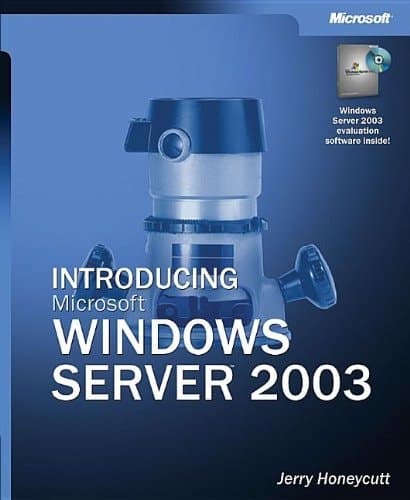
Introducing Microsoft Windows Server(TM) 2003
Jerry HoneycuttPublished2003
Pages464
Formatpaperback
PublisherMicrosoft Press
Synopsis
Microsoft® Windows® Server 2003 provides significant improvements in performance, productivity, and security over previous versions. This official first-look guide shows you exactly what’s new and improved in this powerful network operating system—including advanced technologies for Web services and components, security, networking, Active Directory® directory service, Microsoft Internet Information Services, support for IPv6, and more. It gives you all the information and tools you need to understand, evaluate, and begin deployment planning for Windows Server 2003, whether you’re upgrading from Microsoft Windows NT® Server or Windows 2000 Server.
Topics covered include:
Introducing the Microsoft Windows Server 2003 family, including features, benefits, and requirements.
How to get started: Deploying Windows Server 2003 Upgrading from Windows NT 4.0 Server Upgrading from Windows 2000 Server Testing for application compatibility
Details about new and improved features: Microsoft Active Directory service Management services and the Group Policy Management Console Security-enhancing services Networking and communications Terminal services Microsoft Internet Information Services Application and XML Web services Windows Media® services File services and storage management Print services Clustering services Multilingual support
Recommendations
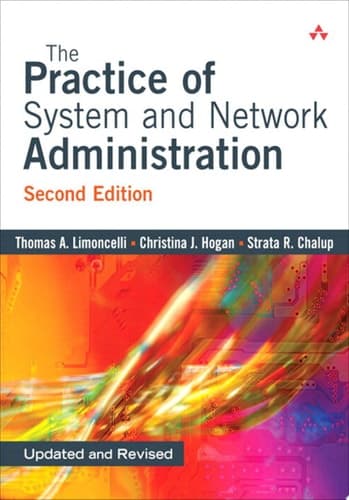
The Practice of System and Network Administration
by Thomas A. Limoncelli
Where Honeycutt gives you the what and why of Windows Server 2003's architecture, Limoncelli takes you into the philosophy of *why* systems are designed this way—treating infrastructure as a craft rather than just features to deploy. You'll recognize the same Active Directory and networking concepts, but through the lens of someone who's actually managed thousands of servers and learned what breaks when you don't understand the underlying principles.
View book
The Cuckoo's Egg Tracking a Spy Through the Maze of Computer Espionage
by Cliff Stoll
This is my curveball for you—a 1989 memoir that reads like a thriller, but it's actually a masterclass in network security from someone who had to defend systems against intrusion when the internet was barely a thing. Stoll's obsessive detective work tracking a hacker through networks will make you understand *why* those security-enhancing services in Windows Server 2003 matter, and it's genuinely unputdownable in a way technical manuals never are.
View book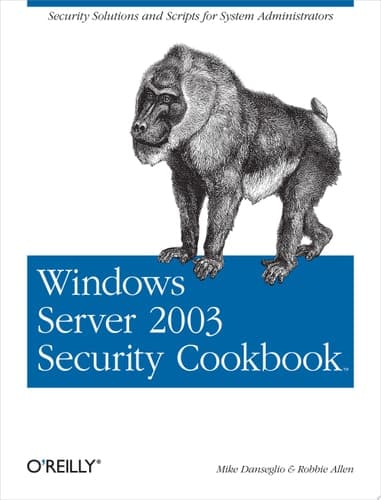
Windows Server 2003 Security Cookbook
by Danseglio, Mike
Honeycutt's guide gives you the overview; Allen goes surgical on the security components that were revolutionary in 2003—particularly Active Directory security and Group Policy implementation. If you found yourself wanting to understand the *depth* behind those security-enhancing services mentioned in your book, Allen treats each feature like it deserves its own small book, with real-world scenarios of what happens when you configure them wrong.
View book
The Art of Computer Systems Performance Analysis: Techniques for Experimental Design, Measurement, Simulation, and Modeling
by Raj Jain
You've read about Windows Server 2003's performance improvements, but Jain teaches you how to actually *measure* whether those improvements matter in your environment—it's the missing manual for anyone deploying new infrastructure. His approach is methodical and almost mathematical, but he writes for practitioners, not theorists, so you'll find yourself actually using these techniques to justify (or question) upgrade decisions.
View book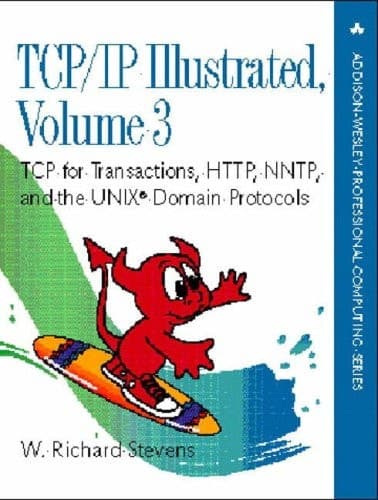
TCP/IP Illustrated
by W. Richard Stevens
Windows Server 2003 introduced IPv6 support, and Honeycutt mentions it in passing—but Stevens' classic actually *shows* you how TCP/IP works at the packet level, making those networking improvements in Server 2003 click into place. It's dense, but it's the kind of book where understanding the fundamentals makes every networking decision you make afterward feel less like following instructions and more like you actually understand what's happening on the wire.
View bookAbout Jerry Honeycutt
Biography coming soon.
View author page