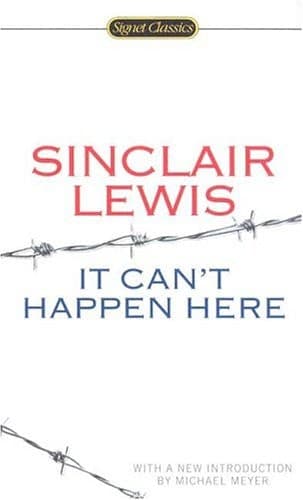
It Can't Happen Here (Signet Classics)
Sinclair LewisPublished2005
Pages400
Formatpaperback
PublisherSignet Classics
Synopsis
It is 1936. America has just elected Berzelius Windrip to the presidency-and his fascist policies turn the U.S. into a totalitarian state.
Recommendations
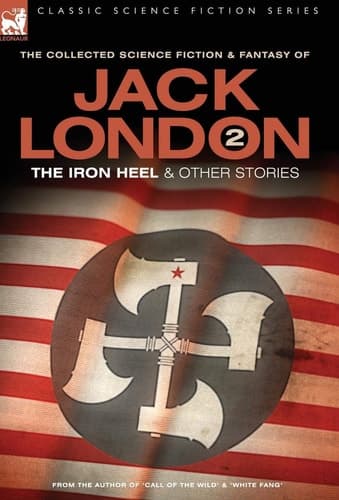
Jack London 2 - The Iron Heel and Other Stories
by Jack London
London wrote this dystopian novel in 1908, making it an earlier American warning about oligarchic tyranny that predates Lewis's work. Where Lewis shows fascism's seduction through charisma and false populism, London depicts an iron-fisted oligarchy crushing labor movements—both explore how quickly democratic institutions can be dismantled, but from different angles that will deepen your understanding of the genre.
View book
Margaret Atwood - The Handmaid's Tale (French Edition)
by Helene Greven
Atwood takes the totalitarian playbook Lewis outlined and shows us its intimate, bodily consequences through a woman's eyes. Both novels use the domestic sphere as a battleground for state control, but Atwood's focus on reproductive oppression and surveillance within the home gives you a visceral understanding of how authoritarianism doesn't just control governments—it colonizes private life.
View book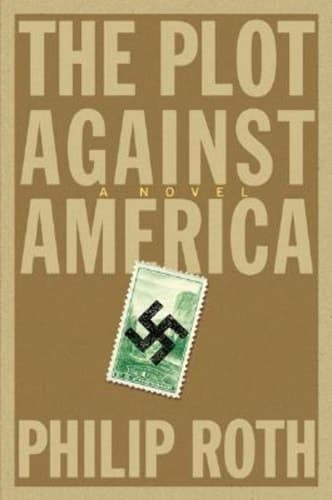
The Plot Against America
by Philip Roth
Roth essentially rewrites Lewis's premise—an American fascist president in the 1940s—but grounds it in a Jewish family's lived experience of creeping persecution and the moral compromises ordinary people make to survive. His approach is more intimate and psychologically complex than Lewis's broader satirical sweep, showing you how alternate history can function as a mirror for examining present-day political fragility.
View book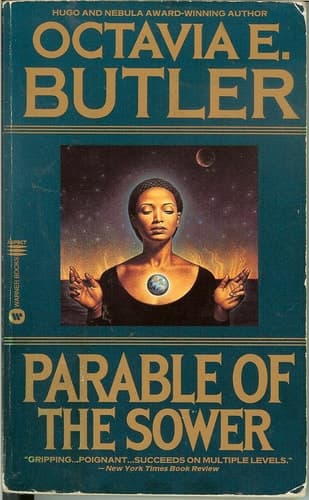
Parable of the Sower
by Octavia E. Butler
Here's the surprise: Butler's 1993 novel isn't about a sudden political coup like Lewis's, but about slow systemic collapse—climate crisis, economic inequality, and social fragmentation creating the conditions for authoritarianism to take root. If Lewis showed you how fascism seizes power, Butler shows you the grinding desperation that makes people vulnerable to it in the first place, and it's set in a near-future America that feels disturbingly plausible.
View book
The Apocalyptic Vision of Mikhail Bulgakov's the Master and Margarita (Studies in Slavic Language & Literature)
by Edward E. Ericson
Bulgakov wrote this during Stalin's terror, and it's a darkly comic novel about artistic freedom and truth under totalitarianism—but it weaves together Soviet Moscow, ancient Jerusalem, and the Devil himself into a narrative that's part satire, part spiritual fable. Where Lewis is direct and urgent, Bulgakov is oblique and mythic, using fantasy elements to say things that couldn't be said directly; reading them together shows you two radically different ways to write about oppression.
View bookAbout Sinclair Lewis
S
Sinclair Lewis
1885–1951
American novelist, short-story writer, and playwright
View author page