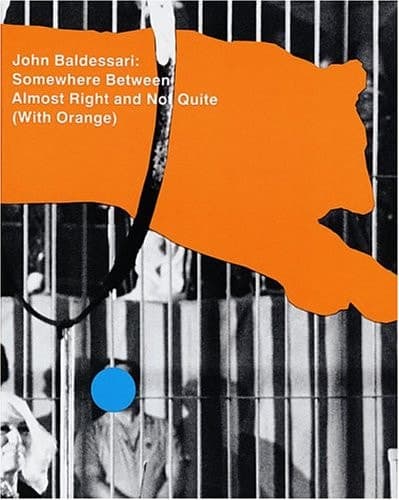
John Baldessari: Somewhere Between Almost Right and Not Quite (With Orange)
John HanhardtPublished2005
Pages112
Formathardcover
PublisherGuggenheim Museum
Synopsis
The American artist John Baldessari rose to prominence in the late 1960s, combining Pop art's use of mass media imagery with Conceptual art's use of language to create a unique body of work that has become a hallmark of postmodern art. Early in his career, Baldessari began incorporating images and text utilized by the advertising and movie industries into his photo-based art. He appropriated pictures and movie stills, juxtaposing, editing and cropping them in conjunction with written texts. The resulting montage of photography and language often counters the narrative associations suggested by the isolated scenes and offers a greater plurality of meanings. The layered, often humorous compositions carry disparate connotations, underscoring how relative meaning can be. Throughout his long and celebrated career, Baldessari has continued to play with and critique popular culture, and over time he has increased the scale and visual impact of his work. This publication looks at new works Baldessari created on commission for the Deutsche Guggenheim.
Recommendations
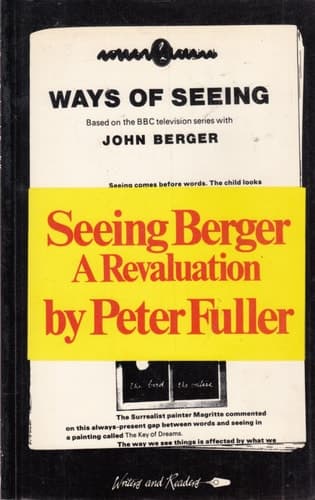
Seeing Berger: A Reevaluation of Ways of Seeing
by Peter Fuller (John Berger)
Berger deconstructs how we interpret visual culture with the same playful skepticism Baldessari brings to his photo-text combinations. Where Baldessari asks 'what does this image really mean when you change its context?', Berger systematically dismantles the assumptions we inherit about looking at art and advertising—you'll recognize the same intellectual mischief at work, just in essay form rather than visual montage.
View book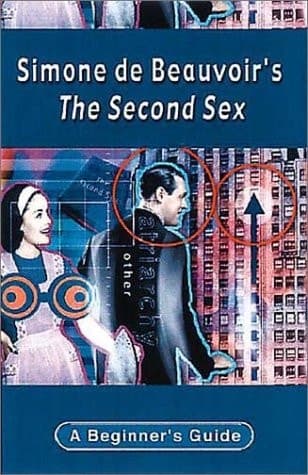
Simone de Beauvoir's the Second Sex
by George Myerson
This is the surprise pick, but hear me out: de Beauvoir uses language and cultural imagery the way Baldessari does—she isolates fragments of how women are represented in literature, advertising, and myth, then recontextualizes them to expose how meaning is constructed rather than inherent. Published in 1949, it predates Baldessari's rise but shares his conviction that juxtaposing text and cultural representation can reveal hidden systems of meaning.
View book
Gödel, Escher, Bach: An Eternal Golden Braid
by Douglas Hofstadter
Hofstadter builds elaborate systems where meaning emerges from pattern-recognition and rule-breaking—much like how Baldessari's cropped photographs and contradictory captions create new meanings through juxtaposition. Both artists are fascinated by how context and structure determine interpretation, and Hofstadter's playful, digressive style mirrors the visual humor you'd find in a Baldessari piece.
View book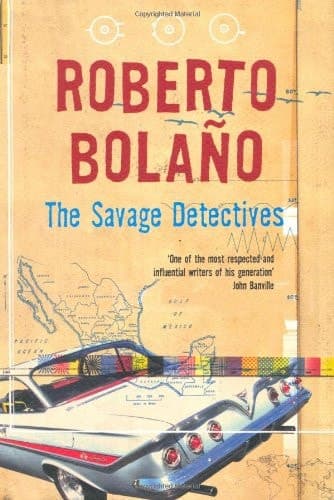
The Savage Detectives A Novel
by Roberto Bolaño
Bolaño fragments narrative the way Baldessari fragments images—multiple voices, incomplete stories, and sudden tonal shifts create a work where you're constantly reassessing what you thought you understood. The novel's collage-like structure and its obsession with how meaning shifts depending on who's telling the story will feel familiar to anyone who's spent time with Baldessari's photo-text montages.
View book
Find what the Sailor Has Hidden Vladimir Nabokov's Pale Fire
by Priscilla Meyer
Nabokov presents a poem alongside a commentary that systematically contradicts and reframes it—a literary version of exactly what Baldessari does when he pairs photographs with text that undermines their apparent meaning. The novel is a masterclass in how form and language can create competing narratives, and Nabokov's dark humor about the unreliability of interpretation will resonate deeply with anyone who appreciates Baldessari's conceptual wit.
View bookAbout John Hanhardt
Biography coming soon.
View author page