Synopsis
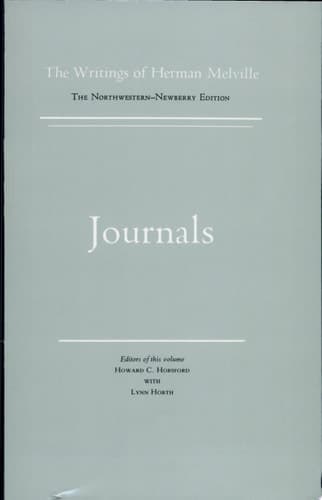
This volume presents Melville's three known journals. Unlike his contemporaries Emerson, Thoreau, and Hawthorne, Melville kept no habitual record of his days and thoughts; each of his three journals records his actions and observations on trips far from home. In this edition's Historical Note, Howard C. Horsford places each of the journals in the context of Melville's career, discusses its general character, and points out the later literary uses he made of it, notably in Moby-Dick, Clarel, and his magazine pieces.
The editors supply full annotations of Melville's allusions and terse entries and an exhaustive index makes available the range of his acquaintance with people, places, and works of art. Also included are related documents, illustrations, maps, and many pages and passages reproduced from the journals. This scholarly edition aims to present a text as close to the author's intention as his difficult handwriting permits. It is an Approved Text of the Center for Editions of American Authors (Modern Language Association of America).
Recommendations
Generating recommendations…
Our AI is preparing recommendations for Journals. This usually takes under a minute.
About Herman Melville
H
Herman Melville
1819–1891
Herman Melville was an American novelist, short story writer, essayist and poet who is often classified as part of dark romanticism. He is best known for his novel *Moby Dick* and novella Billy Budd, the latter of which was published posthumously. ([Source][1].) [1]:http://en.wikipedia.org/wiki/Herman_Melville
View author page