Synopsis
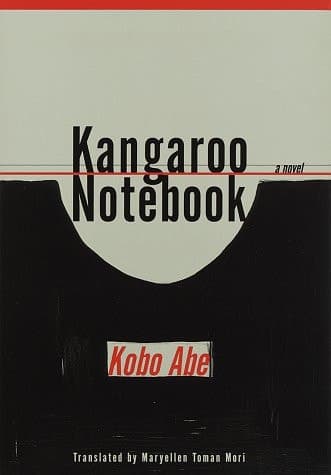
In the last novel written before his death in 1993, one of Japan's most distinguished novelists proffered a surreal vision of Japanese society that manages to be simultaneously fearful and jarringly funny. The narrator of Kangaroo Notebook wakes on morning to discover that his legs are growing radish sprouts, an ailment that repulses his doctor but provides the patient with the unusual ability to snack on himself. In short order, Kobo Abe's unraveling protagonist finds himself hurtling in a hospital bed to the very shores of hell. Abe has assembled a cast of oddities into a coherent novel, one imbued with unexpected meaning. Translated from the Japanese by Maryellen Toman Mori.
From the Trade Paperback edition.
Recommendations
The Savage Detectives A Novel
by Roberto Bolaño
Like Abe, Bolaño constructs meaning from apparent chaos—here, two poets and their obsessive search for a vanished writer become a sprawling meditation on literary obsession and cultural displacement. Both novels feature protagonists whose grip on reality becomes increasingly tenuous, yet the authors wring dark comedy from the deterioration, making the surreal feel inevitable rather than merely bizarre.
View book
The Apocalyptic Vision of Mikhail Bulgakov's the Master and Margarita (Studies in Slavic Language & Literature)
by Edward E. Ericson
Written in 1960s Soviet Russia but operating in a completely different register from social realism, Bulgakov weaves together a devil's visit to Moscow with a retelling of Pontius Pilate—the same kind of bold structural audacity and metaphysical playfulness you'll find in Kangaroo Notebook. Both authors use impossible situations (radish legs, Satan in the city) as vehicles for sharp social critique wrapped in absurdist comedy.
View book
Ficciones
by Jorge Luis Borges
This short story collection shares Abe's fascination with systems that unravel—libraries that contain all books, maps that are the size of the territory they represent, infinite libraries. Where Kangaroo Notebook uses bodily mutation as its entry point into philosophical vertigo, Borges uses conceptual impossibilities, but both achieve that same dizzying sensation of reality becoming untethered from logic.
View book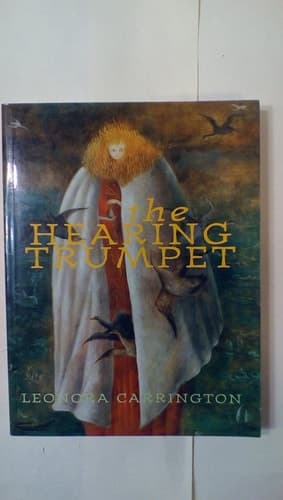
The Hearing Trumpet
by Leonora Carrington
A genuine outlier recommendation: Carrington's 1974 novel follows a 92-year-old woman who discovers a hearing trumpet and promptly gets swept into a surrealist adventure involving nuns, alchemy, and cosmic revelation. It has the same fearless commitment to the bizarre that Abe demonstrates, but filtered through Carrington's visual-artist sensibility—the prose reads like watching a Dalí painting unfold, yet remains deeply humanistic beneath the strangeness.
View book
Find what the Sailor Has Hidden Vladimir Nabokov's Pale Fire
by Priscilla Meyer
Nabokov constructs an entire novel from a poem, a commentary, and an index—a structure as deliberately disorienting as Abe's narrative logic. Both works force you to piece together what's actually happening beneath the surface, and both authors trust their readers to tolerate profound uncertainty. The unreliable narrator here is as slippery as Abe's protagonist, and the comedy emerges from watching someone's grip on reality slip through their own words.
View bookAbout Kōbō Abe
K
Kōbō Abe
1924–1993
Kōbō Abe (安部 公房) is the pseudonym of Kimifusa Abe (安部 公房). Abe was born in Kita, Tokyo, the son of a physician who taught medicine. He was raised in Mukden, Manchuria. He returned to Japan in 1941, and in 1943 he went to Tokyo Imperial University, where he earned a medical degree but he failed his medical exam and was forbidden from practicing. He returned to Manchuria as an author. In 1947, he self-published his first book, Mumei-shishū ("Poems of an unknown poet"). His wrote avant-garde poetry, novels, and plays. In 1977 he was elected a Foreign Honorary Member of the American Academy of Arts and Sciences.
View author page