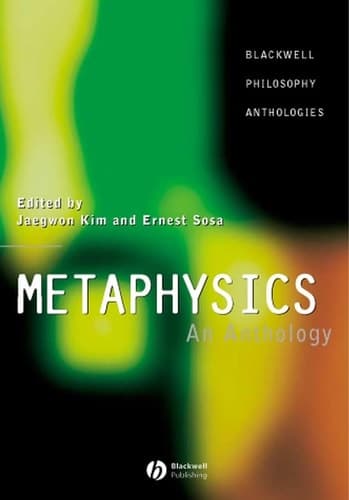
Kim Metaphysics: An Anthology (Blackwell Philosophy Anthologies)
Jaegwon KimPublished1999
Pages690
Formatpaperback
PublisherJohn Wiley &Sons
Synopsis
This anthology, intended to accompany A Companion to Metaphysics (Blackwell, 1995), brings together over 60 selections which represent the best and most important works in metaphysics during this century. The selections are grouped under ten major metaphysical problems and each section is preceded by an introduction by the editors.
Recommendations

The Problems of Philosophy
by Bertrand Russell
Russell's 1912 classic does something Kim's anthology gestures toward but doesn't fully deliver: it actually *shows* you how a philosopher thinks through metaphysical puzzles rather than just presenting conclusions. You'll recognize the same questions about appearance versus reality, universals, and induction, but Russell walks you through his reasoning process in prose that's genuinely elegant—no jargon required. It's like having a conversation with someone who's already read everything in that anthology and is now thinking out loud about what actually matters.
View book
A Commentary on Jean-Paul Sartre's Being and Nothingness
by Joseph S. Catalano
If Kim's anthology left you wanting to see how one philosopher builds an entire metaphysical system rather than sampling many, Sartre's magnum opus is the deep dive. Where Kim presents discrete problems, Sartre shows you how consciousness, freedom, and existence interconnect into a unified vision—it's dense, yes, but the payoff is watching someone construct metaphysics from the ground up rather than picking through fragments. Fair warning: this is the philosophical equivalent of moving from short stories to a 700-page novel, but you'll understand why existentialism became such a force.
View book
Gödel, Escher, Bach: An Eternal Golden Braid
by Douglas Hofstadter
Here's your surprise recommendation: this 1979 book is technically about mathematics, art, and music, but it's really a playful investigation into metaphysical questions about consciousness, identity, and self-reference that Kim's anthology treats with solemn seriousness. Hofstadter uses dialogues, visual puzzles, and recursive patterns to explore the same territory—what makes something 'real,' how meaning emerges from form—but he does it with genuine wit and wonder. It's what happens when someone with a metaphysician's questions decides to write like an artist instead.
View book
The Structure of Scientific Revolutions
by Thomas S. Kuhn
Kuhn's 1962 work sits at the intersection of metaphysics and philosophy of science—he's asking fundamental questions about what 'reality' even means when scientists keep changing their minds about it. If Kim's anthology made you curious about how metaphysical assumptions shape entire fields of inquiry, Kuhn shows you exactly that mechanism at work through case studies in physics and astronomy. His concept of paradigm shifts is now everywhere, but reading the original is like watching someone invent a new way of thinking about thinking itself.
View bookAbout Jaegwon Kim
Biography coming soon.
View author page