Synopsis
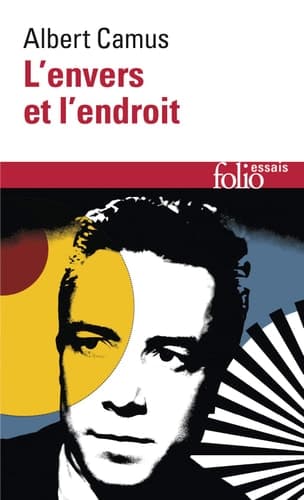
L'envers et l'endroit est le premier livre d'Albert Camus. Il paraît à Alger en 1937. A la fin de sa vie, Camus verra dans cette œuvre de jeunesse la source secrète qui a alimenté ou aurait dû alimenter tout ce qu'il a écrit. L'envers et l'endroit livre l'expérience, déjà riche, d'un garçon de vingt-deux ans : le quartier algérois de Belcourt et le misérable foyer familial dominé par une terrible grand-mère ; un voyage aux Baléares, et Prague, où le jeune homme se retrouve "la mort dans l'âme" ; et surtout, ce thème essentiel : "l'admirable silence d'une mère et l'effort d'un homme pour retrouver une justice ou un amour qui équilibre ce silence". -- Back cover.
Recommendations
Generating recommendations…
Our AI is preparing recommendations for L'envers et l'endroit. This usually takes under a minute.
About Albert Camus

Albert Camus
1913–1960
Albert Camus was a French Algerian author, philosopher, and journalist who was awarded the Nobel Prize for Literature in 1957. He was a key philosopher of the 20th-century and his most famous work is the novel *L'Étranger* (*The Stranger*). In 1949, Camus founded the Group for International Liaisons within the Revolutionary Union Movement, which was a group opposed to some tendencies of the surrealistic movement of André Breton. Camus was the second-youngest recipient of the Nobel Prize for Literature - after Rudyard Kipling - when he became the first African-born writer to receive the award. He is the shortest-lived of any literature laureate to date, having died in an automobile accident just over two years after receiving the award. He is often cited as a proponent of existentialism, the philosophy that he was associated with during his own lifetime, but Camus himself rejected this particular label. In an interview in 1945, Camus rejected any ideological associations: "No, I am not an existentialist. Sartre and I are always surprised to see our names linked…"
View author page