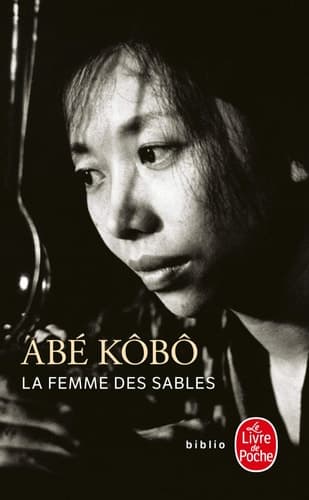
Synopsis
Product Description 312pages. poche. Broché. About the Author Kobo Abe, né le 7 mars 1924 à Tokyo est un auteur japonais. Il passe son enfance à Mukden en Mandchourie, où son père travaille en tant que médecin. Il fait des études de médecine, de 1943 à 1948, tout en écrivant des nouvelles. Puis il abandonne ses études pour se consacrer totalement à la littérature, sa femme Machi, une dessinatrice connue, illustrant ses ½uvres. Son premier roman, Kabé (Les Murs), obtient en 1951 le prix Akutagawa, le plus grand prix littéraire japonais. En 1962, paraît La Femme des sables qui obtient en France le prix du Meilleur livre étranger et qui fait l'objet d'un film, mis en scène par Hiroshi Teshigahara. Inscrit au Parti communiste japonais depuis 1945, Abe Kobo en est exclu après la publication de cet ouvrage, dont le thème, la perte d'identité, n'est guère en accord avec l'idéologie communiste. Le romancier et dramaturge meurt à Tokyo en 1993.
Recommendations
Franz Kafka's The Metamorphosis
by Harold Bloom
Like Abe's protagonist trapped in the sand pit, Kafka's Gregor Samsa finds himself imprisoned by a transformation he cannot escape or fully understand. Both authors excel at that particular kind of existential horror where the nightmare isn't violent—it's the slow, methodical erasure of identity through circumstances that feel almost mundane once you accept them.
View book
The Savage Detectives A Novel
by Roberto Bolaño
Bolaño shares Abe's fascination with how people become lost—not just physically, but in the labyrinth of their own choices and obsessions. The novel's fragmented structure mirrors the disorientation you feel reading *Woman in the Dunes*, where meaning keeps shifting beneath your feet, and you're never quite sure if you're reading a mystery, a love story, or a philosophical inquiry.
View book
The remains of the day de Kazuo Ishiguro
by Gallix/François
This is my surprise pick for you: where *Woman in the Dunes* traps a man physically, Ishiguro traps his narrator in the amber of his own self-deception. Both novels are studies in how people rationalize their captivity—whether to sand or to duty—and the devastating moment when that rationalization cracks. The restraint of Ishiguro's prose echoes Abe's clinical precision.
View book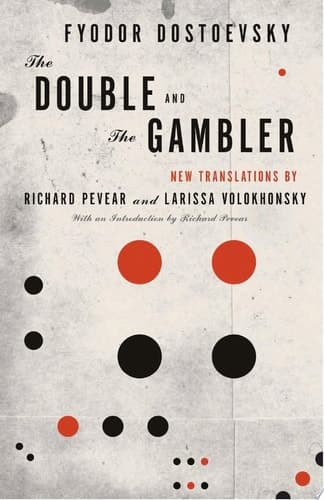
The Double and The Gambler
by Fyodor Dostoevsky
Published in 1846, this novella predates Abe by over a century, but it shares his obsession with identity fragmentation and social alienation. Dostoevsky's protagonist watches his sense of self dissolve as his doppelgänger steals his life—it's the same vertigo you feel watching Abe's man lose his grip on who he was before the sand.
View book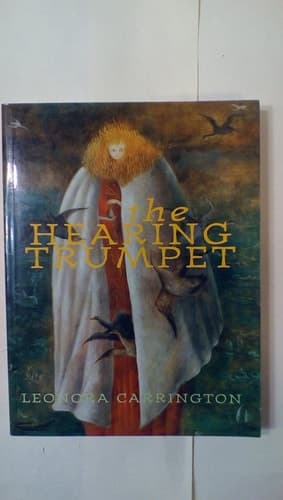
The Hearing Trumpet
by Leonora Carrington
Carrington's elderly protagonist finds herself institutionalized and must navigate an increasingly surreal world with deadpan acceptance—much like Abe's man adapting to his sandy prison. But where Abe is austere and philosophical, Carrington is playful and hallucinatory, turning confinement into a kind of dark comedy. If you want to revisit that theme of inescapable circumstance but through a completely different temperament, this is it.
View bookAbout Kōbō Abe
K
Kōbō Abe
1924–1993
Kōbō Abe (安部 公房) is the pseudonym of Kimifusa Abe (安部 公房). Abe was born in Kita, Tokyo, the son of a physician who taught medicine. He was raised in Mukden, Manchuria. He returned to Japan in 1941, and in 1943 he went to Tokyo Imperial University, where he earned a medical degree but he failed his medical exam and was forbidden from practicing. He returned to Manchuria as an author. In 1947, he self-published his first book, Mumei-shishū ("Poems of an unknown poet"). His wrote avant-garde poetry, novels, and plays. In 1977 he was elected a Foreign Honorary Member of the American Academy of Arts and Sciences.
View author page