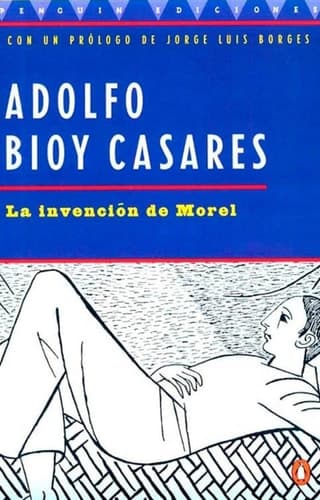
La invención de Morel
Adolfo Bioy CasaresPublished1996
Pages91
Formatpaperback
PublisherAlianza Editorial
Synopsis
Un fugitivo acosado por la justicia llega en un bote de remos a una isla desierta sobre la que se alzan algunas construcciones abandonadas. Pero un día, ese hombre solitario siente que ya no lo es, porque en la isla han aparecido otros seres humanos. los observa, los espía, sigue sus pasos e intenta sorprender sus conversac iones. ése es el punto de partida del misterio, del tránsito continuo de la realidad a la alucinación, que poco a poco lleva al fugitivo hasta el esclarecimiento de todos los enigmas.Este libro puede compararse, por derecho propio, con los relatos más perfectos de Edgar Allan Poe. Su trama ingeniosa, sabiamente desplegada y, sobre todo, la admirable originalidad de la idea en torno a la cual gira la acción, han convertido a La invención de Morel en una de las obras maestras indiscutibles de la literatura fantástica.
Recommendations
Ficciones
by Jorge Luis Borges
Borges shares Bioy Casares's gift for constructing elaborate intellectual puzzles within deceptively slim narratives—stories that seem to fold in on themselves and challenge what's real versus invented. Where Morel builds mystery through a fugitive's observations, Borges achieves similar vertigo through pure conceptual architecture, and you'll find that same Argentine precision and philosophical playfulness that makes you want to reread immediately.
View book
The Savage Detectives A Novel
by Roberto Bolaño
Bolaño takes that same sense of pursuing something elusive—truth, meaning, other people—but stretches it across 900 pages and multiple perspectives, creating a labyrinth where the reader becomes as lost as the characters. Like Morel, it's obsessed with observation and the gap between what we see and what's actually happening, but it trades Casares's elegant constraint for baroque excess.
View book
Find what the Sailor Has Hidden Vladimir Nabokov's Pale Fire
by Priscilla Meyer
This is the book that proves Bioy Casares's technique—hiding the real story beneath layers of misdirection—was part of a broader modernist obsession. Nabokov's poem-plus-commentary structure creates the same dizzying effect where you gradually realize the narrator is unreliable in ways that reframe everything you've read, and the ingenuity of the construction becomes part of the pleasure.
View book
The Golem and the Wondrous Deeds of the Maharal of Prague
by Yudl Rosenberg
Here's the surprise pick: where Morel is austere and cerebral, Wecker is warm and sensory, but both share an interest in beings who exist slightly outside normal reality and the mystery of what consciousness actually is. Set in 1900s New York rather than a timeless island, it grounds its fantastical elements in immigrant experience and human longing—a different register entirely, but with that same quality of wondering what's real about the people around us.
View book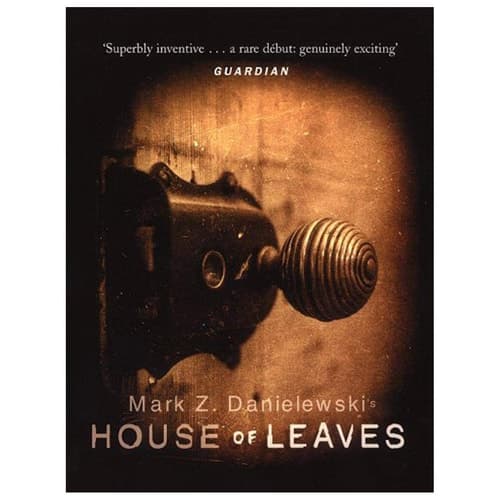
Mark Z. Danielewski's House of Leaves
by Mark Z. Danielewski
If you want to experience what happens when someone takes Bioy Casares's premise—a space that shouldn't be possible, reality that doesn't add up—and weaponizes it across form itself, this is it. The book physically enacts its own mystery through footnotes, multiple narratives, and a house that's bigger on the inside, making the reader experience the same disorientation and obsessive investigation as the characters.
View bookAbout Adolfo Bioy Casares
A
Adolfo Bioy Casares
1914–1999
Adolfo Bioy Casares (Buenos Aires, 15 de septiembre de 1914-Buenos Aires, 8 de marzo de 1999) fue un escritor argentino, considerado uno de los autores más importantes de su país y de la literatura en español, siendo traducido a más de dieciséis idiomas y galardonado con el Premio Cervantes en 1990. Colaboró en varias ocasiones con Jorge Luis Borges bajo distintos pseudónimos, y, en menor medida, con su propia esposa, la escritora Silvina Ocampo. En su obra frecuentó géneros como la literatura fantástica, el policial y la ciencia ficción, destacando las novelas *La invención de Morel* (1940), *El sueño de los héroes* (1954) y *Dormir al sol* (1973). ---------- Adolfo Bioy Casares (Buenos Aires, September 15, 1914 – Buenos Aires, March 8, 1999) was an Argentine writer, considered one of the most important authors in his country and in Spanish-language literature. His work has been translated into more than sixteen languages, and he was awarded the Cervantes Prize in 1990. He collaborated on several occasions with Jorge Luis Borges under various pseudonyms, and, to a lesser extent, with his wife, the writer Silvina Ocampo. His work encompassed genres such as fantasy, detective fiction, and science fiction, with notable novels including *La invención de Morel* (1940), *El sueño de los héroes* (1954), and *Dormir al sol* (1973).
View author page