Synopsis
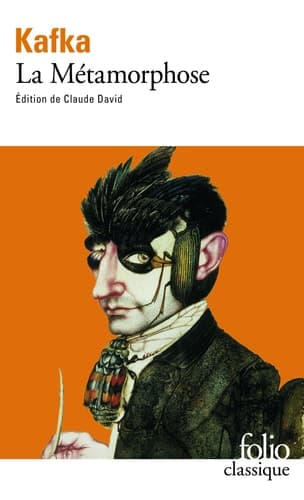
La Métamorphose révèle une vérité méconnue, les conventions disparaissent, les masques tombent. Le récit qui porte ce titre est un des plus pathétiques et des plus violents que Kafka ait écrits ; les effets en sont soulignés à l'encre rouge, les péripéties ébranlent les nerfs du lecteur. C'est l'histoire, " excessivement répugnante ", dit l'auteur, d'un homme qui se réveille changé en cancrelat. Cette transformation est un châtiment imaginaire que Kafka s'inflige. Et son personnage est celui qui ne peut plus aimer, ni être aimé : le conflit qui se déroule dans une famille bourgeoise prend une ampleur mythique. Seuls quelques éléments comiques ou grotesques permettent de libérer de l'oppression du cauchemar.
Recommendations
The Trial
by Franz Kafka
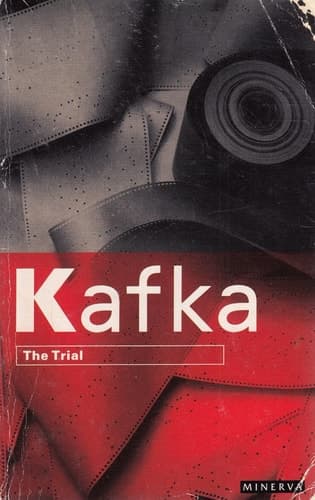
I know—same author—but hear me out. If you found yourself gripped by how Kafka transforms ordinary bureaucratic horror into something mythic, *The Trial* takes that apparatus even further. Where *Metamorphosis* traps you in one family's suffocation, this novel expands that claustrophobia across an entire incomprehensible legal system. The alienation deepens because K. never even knows what he's accused of.
View book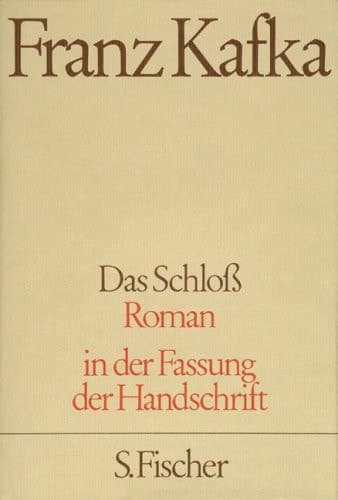
The Castle
by Franz Kafka
Beckett strips away even more than Kafka does—here, characters exist in a void of meaning where language itself becomes unreliable. The grotesque humor you found liberating in *Metamorphosis* becomes sharper and more absurd; people repeat themselves, contradict themselves, and somehow this repetition becomes darkly funny rather than just oppressive. It's like watching someone try to have a conversation with a wall that occasionally talks back.
View book
Die Wiederkehr der Zeichen: Eine psychoanalytische Studie zu Knut Hamsuns «Hunger» (Texte und Untersuchungen zur Germanistik und Skandinavistik) (German Edition)
by Thomas Fechner-Smarsly
Published in 1890, this predates Kafka's psychological intensity but achieves something equally unsettling: a first-person descent into a mind fragmenting from poverty and desperation. Where Gregor's transformation is sudden and physical, Hamsun's narrator deteriorates through his own consciousness, making you complicit in his delusion. The prose itself becomes unreliable, mirroring his mental state in ways that feel almost modern.
View book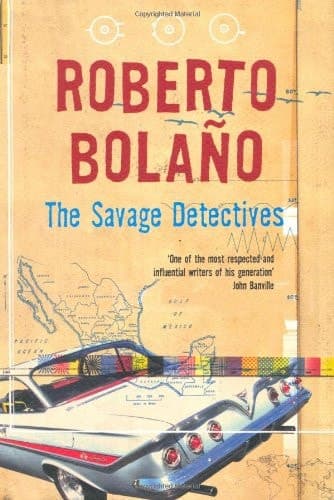
The Savage Detectives A Novel
by Roberto Bolaño
This might seem like a departure—it's sprawling, chaotic, almost anti-narrative—but Bolaño shares Kafka's obsession with how individuals become trapped by systems larger than themselves. Two young poets pursue a literary mystery across Mexico and Europe, but the real horror isn't the plot; it's watching intelligent people slowly realize they're powerless. The grotesque family dynamics of *Metamorphosis* expand here into entire literary movements consuming their participants.
View book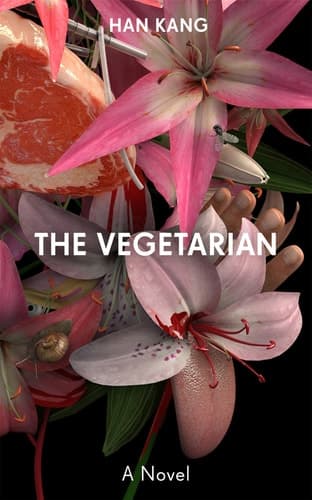
The Vegetarian A Novel
by Kang Han
Here's your surprise recommendation: a woman's decision to stop eating meat becomes the catalyst for her family's unraveling, much like Gregor's transformation. But Han Kang writes with a clinical precision that makes the grotesque feel almost inevitable—her prose is beautiful where Kafka's is unsettling, yet both authors understand how one person's fundamental change can shatter the fragile contracts holding a family together. The violence here is quieter but somehow more devastating.
View bookAbout Franz Kafka
F
Franz Kafka
1883–1924
Franz Kafka (gelegentlich tschechisch František Kafka, 3. Juli 1883, Prag, Österreich-Ungarn-3. Juni 1924, Kierling, Österreich) war ein österreichisch-tschechoslowakischer Schriftsteller. Er gilt als einer der bedeutendsten Vertreter der Prager deutschen Literatur und der deutschsprachigen Literatur des 20. Jahrhunderts. Seine Werke – darunter die drei Romanfragmente *Der Process, Das Schloss* und *Der Verschollene* sowie zahlreiche Erzählungen – gehören zum Kanon der Weltliteratur. Kafkas Werke wurden zum größeren Teil erst nach seinem Tod und gegen seine letztwillige Verfügung von Max Brod veröffentlicht, einem engen Freund und Vertrauten, den Kafka zu seinem Nachlassverwalter bestimmt hatte. Kafkas Schilderungen unergründlich bedrohlicher, absurder Situationen haben zur Bildung des auch im außerliterarischen Kontext verwendeten Adjektivs „kafkaesk“ geführt. ---------- Franz Kafka (3 July 1883 – 3 June 1924) was a German-language Jewish Czech writer and novelist born in Prague, in the Austro-Hungarian Empire. Widely regarded as a major figure of 20th-century literature, his work fuses elements of realism and the fantastique, and typically features isolated protagonists facing bizarre or surreal predicaments and incomprehensible socio-bureaucratic powers. The term Kafkaesque has entered the lexicon to describe situations like those depicted in his writings. His best-known works include the novella *The Metamorphosis* (1915) and the novels *The Trial* (1924) and *The Castle* (1926). His work has widely influenced artists, philosophers, composers, filmmakers, literary historians, religious scholars, and cultural theorists. ([Source][1].) [1]:https://en.wikipedia.org/wiki/Franz_Kafka
View author page