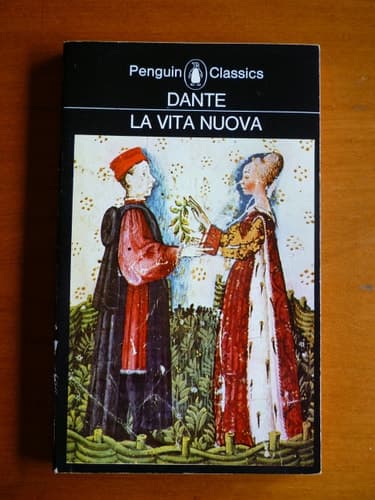
Synopsis
Text: English, Italian (translation)
Recommendations
A Faith Worth Believing Finding New Life Beyond the Rules of Religion
by Tom Stella
Grimes takes Dante's obsessive, almost hallucinatory meditation on a single beloved figure and transplants it into contemporary New York—same fever-dream intensity and fragmented structure, but filtered through a modern consciousness wrestling with addiction and redemption. Where Dante moves through theological abstraction, Grimes grounds you in sensory, visceral detail, yet both writers achieve that same intoxicating blur between the spiritual and the personal.
View book
Find what the Sailor Has Hidden Vladimir Nabokov's Pale Fire
by Priscilla Meyer
Like *La Vita Nuova*, this is a work obsessed with layering meaning—Nabokov builds an entire unreliable world through annotation and commentary, the way Dante builds theology through lyric poetry. Both texts demand you read between the lines, trust the author's architecture, and sit with ambiguity about what's 'real.' The pleasure here is in the puzzle-box construction and the author's visible delight in misdirection.
View book
The Book of Disquiet
by Fernando Pessoa
Pessoa fragments himself across multiple poetic voices the way Dante fragments experience across dream, allegory, and direct address—both writers use formal constraint as a tool for emotional truth. This is a surprise pick because it's not narrative fiction, but rather a prose-poem diary that captures that same quality of *La Vita Nuova*: the sensation of a consciousness trying to make sense of beauty, loss, and the self through language itself.
View book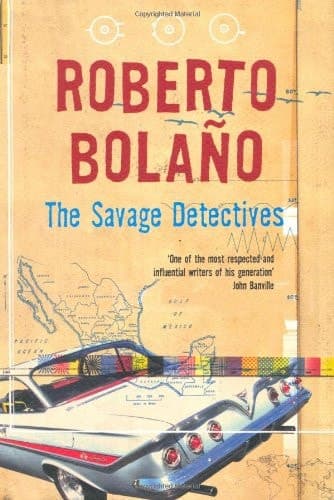
The Savage Detectives A Novel
by Roberto Bolaño
Published in 1998, this is your bridge to contemporary literature—Bolaño writes with Dante's obsessive intensity about a quest (for a poet, for meaning, for connection) but scatters it across hundreds of voices and decades. The structure mirrors *La Vita Nuova*'s blend of poetry and prose, but Bolaño makes the search itself the point, not the arrival. It's maximalist where Dante is compressed, but both leave you feeling like you've witnessed something sacred.
View book
Die Wiederkehr der Zeichen: Eine psychoanalytische Studie zu Knut Hamsuns «Hunger» (Texte und Untersuchungen zur Germanistik und Skandinavistik) (German Edition)
by Thomas Fechner-Smarsly
This 1890 novel is a psychological descent into a single consciousness—a writer starving in Oslo, his mind fracturing and reforming around obsession, memory, and desire. It reads like *La Vita Nuova* filtered through modernist despair: same lyrical intensity about love and the self, but stripped of Dante's theological consolation. Hamsun's prose has that same hallucinatory quality, where internal states become the only reality that matters.
View bookAbout Dante Alighieri
D
Dante Alighieri
1265–1321
Dante was an Italian poet of the Middle Ages. The name Dante is, according to the words of Jacopo Alighieri, a hypocorism for Durante. In contemporary documents it is followed by the patronymic Alagherii or de Alagheriis; it was Boccaccio who popularized the form Alighieri. ([Source][1].) [1]:http://en.wikipedia.org/wiki/Dante_Alighieri Painter of this picture of Dante is Sandro Botticelli, See the new edition of the comedy published by Ateliê Editorial of São Paulo, Brazil, trabslation in verso terza rima complete by João Trentino Ziller
View author page