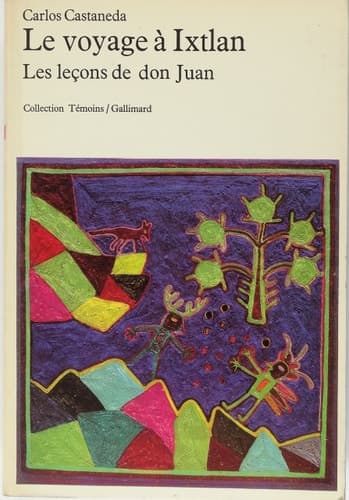
Le voyage à Ixtlan les leçons de don Juan
Carlos CastanedaPublished1974
Pages246
Formatpaperback
PublisherGallimard
Synopsis
"En toi rien n'a vraiment changé." Ainsi se terminait le précédent livre de Carlos Castaneda, Voir (Les enseignements d'un sorcier yaqui). C'est le même sorcier indien, don Juan Matus, qui constitue la figure centrale du Voyage à Ixtlan. Deux conceptions du monde s'affrontent ici. Elles ont pour enjeu la conscience de l'auteur qui se voit soumis à un déconditionnement intensif, auquel il se prête avec curiosité, tout en s'efforçant de comprendre ce qui lui arrive. Ainsi s'opère une initiation déroutante à la faveur de laquelle l'Occidental pénètre toujours plus profondément dans le monde mental de son guide. Initiation qui ne va pas sans rébellion, scepticisme et repentirs, sans parler des terribles angoisses qu'elle impose au néophyte. Initiation qui se poursuivra pendant dix ans et prendra fin sur une illumination qui forme la dernière partie du livre.
Recommendations
Generating recommendations…
Our AI is preparing recommendations for Le voyage à Ixtlan les leçons de don Juan. This usually takes under a minute.
About Carlos Castaneda
C
Carlos Castaneda
1925–1998
Carlos Castaneda was an American author with a Ph.D. in anthropology. Starting with The Teachings of Don Juan in 1968, Castaneda wrote a series of books that describe his training in shamanism, particularly with a group whose lineage descended from the Toltecs. The books, narrated in the first person, relate his experiences under the tutelage of a Yaqui "Man of Knowledge" named don Juan Matus. His 12 books have sold more than 28 million copies in 17 languages. Critics have suggested that they are works of fiction; supporters claim the books are either true or at least valuable works of philosophy and descriptions of practices which enable an increased awareness. Castaneda withdrew from public view in 1973 to work further on his inner development, living in a large house in Westwood, California with three women whom he called "Fellow Travellers of Awareness." He founded Cleargreen, an organization that promotes Tensegrity®, which Dr. Castaneda described as the modern version of the “magical passes” of the shamans of ancient Mexico (Magical Passes p. 22). Magical Passes comprise bodily movements discovered in dream states by shamans of don Juan’s lineage, expanding their powers of perception. (Magical Passes p. 1-2) Castaneda’s first three books, The Teachings of Don Juan: A Yaqui Way of Knowledge, A Separate Reality and Journey to Ixtlan, were written while Castaneda was an anthropology student at UCLA. He wrote these books as his research log describing his apprenticeship with a traditional "Man of Knowledge" identified as don Juan Matus, a Yaqui Indian from northern Mexico. Castaneda was awarded his bachelor's and doctoral degrees based on the work described in these books. For several years, anthropologists considered his work authentic and important, but then a number of exposés questioned Castaneda's veracity. Academic critics now claim the books are works of fiction, citing the books' internal contradictions, discrepancies between the books and anthropological data, alternate sources for Castaneda's detailed knowledge of shamanic practices and lack of corroborating evidence. --Wikipedia
View author page