Synopsis
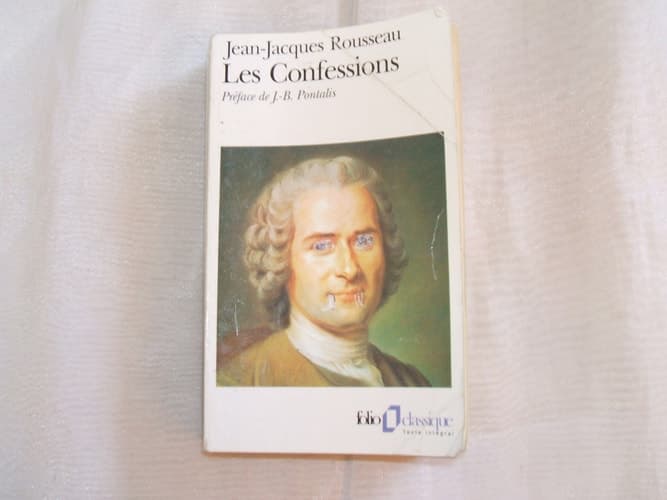
" Je forme une entreprise qui n'eut jamais d'exemple et dont l'exécution n'aura point d'imitateurs ", proclame fièrement Rousseau dans son préambule, montrant par là la nouveauté et l'audace de sa démarche autobiographique. Car l'écrivain, acculé par ses détracteurs, se sent obligé de se justifier : il dira donc tout, même " le plus honteux " ! A la recherche d'une cohérence, d'un sens, il part de l'enfance pour démêler le fil de sa vie, n'ayant de cesse de s'expliquer. Le lecteur accède ainsi aux secrets de son cœur, à ses malheurs bien sûr, mais aussi à de nombreux moments de bonheur, moments tendres, moments drôles parfois. Dans un style d'une remarquable limpidité, Jean-Jacques Rousseau raconte ainsi sa vie et ses sentiments. En faisant le récit sans fard de son existence, il tend au lecteur un miroir dans lequel celui-ci, souvent, se reconnaîtra.
Recommendations
Generating recommendations…
Our AI is preparing recommendations for Les confessions. This usually takes under a minute.
About Jean-Jacques Rousseau
J
Jean-Jacques Rousseau
1712–1778
Jean-Jacques Rousseau was a major Genevois philosopher, writer, and composer of 18th-century Romanticism. His political philosophy influenced the French Revolution and the development of modern political, sociological and educational thought. His novel, *Emile: or, On Education*, which he considered his most important work, is a seminal treatise on the education of the whole person for citizenship. His sentimental novel, Julie, ou la nouvelle Héloïse, was of great importance to the development of pre-Romanticism and romanticism in fiction. Rousseau's autobiographical writings: his *Confessions*, which initiated the modern autobiography, and his *Reveries of a Solitary Walker* were among the pre-eminent examples of the late 18th-century movement known as the "Age of Sensibility", featuring an increasing focus on subjectivity and introspection that has characterized the modern age. Rousseau also made important contributions to music as a theorist. During the period of the French Revolution, Rousseau was the most popular of the philosophers among members of the Jacobin Club. He was interred as a national hero in the Panthéon in Paris, in 1794, 16 years after his death.<sup>[1][1]</sup> [1]: http://en.wikipedia.org/wiki/Jean-Jacques_Rousseau
View author page