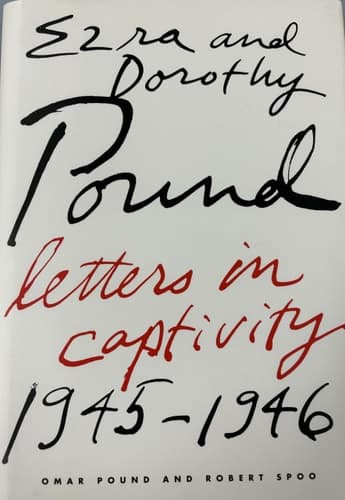
Letters in Captivity 1945 - 1946
Ezra PoundPublished1999
Pages398
Formathardcover
PublisherOxford University Press
Synopsis
These fascinating letters capture the most traumatic experience of Ezra Pound's life, when he was incarcerated at the end of World War II and indicted for treason. Omar Pound and Robert Spoo have collected and edited the unpublished correspondence between the poet and his wife, combining it with military and FBI documents, previously unknown photographs, and an extensive, insightful introduction, to create the definitive work on this period of Pound's life.
During his incarceration in a U.S. Army detention camp outside Pisa, Pound was allowed to write only to his wife, so these letters afford a unique look at a painful yet highly productive period, when Pound wrote his acclaimed Pisan Cantos and worked on his translations of Confucius. Readers will discover many fresh insights into the sources and contexts of the Cantos and the circumstances of their composition. Here, too, are many moving passages testifying to Pound's partnership with Dorothy and her courageous efforts to help him; her experiences no less than his come to life in this volume. But perhaps the most moving are the harsh conditions Pound found himself in: at one point, in the Pisan camp, he was confined for three weeks in an open air cage, until the sixty year old poet suffered a breakdown and was moved to a tent in the medical compound. The editors connect the anxious lyricism of the Pisan Cantos to these dramatic experiences, as the poet alternated "between savage indignation and suave serenity." The book also covers Pound's return to the United States and his confinement in a federal mental institution there.
With more than 150 previously unpublished letters and documents, all authoritatively annotated, Ezra and Dorothy Pound: Letters in Captivity, 1945 1946, offers a rare glimpse into the life and work of one of our century's greatest literary figures.
Recommendations
Generating recommendations…
Our AI is preparing recommendations for Letters in Captivity 1945 - 1946. This usually takes under a minute.
About Ezra Pound
E
Ezra Pound
1885–1972
Ezra Weston Loomis Pound was an American expatriate poet, critic and intellectual who was a major figure of the Modernist movement in the first half of the 20th century. He is generally considered the poet most responsible for defining and promoting a modernist aesthetic in poetry.[1] The critic Hugh Kenner said of Pound upon meeting him: "I suddenly knew that I was in the presence of the center of modernism."[2] Source and more information: http://en.wikipedia.org/wiki/Ezra_Pound
View author page