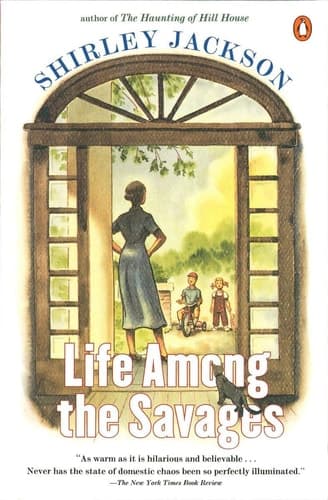
Synopsis
Shirley Jackson, author of the classic short story The Lottery, was known for her terse, haunting prose. But the writer possessed another side, one which is delightfully exposed in this hilariously charming memoir of her family's life in rural Vermont. Fans of Please Don't Eat the Daisies, Cheaper by the Dozen, and anything Erma Bombeck ever wrote will find much to recognize in Shirley Jackson's home and neighborhood: children who won't behave, cars that won't start, furnaces that break down, a pugnacious corner bully, household help that never stays, and a patient, capable husband who remains lovingly oblivious to the many thousands of things mothers and wives accomplish every single day.
"Our house," writes Jackson, "is old, noisy, and full. When we moved into it we had two children and about five thousand books; I expect that when we finally overflow and move out again we will have perhaps twenty children and easily half a million books." Jackson's literary talents are in evidence everywhere, as is her trenchant, unsentimental wit. Yet there is no mistaking the happiness and love in these pages, which are crowded with the raucous voices of an extraordinary family living a wonderfully ordinary life.
Continuously in print since 1948, Jackson's Haunting of Hill House has been bought by Dreamworks.
Recommendations
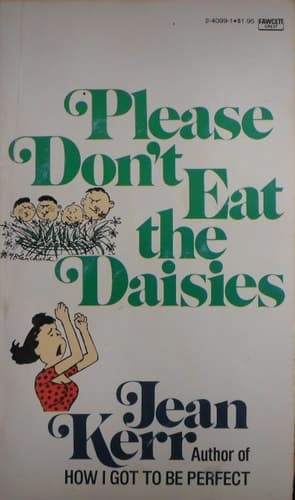
Please Don't Eat the Daisies
by Jean Kerr
Jackson's memoir actually references Kerr's work as kindred spirit, and for good reason—Kerr captures that same wry, unsentimental humor about domestic chaos with a Broadway playwright's ear for dialogue. Where Jackson observes her Vermont household with anthropological precision, Kerr dissects Manhattan motherhood with the timing of a seasoned comedic writer, but both find genuine warmth beneath the exasperation.
View book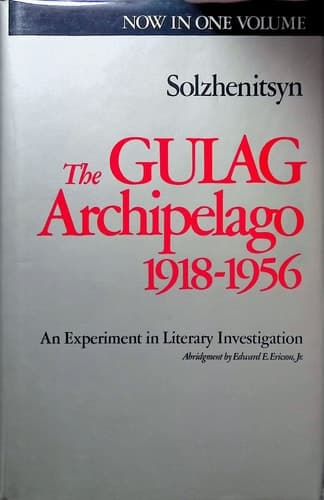
The Gulag Archipelago, 1918-1956: An Experiment in Literary Investigation (English and Russian Edition)
by Aleksandr I. Solzhenitsyn
This might seem like a jarring leap from Vermont domesticity, but hear me out: both Jackson and Solzhenitsyn are unflinching documentarians of ordinary human experience under pressure, refusing sentimentality while revealing profound truths about resilience and community. Jackson's terse, observational prose style—the way she notices what others miss—is exactly what makes Solzhenitsyn's testimonial accounts so devastating and real rather than propagandistic.
View book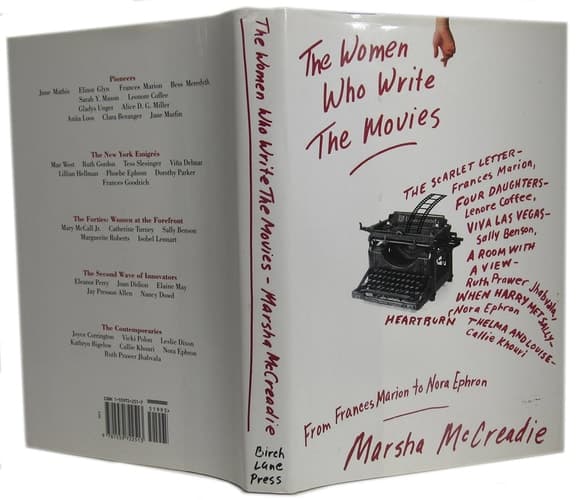
The Women Who Write the Movies: From Frances Marion to Nora Ephron
by Marsha McCreadie
If you loved Jackson's ability to find comedy in the mundane frustrations of being a woman managing a household, Ephron's essays and interviews offer that same sharp-eyed dissection of domestic life, romance, and the gap between expectation and reality—but filtered through a New York sensibility and with even more bite about gender politics. Both writers refuse to apologize for finding their own lives endlessly fascinating material.
View book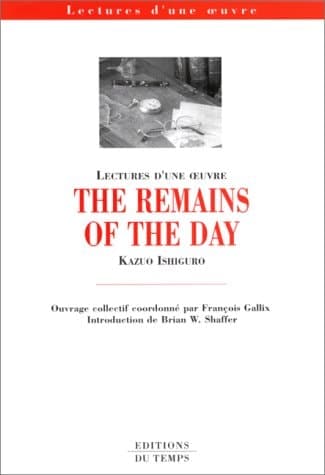
The remains of the day de Kazuo Ishiguro
by Gallix/François
A surprising pick, but Ishiguro shares Jackson's gift for revealing profound emotional truths through restrained, almost deadpan narration—his butler's quiet reflections on a life of service have the same unsettling power as Jackson's observations about invisible domestic labor. Both writers make you feel the weight of what's deliberately left unsaid, and both find tragedy and comedy in the gap between surface and reality.
View bookAbout Shirley Jackson
S
Shirley Jackson
1916–1965
Shirley Hardie Jackson (December 14, 1916 – August 8, 1965) was an American writer, known primarily for her works of horror and mystery. **Source**: [Shirley Jackson](https://en.wikipedia.org/wiki/Shirley_Jackson) on Wikipedia.
View author page