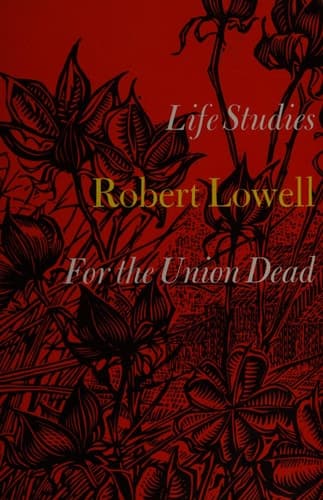
Life Studies: and, For the Union Dead
Robert LowellPublished1967
Pages72
Formatpaperback
PublisherFarrar, Straus and Giroux
Synopsis
This popular volume collects two of Lowell's finest books of poetry.
Recommendations
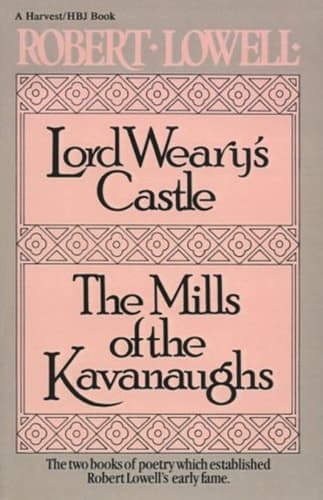
Lord Weary's Castle; The Mills of the Kavanaughs (Harvest/HBJ Book)
by Robert Lowell
Wait—I know what you're thinking. But hear me out: if you haven't read Lowell's earlier work, this 1946 collection shows you where the confessional intensity of Life Studies was born. The religious anguish and formal mastery here are rawer, less autobiographical but equally devastating—it's like seeing the skeleton before the flesh.
View book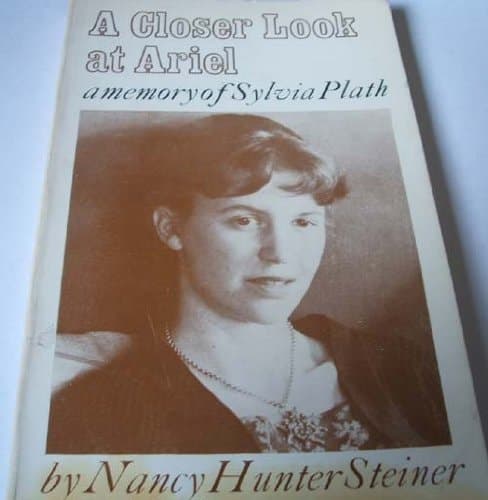
A Closer Look at Ariel A Memory of Sylvia Plath
by Nancy Hunter Steiner
Plath's late poems operate in the same register as Lowell's most personal work—that unflinching gaze at family trauma and psychological dissolution—but where Lowell often maintains formal distance, Plath burns the distance down entirely. The poems feel like they're being written in real time, which gives them a different kind of power than Lowell's carefully constructed confessions.
View book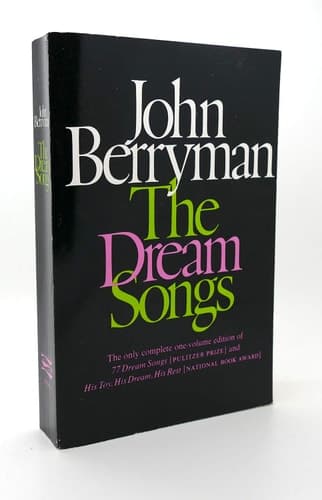
The Dream Songs Poems
by John Berryman
Berryman's fragmented, jazz-like approach to the American self shares Lowell's obsession with history and personal ruin, but he refuses the coherence Lowell sometimes reaches for. If you found yourself drawn to how Lowell moves between public and private in 'For the Union Dead,' you'll find Berryman doing something wilder—collapsing the boundary entirely through formal experimentation.
View book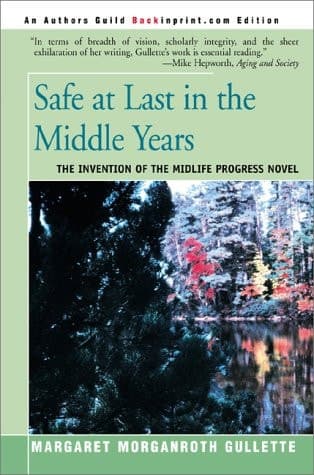
Safe at Last in the Middle Years The Invention of the Midlife Progress Novel: Saul Bellow, Margaret Drabble, Anne Tyler, and John Updike
by Margaret Morganroth Gullette
This is the surprise one: Ernaux does in prose what Lowell does in poetry—she uses intimate personal detail to map the texture of a historical moment, refusing the comfort of a unified self or narrative. Published in 2008, it shows how that confessional impulse evolved beyond verse, and her clinical precision about class and desire has the same unflinching quality as Lowell's best work.
View book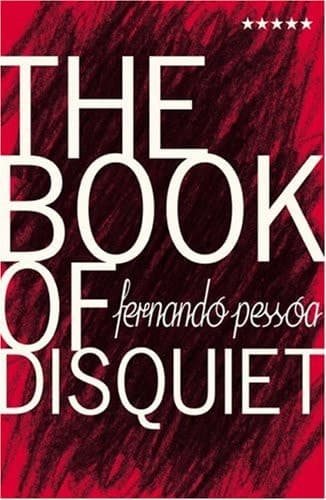
The Book of Disquiet
by Fernando Pessoa
Pessoa's fragmented, aphoristic meditations on consciousness and alienation come from a completely different tradition (Portuguese modernism, early 20th century), but they share Lowell's sense that the self is multiple, unstable, and best captured through lyric intensity rather than narrative. It's a risk—less obviously 'confessional'—but the philosophical restlessness will feel familiar.
View bookAbout Robert Lowell
R
Robert Lowell
1917–1977
Robert Lowell was an American poet, considered the founder of the confessional poetry movement. He was appointed the sixth Poet Laureate Consultant in Poetry to the Library of Congress in 1946.[1] ([Source][1].) [1]:http://en.wikipedia.org/wiki/Robert_Lowell
View author page