
Synopsis
The death of Edgar Allan Poe on October 7, 1849, has remained mysterious: the circumstances leading up to it are uncertain and the cause of death is disputed. On October 3, Poe was found delirious on the streets of Baltimore, Maryland, "in great distress, and... in need of immediate assistance", according to the man who found him, Joseph W. Walker. He was taken to the Washington College Hospital, where he died at 5 a.m. on Sunday, October 7. Poe was never coherent enough to explain how he came to be in this condition. Much of the extant information about the last few days of Poe's life comes from his attending physician, Dr. John Joseph Moran, though his credibility is questionable. Poe was buried after a small funeral at the back of Westminster Hall and Burying Ground, but his remains were moved to a new grave with a larger monument in 1875. It has been questioned whether the correct corpse was moved. The 1875 monument also marks the burial place of Poe's wife, Virginia, and his mother-in-law, Maria. Theories as to what caused Poe's death include suicide, murder, cholera, rabies, syphilis, influenza, and that Poe was a victim of cooping. Evidence of the influence of alcohol is strongly disputed. After Poe's death, Rufus Wilmot Griswold wrote his obituary under the pseudonym "Ludwig". Griswold, who became the literary executor of Poe's estate, was actually a rival of Poe and later published his first full biography, depicting him as a depraved, drunk, drug-addled madman. Much of the evidence for this image of Poe is believed to have been forged by Griswold, and though friends of Poe denounced it, this interpretation had lasting impact.
Recommendations
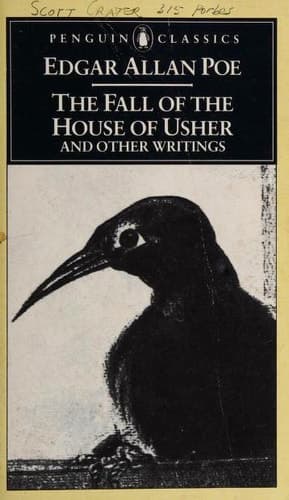
The Fall of the House of Usher and Other Writings Poems, Tales, Essays and Reviews
by Edgar Allan Poe
Lovecraft inherited Poe's obsession with decay, psychological dissolution, and the terror lurking beneath genteel surfaces—but he pushes it further into cosmic horror where the narrator's sanity becomes genuinely unreliable. You'll recognize Poe's fingerprints everywhere, but Lovecraft uses that same claustrophobic dread to suggest something far stranger than mere human tragedy.
View book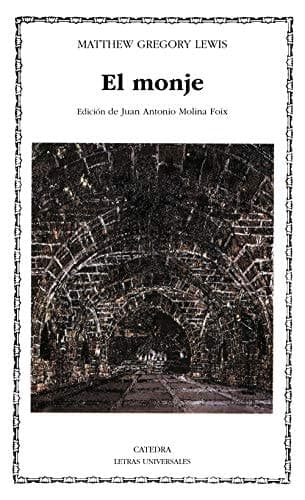
The Monk
by Matthew Gregory Lewis
Published in 1796, this novel shares Poe's fascination with beautiful, doomed women and the corruption hiding behind religious and social respectability—but Lewis writes with a sensationalism that feels almost operatic compared to Poe's restraint. It's the Gothic tradition Poe inherited, and reading it backwards helps you see what he refined and what he rejected.
View book
Strange Case of Dr. Jekyll and Mr. Hyde (The Collected Works of Robert Louis Stevenson)
by Robert Louis Stevenson
Stevenson captures that same Poe-like quality of watching a respectable man unravel into something unrecognizable, but he frames it as a scientific mystery rather than pure atmosphere. The novella's obsession with duality and hidden selves echoes through 'Ligeia'—the question of whether we're witnessing madness or something genuinely supernatural never quite resolves.
View book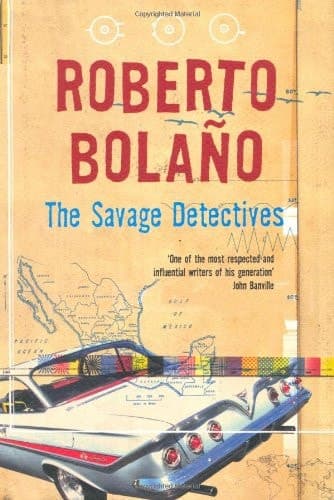
The Savage Detectives A Novel
by Roberto Bolaño
Here's the curveball: Bolaño's 1998 novel shares Poe's fascination with obsessive, doomed figures pursuing impossible quests, but it's structured as fragmented testimonies and diary entries rather than a single narrator's descent. If you loved how Poe makes you question what's real in 'Ligeia,' Bolaño does something similar across 900 pages—multiple voices, unreliable memories, and the sense that truth is always just out of reach.
View book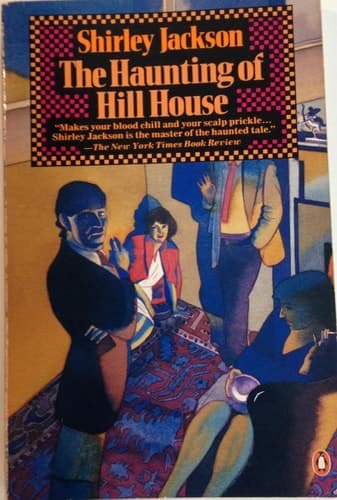
The Haunting of Hill House
by Shirley Jackson
Jackson writes psychological horror that feels utterly modern, yet she's working in Poe's tradition—a woman's mind becoming increasingly uncertain whether the horror is external or internal. Where Poe uses ornate language to create dread, Jackson uses deceptive simplicity and everyday details, but the effect is equally unsettling: you're never quite sure if Hill House is genuinely haunted or if Eleanor is experiencing a breakdown we're watching in real time.
View bookAbout Edgar Allan Poe
E
Edgar Allan Poe
1809–1849
Edgar Allan Poe was an American writer, poet, editor and literary critic, considered part of the American Romantic Movement. Best known for his tales of mystery and the macabre, Poe was one of the earliest American practitioners of the short story and is considered the inventor of the detective-fiction genre. He is further credited with contributing to the emerging genre of science fiction.[1] He was the first well-known American writer to try to earn a living through writing alone, resulting in a financially difficult life and career.[2] Source and more information: https://en.wikipedia.org/wiki/Edgar_Allan_Poe
View author page