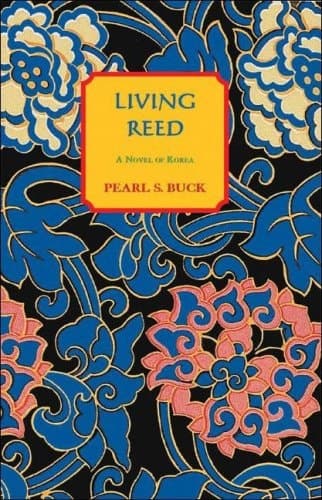
Living Reed: A Novel of Korea
Pearl S. BuckPublished2004
Pages480
Formatpaperback
PublisherMoyer Bell and its subsidiaries
Synopsis
The Living Reed follows four generations of one family, the Kims, beginning with Il-han and his father, both advisors to the royal family in Korea. When Japan invades and the queen is killed, Il-han takes his family into hiding. In the ensuing years, he and his family take part in the secret war against the Japanese occupation. Pearl S. Buck's epic tells the history of Korea through the lives of one family. She paints an amazing portrait of the country, and makes us empathize with their struggle for sovereignty through her beautifully drawn characters.
Recommendations
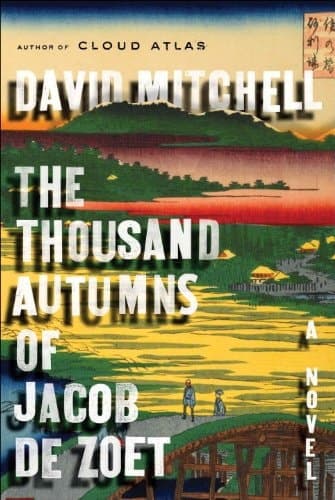
The Thousand Autumns of Jacob De Zoet A Novel
by David Stephen Mitchell
Mitchell constructs his narrative across generations and cultural collision points much like Buck does, but he anchors it through a single trading post where Dutch, Japanese, and Korean interests collide in the 1790s. You'll find that same meticulous attention to how ordinary people navigate extraordinary historical pressures, with the added complexity of Mitchell's nested storytelling that rewards careful reading.
View book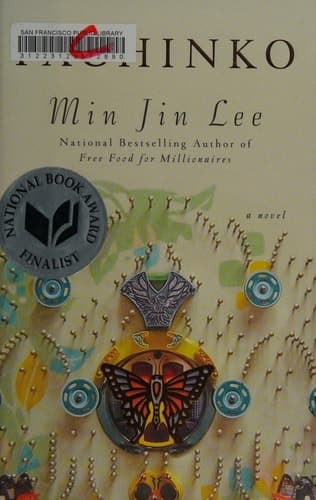
Pachinko (National Book Award Finalist)
by Min Jin Lee
Lee follows a Korean family across four generations much like Buck does, but she begins in the 1910s and traces their journey from Korea through Japanese occupation into diaspora in Japan itself. Where Buck gives you the resistance narrative from inside Korea, Lee shows you the impossible compromises and survival strategies of those caught between nations—it's a natural companion piece that deepens your understanding of that historical moment.
View book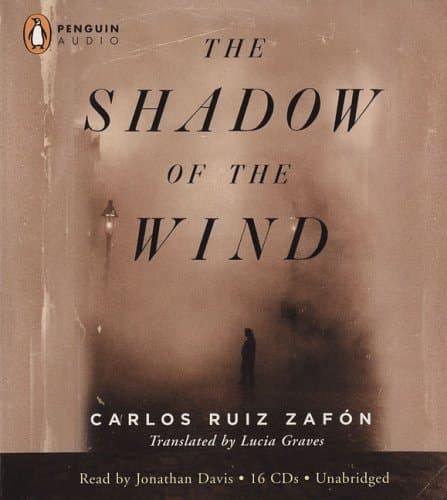
Shadow of the Wind
by Carlos Ruiz Zafon
This one's a bit of a departure from the straightforward historical epic, but Zafón shares Buck's gift for weaving personal stories through a nation's trauma—here it's post-Spanish Civil War Barcelona rather than occupied Korea. The mystery unfolds through a family's secrets and a city's hidden history, giving you that same sense of how individual lives are shaped by forces larger than themselves, but wrapped in gothic atmosphere and literary puzzle-box construction.
View book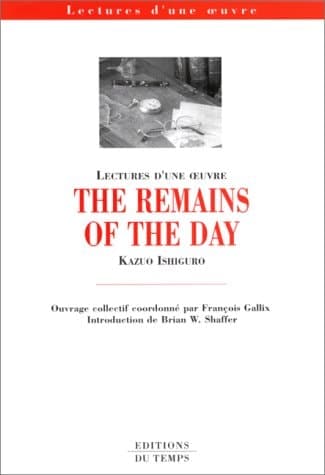
The remains of the day de Kazuo Ishiguro
by Gallix/François
Ishiguro's spare, elegant prose examines how one man's quiet complicity during a dark historical period shapes his entire life—it's a completely different approach to historical reckoning than Buck's grand family narrative, but equally devastating. If you want to sit with the psychological weight of living through occupation and compromise, rather than the sweeping resistance story, this introspective counterpoint will haunt you in the best way.
View book
Books... the Quietest and Most Constant of Friends Book Lovers Quotations
by Helen Exley
Wingate constructs a dual timeline that moves between Reconstruction-era Louisiana and present day, following formerly enslaved people searching for family members separated by war and policy. Like Buck, she's interested in how ordinary people maintain dignity and connection through systemic violence, and how historical wounds echo through generations—but she adds the contemporary layer of how we reckon with that history now, giving you both the intimate family story and the broader reckoning.
View bookAbout Pearl S. Buck
P
Pearl S. Buck
1892–1973
Pearl S. Buck had always lived in China except for the time she spent in the United States when she was being educated. She studied at Randolph-Macon College and at Cornell University. She taught at the University of Nanking and at the Government University in Nanking under two national regimes. She lived in Nanking during the 1930's. *The Good Earth* was Mrs. Buck's second published novel. *East Wind: West Wind* appeared under the John Day imprint in 1930. She contributed articles and stories to various magazines, among them *The Atlantic Monthly, The Nation*, and *Asia*.
View author page