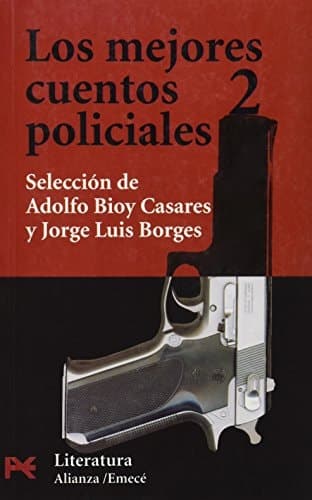
Los mejores cuentos policiales
Adolfo Bioy CasaresPublished2002
Pages261
Formatpaperback
PublisherAlianza
Synopsis
Como fervientes aficionados al género policial y de intriga, que cultivaron tanto conjuntamente «Seis problemas para don Isidro Parodi» (BA 0023) o «Un modelo para la muerte» (BA 0032) como por separado, y como grandes escritores, pocas personas podían resultar más idóneas que JORGE LUIS BORGES y ADOLFO BIOY CASARES para compilar una antología de LOS MEJORES CUENTOS POLICIALES. Repartida en dos volúmenes (L 5564 y L 5618), los autores que incluye este segundo son Nathaniel Hawthorne, Edgar Allan Poe, Robert Louis Stevenson, Arthur Conan Doyle, Jack London, Gilbert K. Chesterton, Eden Phillpotts, Ryunosuke Akutagawa, Anthony Berkeley, Millward Kennedy, Ellery Queen, Jorge Luis Borges, Manuel Peyrou, Silvina Ocampo y Adolfo Luis Pérez Zelaschi.
Recommendations
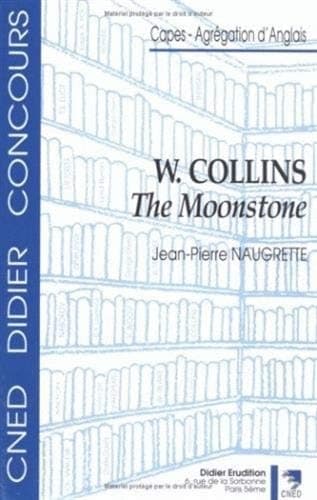
The Moonstone, by Wilkie Collins
by Jean-Pierre Naugrette
Collins essentially invented the detective novel before Conan Doyle, and this Victorian mystery has the same intricate puzzle-box construction you'd find in the Borges/Bioy Casares anthology—multiple narrators, false leads, and a solution that rewards careful attention. What makes it special is how Collins treats the mystery as a social problem as much as an intellectual game, something that anthology clearly valued in its selections.
View book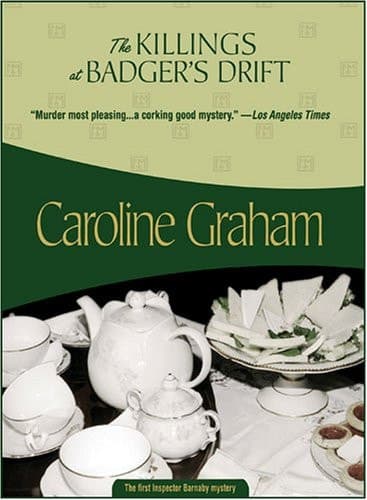
The Killings at Badger's Drift
by Caroline Graham
Graham has that same restraint and misdirection you'd recognize from the shorter stories in your anthology—she trusts readers to notice what matters while she's describing the English village landscape. The mystery unfolds through observation rather than exposition, and there's a psychological acuity to how she reveals character that echoes Silvina Ocampo's work in particular.
View book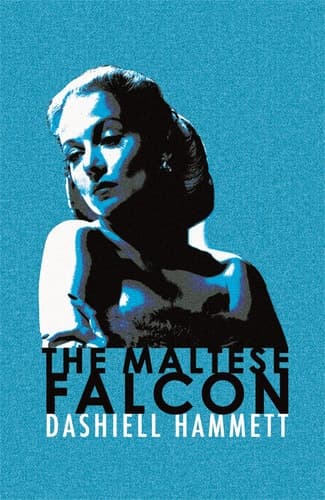
The Maltese Falcon
by Dashiell Hammett
Here's where I'm nudging you slightly sideways: Hammett writes detective fiction with the hard-boiled economy of a short story writer, which means every sentence does multiple jobs at once. Coming from an anthology curated by two masters of the form, you'll appreciate how Hammett's dialogue and pacing create suspense without elaborate plotting—it's closer to the Poe and Stevenson selections than to the cozy tradition.
View book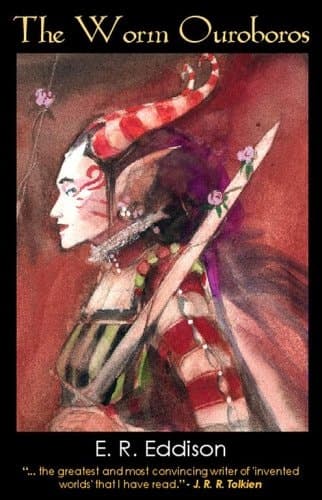
The Worm Ouroboros
by E. R. Eddison
This is my surprise recommendation, and here's why it works: Eddison builds an entire world with the same architectural precision that Borges brought to his labyrinths and Casares to his paradoxes. It's fantasy, yes, but it reads like an elaborate puzzle-box narrative where the world's rules matter as much as the plot—there's an intellectual pleasure in untangling how everything connects that mirrors what drew you to detective fiction in the first place.
View book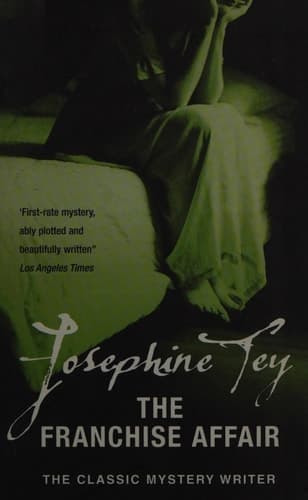
The Franchise Affair
by Josephine Tey
Tey approaches mystery from a legal and logical angle that would have appealed to Borges—she's interested in how we construct truth from evidence, and what happens when the obvious narrative turns out to be incomplete. Her protagonist is a solicitor, not a detective, which gives the investigation a different texture, and she shares that quality with the anthology's best stories of building suspense through careful reasoning rather than action.
View bookAbout Adolfo Bioy Casares
A
Adolfo Bioy Casares
1914–1999
Adolfo Bioy Casares (Buenos Aires, 15 de septiembre de 1914-Buenos Aires, 8 de marzo de 1999) fue un escritor argentino, considerado uno de los autores más importantes de su país y de la literatura en español, siendo traducido a más de dieciséis idiomas y galardonado con el Premio Cervantes en 1990. Colaboró en varias ocasiones con Jorge Luis Borges bajo distintos pseudónimos, y, en menor medida, con su propia esposa, la escritora Silvina Ocampo. En su obra frecuentó géneros como la literatura fantástica, el policial y la ciencia ficción, destacando las novelas *La invención de Morel* (1940), *El sueño de los héroes* (1954) y *Dormir al sol* (1973). ---------- Adolfo Bioy Casares (Buenos Aires, September 15, 1914 – Buenos Aires, March 8, 1999) was an Argentine writer, considered one of the most important authors in his country and in Spanish-language literature. His work has been translated into more than sixteen languages, and he was awarded the Cervantes Prize in 1990. He collaborated on several occasions with Jorge Luis Borges under various pseudonyms, and, to a lesser extent, with his wife, the writer Silvina Ocampo. His work encompassed genres such as fantasy, detective fiction, and science fiction, with notable novels including *La invención de Morel* (1940), *El sueño de los héroes* (1954), and *Dormir al sol* (1973).
View author page