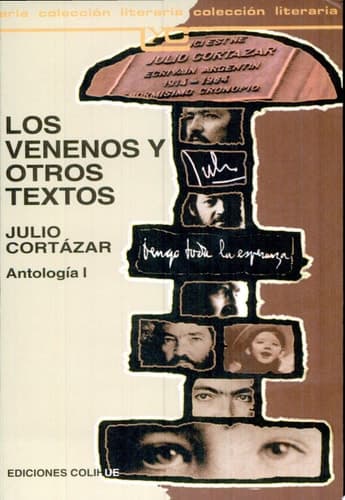
Los venenos y otros textos antología I
Julio CortázarPublished1995
Pages203
Formatpaperback
PublisherEdiciones Colihue SRL
Synopsis
Los cuentos agrupados en esta tomo están entre los más conocidos de Cortázar y con temáticas más claras. Se los complemnta con fotografías que ilustran la presencia de Cortázar encalles, puentes, calles, centros culturales de Buenos Aires,apartir de 1994 y una serie de juegos de ingenio. Seleccición, introducción, notas y propuestas de trabajo : Hebe Monges.
Recommendations

Formen des Offenen: Thomas Manns "Zauberberg", die «Oxen of the Sun» - Episode in James Joyces "Ulysses" und Julio Cortázars "Rayuela" (Europäische ... Universitaires Européennes) (German Edition)
by Paul Forssbohm
Wait—I know what you're thinking. But hear me out: if you've only read the anthology, Rayuela is where Cortázar's formal experimentation reaches its apex. The non-linear structure and metafictional games you glimpsed in those short stories become the entire architecture here. It's like seeing the blueprint after admiring the finished building.
View book
The Apocalyptic Vision of Mikhail Bulgakov's the Master and Margarita (Studies in Slavic Language & Literature)
by Edward E. Ericson
Bulgakov shares Cortázar's gift for weaving the surreal into the mundane—a devil arrives in Soviet Moscow the way Cortázar's creatures arrive in Buenos Aires apartments. Both writers use magical realism not as escapism but as a precise tool for examining reality itself, and both maintain an almost playful tone while discussing deeply serious things.
View book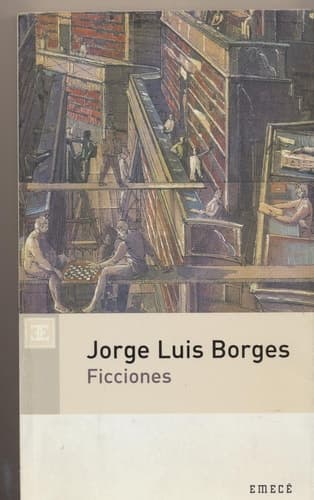
Ficciones
by Jorge Luis Borges
I'm recommending this as a deliberate sideways move rather than a straight line. While Cortázar embraces sensory experience and emotional texture, Borges builds labyrinths of pure idea—but both are Argentine masters of the short form who treat stories as intellectual puzzles. Reading them together shows you two completely different ways to make readers think.
View book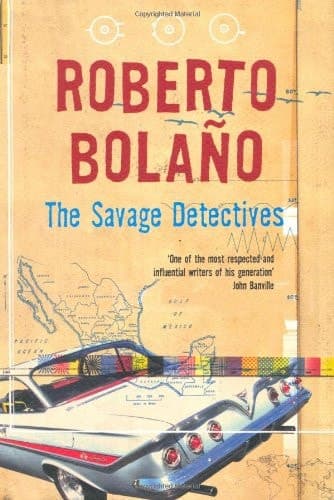
The Savage Detectives A Novel
by Roberto Bolaño
Here's your surprise recommendation: Bolaño takes the fragmented, digressive storytelling impulse you loved in Cortázar and stretches it across 900 pages of literary obsession and bohemian wandering. It's messier and more sprawling than Cortázar's controlled precision, but that same sense that the real story lives in the gaps between what's being told.
View book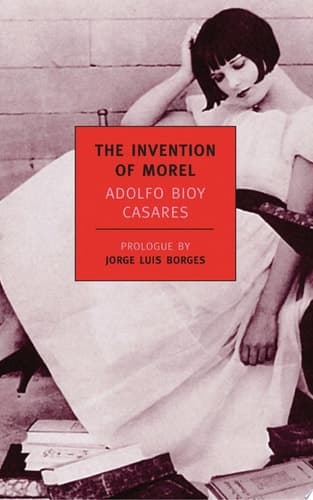
The Invention of Morel
by Adolfo Bioy Casares
Published in 1940, this novella predates most of Cortázar's work and shows you where some of his DNA comes from. Bioy Casares creates an impossible island where reality itself becomes unstable—it has that same quality of treating the fantastic as a logical problem to be solved, with the precision of a mathematician and the wonder of a dreamer.
View bookAbout Julio Cortázar
J
Julio Cortázar
1914–1984
Julio Florencio Cortázar (Ixelles, 26 de agosto de 1914-París, 12 de febrero de 1984) fue un escritor, poeta y profesor argentino. También trabajó como traductor, oficio que desempeñó para la Unesco y varias editoriales. En 1981, sin renunciar a su nacionalidad argentina, optó por la francesa en protesta contra la dictadura militar en su país, que prohibió sus libros y que él denunció a la prensa internacional desde su residencia en París. Se lo considera uno de los autores más innovadores y originales de su tiempo, maestro del relato corto, la prosa poética y la narración breve en general, y creador de importantes novelas, en la cual destaca *Rayuela,* que inauguraron una nueva forma de hacer literatura en el mundo hispano. Junto a Gabriel García Márquez, Mario Vargas Llosa y Carlos Fuentes, fue uno de los exponentes centrales del *boom* latinoamericano. Fuente: [Wikipedia](https://es.wikipedia.org/wiki/Julio_Cort%C3%A1zar) ---------- Julio Cortázar, born Jules Florencio Cortázar, was an Argentine author of novels and short stories. He influenced an entire generation of Latin American writers from Mexico to Argentina, and most of his best-known work was written in France, where he established himself in 1951. Source and more information: http://en.wikipedia.org/wiki/Julio_Cort%C3%A1zar
View author page