Synopsis
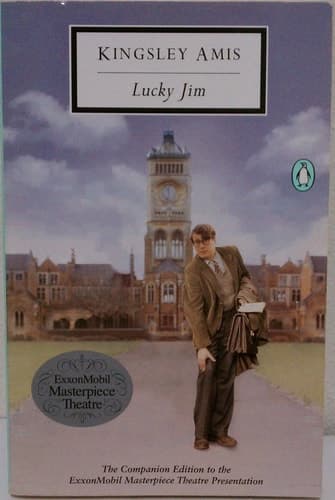
A hilarious satire of British university life. It is a young man's book, in fact a book of two young men. They are not exactly angry young men, but they are extremely irritable. College friends with similar backgrounds, they graduated from both Oxford University and World War II to find themselves in an England in terminal decline. It has lost overseas possessions that had once been its pride, and the people in charge are snobs and incompetents. Worst of all, no one seems to appreciate the young men's genius: neither the women they meet not the publishers to whom they send their works. "Lucky Jim" Dixon has accidentally fallen into a job at one of the new red brick universities. A moderately successful future in the History Department beckons as long as Jim can keep in with eccentric Professor Welch, survive a madrigal-singing weekend, deliver a lecture on 'Merrie England' and resist Christine, the hopelessly desirable girlfriend of Welch's awful son, Bertrand. Here the reader is lead through a gallery of English bores, cranks, frauds, and neurotics with whom Jim must contend in order to hold on to his cushy academic perch and win the girl of his fancy.
Recommendations
Generating recommendations…
Our AI is preparing recommendations for Lucky Jim. This usually takes under a minute.
About Kingsley Amis
K
Kingsley Amis
1922–1995
KingsleyAmis, the author of *Lucky Jim*, was born in the south of London in 1922. His first interest in literature was in the field of poetry. At the age of eleven he was writing verse, at the university he was one of the editors of *Oxford Poetry 1949*, and his own poetry has been published in two books: *A Frame of Mind* and *A Case of Samples*. His name is often to be seen in British newspapers and magazines as the writer of articles and reviews. Lucky Jim, published in 1954, was Amis's first novel. It was something so different, so fresh and so brilliantly clever that the critics welcomed it with excitement. Kingsley Amis is a university lecturer in English. In Lucky Jim he takes us into a world he knows well; it is set in a university college ' somewhere in England', but you need not have seen a British university to enjoy this book.
View author page