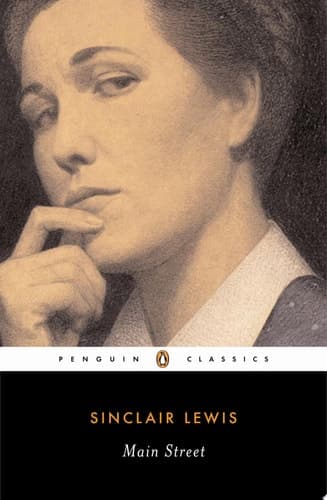
Main Street The Story of Carol Kennicott
Sinclair LewisPublished1995
Pages464
Formatpaperback
PublisherPenguin
Synopsis
Nobel Prize winner Sinclair Lewis's barbed portrait of Gopher Prairie, Minnesota, shattered the myth of the American Middle West as God's Country and became a symbol of the cultural narrow-mindedness and smug complacency of small towns everywhere.
A Penguin Classic
At the center of Main Street is Carol Kennicott, the wife of a town doctor, who dreams of initiating social reforms and introducing art and literature to the community. The range of reactions when it was published in 1920 was extraordinary, reflecting the ambivalence in the novel itself and Lewis's own mixed feelings about his hometwon of Sauk Centre, Minnesota, the prototype for Gopher Prairie.
For more than seventy years, Penguin has been the leading publisher of classic literature in the English-speaking world. With more than 1,700 titles, Penguin Classics represents a global bookshelf of the best works throughout history and across genres and disciplines. Readers trust the series to provide authoritative texts enhanced by introductions and notes by distinguished scholars and contemporary authors, as well as up-to-date translations by award-winning translators.
Recommendations
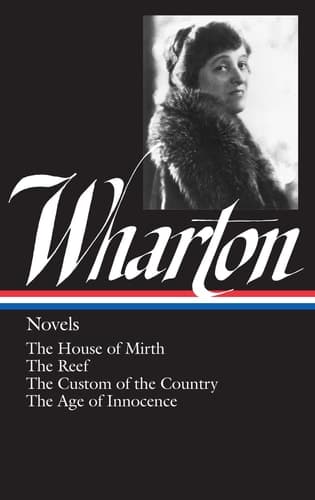
Edith Wharton: Novels (LOA #30) The House of Mirth / The Reef / The Custom of the Country / The Age of Innocence
by Edith Wharton
Wharton shares Lewis's surgical precision in dissecting American social pretension, but where Carol Kennicott struggles against small-town conformity, Wharton's Undine Spragg weaponizes it. Both novels use a protagonist's clash with their community to expose how deeply provincial attitudes run—whether in Minnesota or Manhattan—and both authors write with a kind of affectionate contempt for the characters they're anatomizing.
View book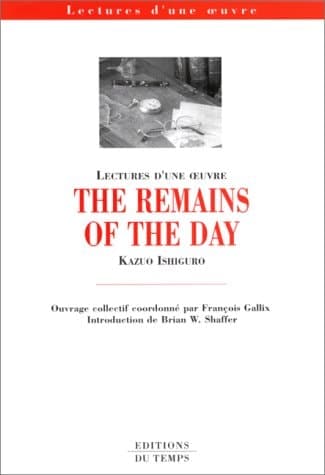
The remains of the day de Kazuo Ishiguro
by Gallix/François
This 1989 novel does something Lewis does brilliantly: it shows how a character's blindness to their own compromises becomes the tragedy itself. Stevens, the butler, has internalized the values of his world so completely that he can't see what he's lost—much like how Gopher Prairie's residents can't perceive their own limitations. Ishiguro's restrained prose creates that same tension between what's said and what's devastatingly unsaid.
View book
The Moviegoer
by Walker Percy
Here's your surprise pick: Percy's 1961 novel is philosophically restless in ways that might seem distant from Lewis's social realism, but both are asking the same question—how do you live authentically in a culture that's designed to make you numb? Binx Bolling wanders through New Orleans the way Carol wanders through Gopher Prairie, searching for something real beneath the surfaces everyone accepts without question. It's more introspective than Main Street, but equally skeptical of easy answers.
View book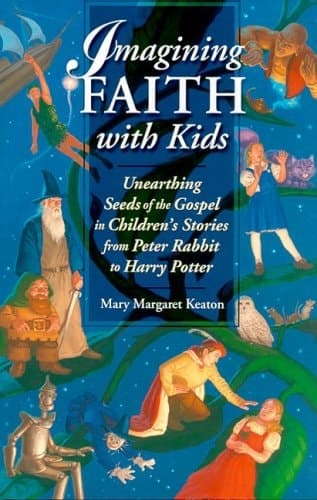
Imagining Faith with Kids Unearthing Seeds of the Gospel in Children's Stories from Peter Rabbit to Harry Potter
by Mary Margaret Keaton
I know—same author, but this is essential. Where Main Street shows small-town conformity through Carol's eyes, Babbitt shows it through a man who's completely absorbed it and briefly, agonizingly, questions it. Lewis deepens his critique here, and you'll see how he's thinking about American mediocrity from multiple angles. The two novels together form a devastating portrait.
View bookAbout Sinclair Lewis
S
Sinclair Lewis
1885–1951
American novelist, short-story writer, and playwright
View author page