
Making the Impossible Possible Leading Extraordinary Performance -- The Rocky Flats Story
Kim S. CameronPublished2006
Pages286
Formatpaperback
PublisherBerrett-Koehler Publishers
Synopsis
The most contaminated nuclear weapons plant in the country, Rocky Flats was an environmental disaster and the site of rampant worker unrest. Although estimates projected that cleaning up and closing the facility would take 70 years and $36 billion, the project was completed 60 years ahead of schedule and $30 billion under budget, and most of the site is now on its way to becoming a wildlife refuge. Kim Cameron and Marc Lavine explain how this amazing feat was accomplished and how other organizations can apply the same methods to achieve breakthrough levels of performance. The authors discovered that the Rocky Flats leaders used a distinctive “abundance approach,” identifying and building on sources of strength, resilience, and vitality rather than simply solving problems and overcoming difficulties. Drawing on numerous firsthand accounts and public records, they identify 21 specific leadership practices and key techniques that were fundamental to this innovative approach. This fascinating and thoroughly researched case study provides a complete guide for anyone wanting to better understand and apply the lessons of this remarkable, history-making achievement.
Recommendations

A Left Hand Turn Around the World Chasing the Mystery and Meaning of All Things Southpaw
by David Wolman
Like Cameron's Rocky Flats study, Marquet documents a real organizational transformation—but this time it's a nuclear submarine crew that went from worst-in-fleet to best-in-fleet by fundamentally shifting how leaders distribute authority and build on people's strengths. You'll recognize that same 'abundance approach' applied to an entirely different high-stakes environment, with the added benefit of Marquet's firsthand narrative voice as the leader who lived through it.
View book
Thinking Past Terror Islamism and Critical Theory on the Left
by Susan Buck-Morss
This one's a bit of a departure, but Kahneman's exploration of how humans actually make decisions—and where our thinking goes wrong—provides the psychological foundation for *why* Cameron's abundance approach works better than traditional problem-solving. It's the 'why' book to Rocky Flats' 'how' book, and it'll make you see organizational change through a completely different lens.
View book
Beyond the Goal: Eliyahu Goldratt Speaks on the Theory of Constraints (Your Coach In A Box)
by Eliyahu M. Goldratt
Goldratt teaches constraint theory through a novel about a factory manager solving production crises, and it shares Rocky Flats' DNA: both identify that breakthrough performance comes from understanding the *system* rather than just fixing individual problems. Where Cameron focuses on building strength, Goldratt focuses on finding bottlenecks, but they're asking the same fundamental question about how organizations actually work.
View book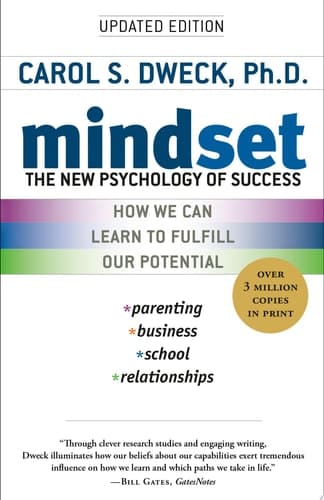
Mindset The New Psychology of Success
by Carol S. Dweck
Dweck's research on fixed versus growth mindsets is the individual-level mirror of what Cameron observed at the organizational level—Rocky Flats succeeded partly because leaders helped people see themselves as capable of growth rather than trapped by circumstances. This is the book that explains the *mindset shift* that had to happen for those 21 leadership practices to actually take root.
View book
Never Accept Candy From Strangers Unless They Let You Ride In Their Car
by Lawrence Russell
Here's your surprise pick: Hochschild's sociological narrative about communities affected by industrial decline and environmental damage gives you the *human context* for why Rocky Flats mattered beyond the spreadsheet. She explores how people find meaning and resilience in difficult circumstances—which is exactly what Cameron's leaders helped their workforce do—but through intimate portraits rather than management frameworks.
View bookAbout Kim S. Cameron
Biography coming soon.
View author page