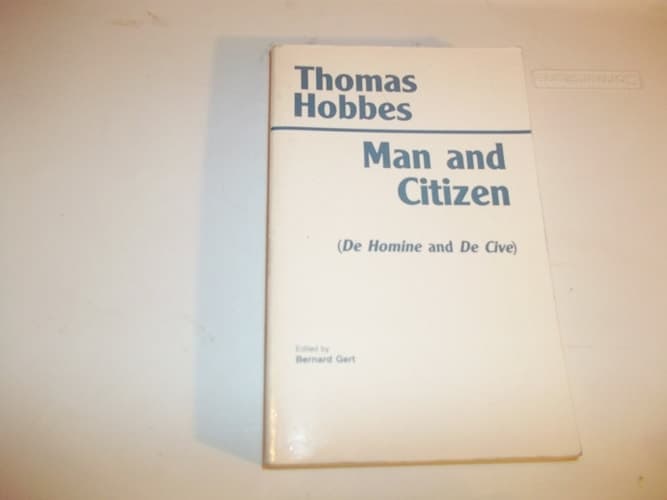
Man and Citizen De Homine and De Cive
Thomas HobbesPublished1991
Pages388
Formatpaperback
PublisherHackett Publishing
Synopsis
A reprint of the 1972 Doubleday edition. Contains the most helpful version of Hobbes's political and moral philosophy available in English. Includes the only English translation of De Homine, chapters X-XV. Features the English translation of De Cive attributed to Hobbes.
Recommendations

Paul Auster Coffret en 3 volumes : Moon Palace ; Léviathan ; Tombouctou
by Paul Auster
Auster constructs a philosophical mystery where characters grapple with questions of individual agency versus social obligation—the same tension that animates Hobbes's work. Where Hobbes builds his argument systematically, Auster spirals inward through nested narratives, but both writers are fundamentally asking: what binds us to one another, and at what cost?
View book
Simone de Beauvoir's the Second Sex
by George Myerson
De Beauvoir takes Hobbes's framework about human nature and obligation, then asks the question he couldn't: what happens when half of humanity is systematically excluded from the social contract? Her philosophical rigor and willingness to deconstruct foundational assumptions about human behavior will feel familiar to you, even as she's fundamentally challenging his premises.
View book
The Apocalyptic Vision of Mikhail Bulgakov's the Master and Margarita (Studies in Slavic Language & Literature)
by Edward E. Ericson
Here's your surprise pick: this 1960s Russian novel is actually a profound meditation on power, morality, and the social order—but Bulgakov explores these through satire and magical realism rather than logical argument. The devil's visit to Soviet Moscow becomes a darkly comic test of Hobbes's assumptions about human nature and self-interest, showing what happens when those principles collide with actual human beings.
View book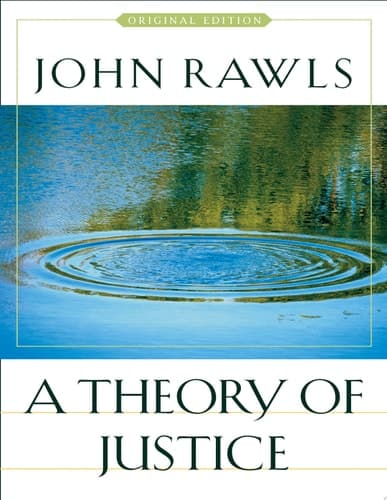
A Theory of Justice
by John Rawls
Rawls is essentially having a centuries-long conversation with Hobbes about what a just social contract actually looks like. He respects Hobbes's starting point—that we need a framework for cooperation among self-interested parties—but proposes a fundamentally different answer. If you found Hobbes's logic compelling but wondered about its limitations, Rawls will feel like the natural next step.
View book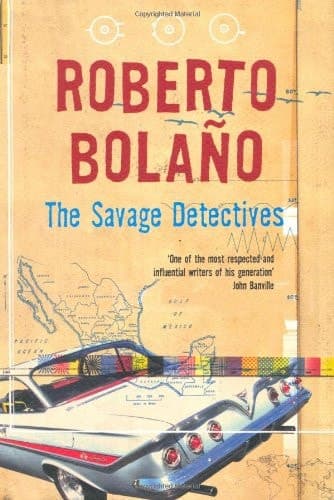
The Savage Detectives A Novel
by Roberto Bolaño
Another surprise recommendation: Bolaño's sprawling novel is obsessed with how groups form, dissolve, and justify themselves—which is essentially Hobbes's question, but filtered through the lives of poets, drifters, and marginal figures. The book's structure itself enacts a kind of social contract between reader and author, asking you to trust the chaos and find meaning in fragments.
View bookAbout Thomas Hobbes
Biography coming soon.
View author page