Synopsis
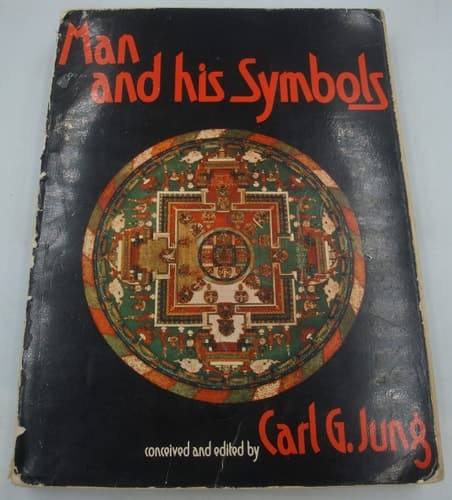
Illustrated throughout with revealing images, this is the first and only work in which the world-famous Swiss psychologist explains to the layperson his enormously influential theory of symbolism as revealed in dreams.
Recommendations
The Structure and Dynamics of the Psyche
by Renos Papadopoulos
Wait—I know Jung wrote your last book, but this collection of his essays goes deeper into the mechanics of how symbols actually *function* in the unconscious mind rather than just cataloging them. It's denser than Man and His Symbols, but if you found yourself wanting to understand *why* certain images recur across cultures, this is where Jung himself does that analytical heavy lifting.
View book
The Complete Psychological Works of Sigmund Freud Vol.5 The Interpretation of Dreams (second Part) & On Dreams
by Sigmund Freud
Freud's foundational text reads almost like a debate partner to Jung—they diverge sharply on what dreams *mean*, but Freud's obsessive case-study approach and his conviction that dreams are decipherable puzzles will give you a completely different lens for understanding the symbolic language your sleeping mind speaks. It's the intellectual argument Jung was responding to.
View book
The Hero With a Thousand Faces
by Joseph Campbell
Campbell takes Jung's ideas about archetypes and symbols and traces them through world mythology, showing how the same symbolic patterns show up in hero stories from every culture imaginable. Where Jung asks 'what does this symbol mean in your psyche?', Campbell asks 'why does humanity keep telling the same story over and over?'—and the answer involves the very archetypal structures Jung mapped.
View book
The Savage Mind
by Claude Lévi-Strauss
Here's your surprise recommendation: Lévi-Strauss was an anthropologist, not a psychologist, but he was obsessed with the same question Jung was—how do human minds organize meaning through symbols and binary oppositions? He approaches it from the outside (studying actual cultures) rather than the inside (studying dreams), which creates a fascinating counterpoint. You'll see how symbols function as a *system* rather than just individual carriers of meaning.
View book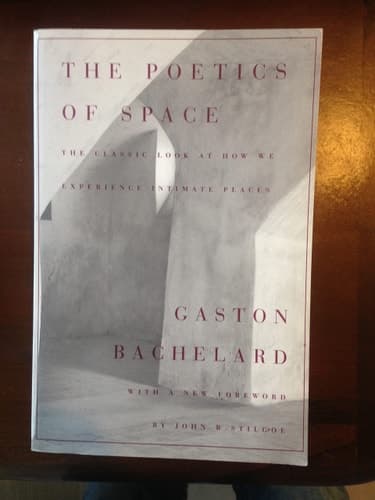
The Poetics of Space
by Gaston Bachelard
Bachelard was a philosopher fascinated by how physical spaces—houses, rooms, corners—become symbolic containers for memory and emotion. He writes with Jung's reverence for symbol but focuses on the spaces we inhabit rather than the dreams we have, creating a kind of phenomenological companion to Jung's dream work. It's beautifully written and surprisingly intimate for a work of philosophy.
View bookAbout Carl Gustav Jung
C
Carl Gustav Jung
1875–1961
A Swiss psychologist and psychiatrist (<a href=http://en.wikipedia.org/wiki/Carl_Jung>biography</a>, <a href=http://en.wikipedia.org/wiki/Carl_Jung_publications>bibliography</a>).
View author page