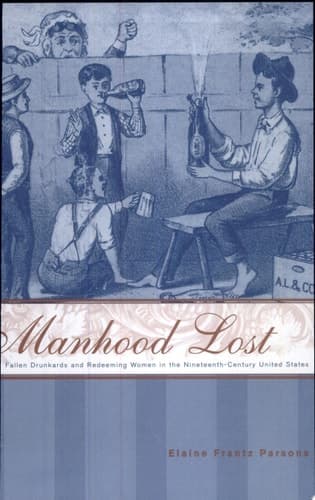
Manhood Lost Fallen Drunkards and Redeeming Women in the Nineteenth-Century United States
Elaine Frantz ParsonsPublished2003
Pages241
Formathardcover
PublisherJHU Press
Synopsis
In fiction, drama, poems, and pamphlets, nineteenth-century reformers told the familiar tale of the decent young man who fell victim to demon rum: Robbed of his manhood by his first drink, he slid inevitably into an abyss of despair and depravity. In its discounting of the importance of free will, argues Elaine Frantz Parsons, this story led to increased emphasis on environmental influences as root causes of drunkenness, poverty, and moral corruption—thus inadvertently opening the door to state intervention in the form of Prohibition.
Parsons also identifies the emergence of a complementary narrative of "female invasion"—womanhood as a moral force powerful enough to sway choice. As did many social reformers, women temperance advocates capitalized on notions of feminine virtue and domestic responsibilities to create a public role for themselves. Entering a distinctively male space—the saloon—to rescue fathers, brothers, and sons, women at the same time began to enter another male bastion—politics—again justifying their transgression in terms of rescuing the nation's manhood.
Recommendations
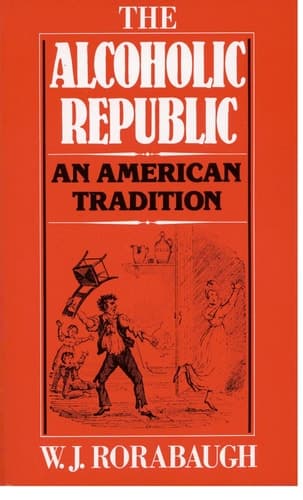
The Alcoholic Republic An American Tradition
by W. J. Rorabaugh
Rorabaugh takes the same historical period Parsons examines but approaches it from the opposite angle—focusing on the actual drinking culture and economic forces that shaped American alcohol consumption rather than the reform narratives about it. Where Parsons deconstructs the mythology reformers created, Rorabaugh reconstructs what people were actually doing, giving you the fuller picture of how these competing stories emerged from real social conditions.
View book
Evil Harvest The True Story of Cult Murder in the American Heartland
by Rod Colvin
Welter's foundational essay collection examines the exact ideology of feminine virtue that Parsons shows women reformers strategically deployed—but Welter traces how this ideology actually constrained women while appearing to elevate them. Reading these together creates a productive tension: you'll see how the same concept of 'true womanhood' both limited women's agency and paradoxically became their tool for entering public life.
View book
Always Looking Up The Adventures of an Incurable Optimist
by Michael J. Fox
This is a slightly different surprise—Rothman examines how nineteenth-century reformers created the penitentiary system through the same logic Parsons identifies in temperance reform: the belief that environment shapes behavior, and therefore state intervention can cure social problems. You'll see the same intellectual architecture applied to crime and punishment, which deepens your understanding of how Parsons's argument about Prohibition connects to broader patterns in American reform thinking.
View book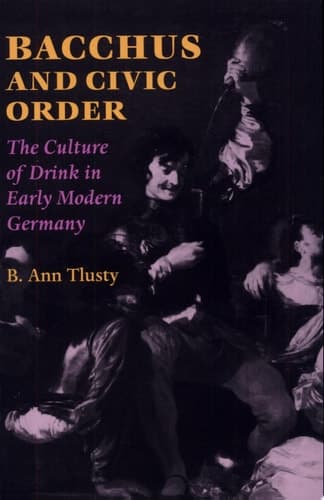
Bacchus and Civic Order The Culture of Drink in Early Modern Germany
by B. Ann Tlusty
Clark pushes your timeline backward and across the Atlantic to show how drinking cultures and their regulation developed centuries before American Prohibition—revealing that the anxieties Parsons describes weren't unique to nineteenth-century America but part of a longer European tradition reformers inherited. This historical depth lets you see which elements of the temperance narrative were genuinely new to America and which were recycled from older moral panics.
View book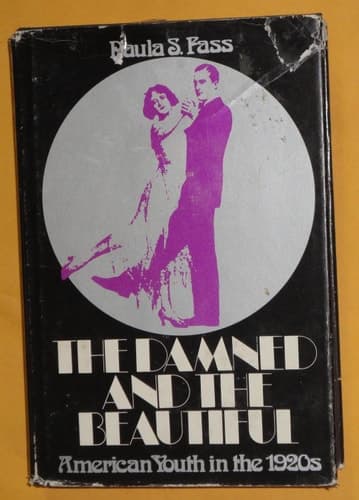
The Damned and the Beautiful: American Youth in the 1920s
by Paula S. Fass
Here's your genre surprise—this is cultural and social history, but it reads almost like a novel about generational conflict, following young people who came of age right as Prohibition took effect. Fass shows what actually happened to the 'manhood' and 'womanhood' that reformers were so anxious about once their grand experiment began, revealing the gap between reform rhetoric and lived experience that Parsons's analysis predicts.
View bookAbout Elaine Frantz Parsons
Biography coming soon.
View author page