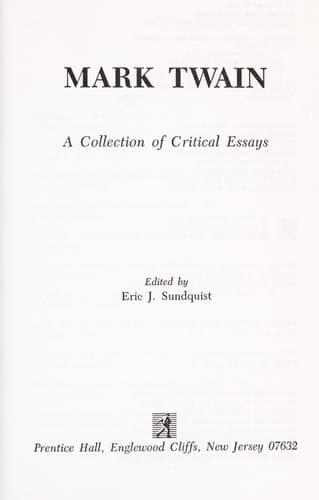
Mark Twain A Collection of Critical Essays
Eric J. SundquistPublished1994
Pages204
Formatpaperback
PublisherPrentice Hall
Synopsis
A generation ago Prentice Hall's Twentieth Century Views series set the standard for truly useful collections of literary criticism on widely studied authors. These collections of essays, selected and introduced by distinguished scholars, made the most informative and provocative critical work on each writer easily available to students, scholars, and the general public. Now the New Century Views series, co-edited by Richard Brodhead and Maynard Mack, offers volumes of the same excellence for the contemporary moment. Each volume captures and makes accessible the most stimulating critical writing of our time on crucial literary figures of the past and present. Also included in each is an introduction to the author's life and work, a chronology of important dates, and a selected bibliography.
Recommendations
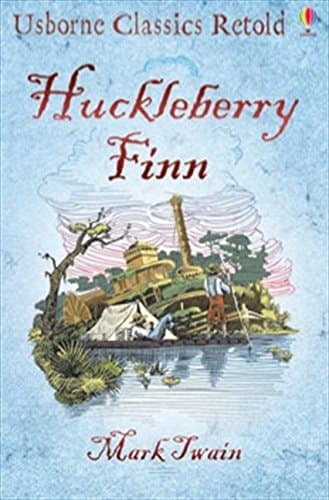
Huckleberry Finn
by Mark Twain
Since you've been deep in Twain criticism, you're ready to experience the primary text through fresh eyes—but Sagal's annotated edition pairs Twain's original 1884 text with contemporary context that mirrors what those critical essays were doing. It's like having Sundquist's contributors whispering in the margins as you read, pointing out the linguistic tricks and social commentary Twain embedded in Huck's voice.
View book
The Confidence-Man His Masquerade
by Herman Melville
Melville's 1857 novel shares Twain's fascination with con artists and unreliable narration, but where Twain tends toward satire and sentiment, Melville goes full philosophical puzzle-box. If you appreciated the critical essays' discussion of Twain's moral ambiguity, you'll find Melville wrestling with similar questions about deception and American identity—just with considerably more baroque language and a steamboat setting that rivals Twain's rivers.
View book
Ralph Ellison - Invisible Man
by Anke Balduf
Published in 1952, this novel extends the conversation Twain started about race, identity, and American mythology—but Ellison writes from a perspective Twain couldn't access, and the result is both a direct response to and a radical reimagining of the American literary tradition. The critical essays you've been reading likely touched on Twain's racial politics; Ellison's protagonist navigates a world where invisibility is imposed rather than chosen, creating a darker mirror to Huck's freedom.
View book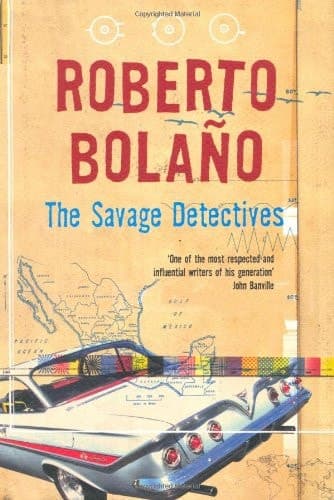
The Savage Detectives A Novel
by Roberto Bolaño
This might seem like a left turn, but stay with me: Bolaño's 1998 novel is essentially a work of literary criticism disguised as a novel, following obsessive readers and failed poets through Mexico and Europe. It has Twain's digressive energy and his fascination with how people tell stories about themselves, but filtered through postmodern skepticism—the book constantly questions whether literary criticism and literary creation are even different activities.
View book
Find what the Sailor Has Hidden Vladimir Nabokov's Pale Fire
by Priscilla Meyer
Nabokov's 1962 masterpiece is a poem with a critical apparatus—literally a work of literature wrapped in scholarly commentary—which makes it the perfect next step after reading a collection of critical essays. The unreliable editor-narrator rivals any Twain creation for complexity, and the book's structure forces you to become a critic yourself, deciding what's true and what's invention, much like the essays you've been reading asked you to reconsider what Twain was actually doing beneath the humor.
View bookAbout Eric J. Sundquist
Biography coming soon.
View author page