Synopsis
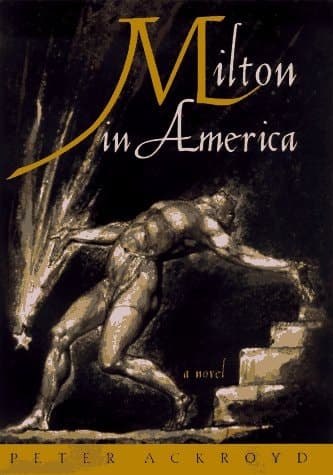
When Peter Ackroyd, one of Britain's undisputed literary masters, writes a new novel, it is a literary event. With his last novel, The Trial of Elizabeth Cree, "as gripping and ingenious a murder mystery as you could hope to come across," in the words of the San Francisco Chronicle, he reached a whole new level of critical and popular success. Now, with his trademark blending of historical fact and fictive fancy, Ackroyd has placed the towering poet of Paradise Lost in the new Eden that is colonial America.
John Milton, aging, blind, fleeing the restoration of English monarchy and all the vain trappings that go with it ("misrule" in his estimation), comes to New England, where he is adopted by a community of fellow puritans as their leader. With his enormous powers of intellect, his command of language, and the awe the townspeople hold him in, Milton takes on absolute power. Insisting on strict and merciless application of puritan justice, he soon becomes, in his attempt at regaining paradise, as much a tyrant as the despots from whom he and his comrades have sought refuge, more brutal than the "savage" native Americans.
As always, Ackroyd has crafted a thoroughly enjoyable novel that entertains while raising provocative questions--this time about America's founding myths. With a resurgence of interest in the puritans (in the movie adaptations of The Scarlet Letter and the forthcoming The Crucible), Milton in America is particularly relevant. It is also entirely absorbing--in short, vintage Ackroyd.
Recommendations
Generating recommendations…
Our AI is preparing recommendations for Milton in American. This usually takes under a minute.
About Peter Ackroyd
P
Peter Ackroyd
Born 1949
Peter Ackroyd is an English biographer, novelist and critic with a particular interest in the history and culture of London. For his novels about English history and culture and his biographies of, among others, William Blake, Charles Dickens, T. S. Eliot and Sir Thomas More, he won the Somerset Maugham Award and two Whitbread Awards. He is noted for the volume of work he has produced, the range of styles therein, his skill at assuming different voices and the depth of his research. He was elected a fellow of the Royal Society of Literature in 1984 and appointed a Commander of the Order of the British Empire in 2003. - Wikipedia
View author page