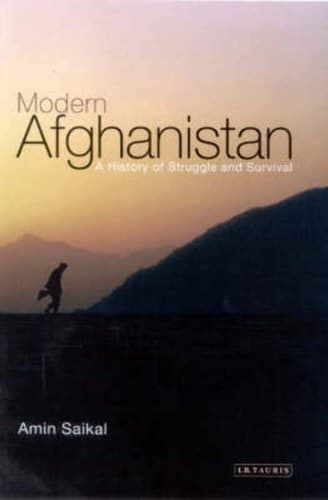
Modern Afghanistan A History of Struggle and Survival
Amin SaikalPublished2006
Pages342
Formatpaperback
PublisherBloomsbury Academic
Synopsis
The treacherous mountain passes and blasted desert plains of Afghanistan have been the graveyard of every would-be conquering army since the days of Alexander the Great. With America, Britain and NATO committed to a long-term political and military engagement there, it is imperative to understand the country's complex and bloody history. Afghanistan emerged in the mid-eighteenth century from the collapse of the Persian Safavid Empire and the decline of the Mughal dynasty in India. The nineteenth century saw the country ravaged by the rivalry of warring elites, and their great power supporters. In recent times, Afghanistan has experienced the Soviet invasion of 1979, the Pakistan-backed internal conflict of the 1990s, the Taliban regime and then the US invasion after the catastrophe of 9/11. Today, whilst the US-backed government is struggling to expand its control beyond Kabul, narco-warlords, jihadists and Western troops fight out the battle for control of this strategically vital country. Why has Afghanistan's course of development been so turbulent? Why does it remain so vulnerable to domestic instability, foreign intervention and ideological extremism?
In reconstructing the tempestuous narrative of modern Afghanistan, Amin Saikal provides a sweeping new understanding of its troubled past. He identifies the country's inability to develop stable political structures as stemming from the inter-dynastic rivalry (exacerbated by polygamy) that scarred successive royal families from the end of the eighteenth century until the pro-Communist coup of April 1978. Outside interventions further weakened the country internally, preventing socio-economic development and leaving the country ripe for the politics of ideological extremism. "Modern Afghanistan: A History of Struggle and Survival" is the definitive study of Afghanistan and its troubles. It will be vital reading for all those who are interested in the changing politics of the Middle East and Central Asia.
Recommendations
The Great Game The Struggle for Empire in Central Asia
by Peter Hopkirk
Hopkirk traces the same geopolitical chess match that shaped Afghanistan, but focuses on the British-Russian rivalry of the 19th century with the narrative drive of a thriller. Where Saikal gives you the political structures and dynastic failures, Hopkirk puts you inside the tents of spymasters and generals, making the abstract power struggles feel immediate and personal.
View book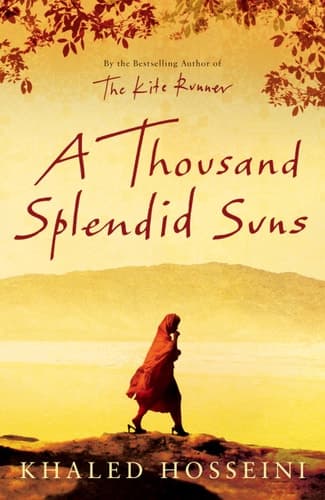
A Thousand Splendid Suns
by Khaled Hosseini
This is your surprise pick—a novel rather than history, but it does something Saikal's academic framework can't: it shows you how the political chaos you've just read about actually lands in people's daily lives, particularly women's. The Taliban era, the Soviet occupation, the warlord period—you'll recognize every historical moment, but now you're living through it with characters whose survival depends on navigating the exact instability Saikal analyzes.
View book
The Looming Tower Al-Qaeda and the Road to 9/11
by Lawrence Wright
Wright picks up where Saikal's narrative essentially ends—with the US invasion following 9/11—and traces backward to show how the ideological extremism Saikal identifies actually developed and metastasized. You'll see the Afghan mujahideen, the Pakistani intelligence apparatus, and the Saudi funding networks as interconnected pieces of a much larger puzzle that culminates in that catastrophic moment.
View book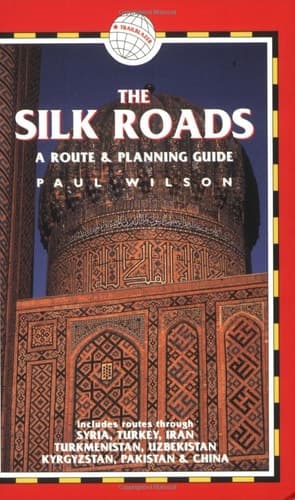
The Silk Roads A Route and Planning Guide
by Paul Wilson
If you want to understand *why* Afghanistan matters so much to so many empires, Frankopan reframes the entire history of Eurasia around trade routes and cultural exchange rather than Western-centric conquest narratives. Afghanistan becomes not a graveyard but a crossroads—and suddenly Saikal's emphasis on outside intervention makes even more sense when you see how central this territory has always been to global commerce and power.
View book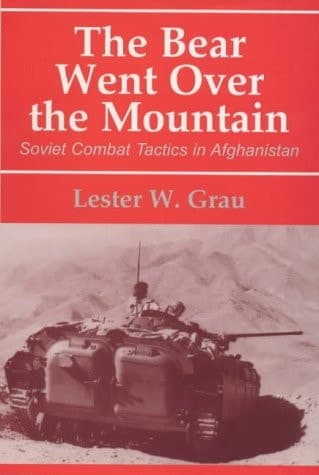
The Bear Went Over the Mountain Soviet Combat Tactics in Afghanistan
by Lester W. Grau
A deeper dive into the Soviet invasion that Saikal covers as a turning point—this one gets into the actual military strategy, the resistance tactics, and the logistical nightmares that made Afghanistan the USSR's Vietnam. It's more specialized than Saikal, but it gives you the granular detail of how that particular intervention unfolded, which helps explain why it destabilized the country so thoroughly.
View bookAbout Amin Saikal
A
Amin Saikal
Born 1951
Biography coming soon.
View author page