Synopsis
'Everybody knows now that Ulysses is the greatest novel of the century' Anthony Burgess, Observer
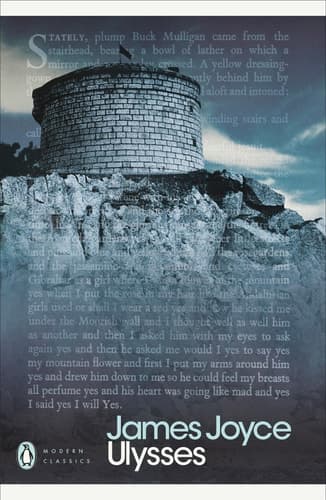
Following the events of one single day in Dublin, the 16th June 1904, and what happens to the characters Stephen Dedalus, Leopold Bloom and his wife Molly, Ulysses is a monument to the human condition. It has survived censorship, controversy and legal action, and even been deemed blasphemous, but remains an undisputed modernist classic: ceaselessly inventive, garrulous, funny, sorrowful, vulgar, lyrical and ultimately redemptive. It confirms Joyce's belief that literature 'is the eternal affirmation of the spirit of man'.
'The most important expression which the present age has found; it is a book to which we are all indebted, and from which none of us can escape' T. S. Eliot
'Intoxicating ... a towering work, in its word play surpassing even Shakespeare' Guardian
Recommendations
Generating recommendations…
Our AI is preparing recommendations for Modern Classics Ulysses. This usually takes under a minute.
About James Joyce
J
James Joyce
1882–1941
James Augustine Aloysius Joyce was an Irish novelist and poet. He contributed to the modernist avant-garde and is regarded as one of the most influential and important authors of the 20th century. Joyce is best known for Ulysses (1922), a landmark work in which the episodes of Homer's Odyssey are paralleled in an array of contrasting literary styles, perhaps most prominent among these the stream of consciousness technique he utilised. Other well-known works are the short-story collection Dubliners (1914), and the novels A Portrait of the Artist as a Young Man (1916) and Finnegans Wake (1939). His other writings include three books of poetry, a play, occasional journalism and his published letters. [(Wikipedia][1]) [1]: https://en.wikipedia.org/wiki/James_Joyce
View author page