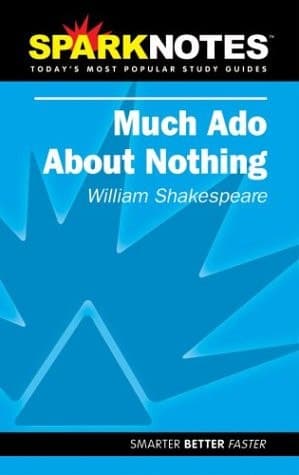
Much Ado about Nothing, William Shakespeare
William ShakespearePublished2002
Pages66
Formatpaperback
PublisherSpark
Synopsis
"Get your "A" in gear!
They're today's most popular study guides-with everything you need to succeed in school. Written by Harvard students for students, since its inception "SparkNotes(TM) has developed a loyal community of dedicated users and become a major education brand. Consumer demand has been so strong that the guides have expanded to over 150 titles. "SparkNotes'(TM) motto is "Smarter, Better, Faster because:
- They feature the most current ideas and themes, written by experts.
- They're easier to understand, because the same people who use them have also written them.
- The clear writing style and edited content enables students to read through the material quickly, saving valuable time.
And with everything covered--context; plot overview; character lists; themes, motifs, and symbols; summary and analysis, key facts; study questions and essay topics; and reviews and resources--you don't have to go anywhere else!
Recommendations
Generating recommendations…
Our AI is preparing recommendations for Much Ado about Nothing, William Shakespeare. This usually takes under a minute.
About William Shakespeare
W
William Shakespeare
1564–1616
William Shakespeare was an English poet and playwright, widely regarded as the greatest writer in the English language and the world's pre-eminent dramatist. He is often called England's national poet and the "Bard of Avon". His surviving works, including some collaborations, consist of 38 plays,[c] 154 sonnets, two long narrative poems, and several other poems. His plays have been translated into every major living language and are performed more often than those of any other playwright. He has invented over 1700 words some of which are common. ([Source][1].) [1]:https://en.wikipedia.org/wiki/William_Shakespeare Looking for the '[First Folio](https://openlibrary.org/works/OL362289W/Plays)'?
View author page