Synopsis
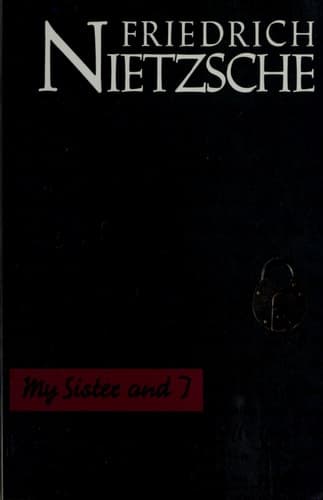
The revised and updated edition of Nietzsche's disputed final work, including textual research supporting its authenticity and translations of his final correspondence. Reportedly written in the mental institution at Jena following his celebrated mental collapse in Turin, and smuggled out by a fellow inmate to avoid the tyrannical eye of his sister (with whom he confesses to an incestuous relationship), My Sister and I is a reflective counterpoint to the megalomania and stridency of Ecce Homo.
Recommendations

The Genealogy of Morals
by Friedrich Wilhelm Nietzsche
Wait—I know what you're thinking. But hear me out: if *My Sister and I* intrigued you as a window into Nietzsche's more vulnerable, introspective late period, this earlier polemic offers the inverse experience. Where *My Sister and I* confesses and questions, *Genealogy* attacks and systematizes. Reading them as a pair—the hammer and the confession—gives you the full arc of his thought in a way that's genuinely revelatory.
View book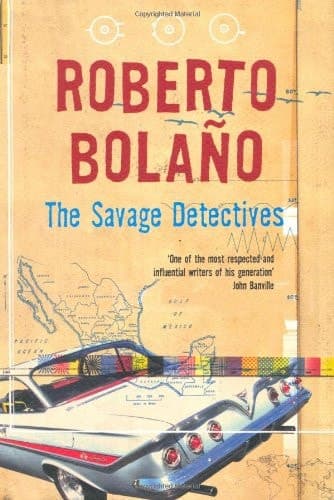
The Savage Detectives A Novel
by Roberto Bolaño
Bolaño constructs his narrative from fragments, letters, and testimonies—much like how *My Sister and I* exists as a contested, recovered text that we're reading *around* rather than through a single authoritative voice. Both works ask you to piece together a life from unreliable narration and competing accounts, and both have that quality of intellectual obsession that borders on fever dream.
View book
Die Wiederkehr der Zeichen: Eine psychoanalytische Studie zu Knut Hamsuns «Hunger» (Texte und Untersuchungen zur Germanistik und Skandinavistik) (German Edition)
by Thomas Fechner-Smarsly
Here's your surprise pick: this 1890 psychological novel predates modernism as we know it, and it does something *My Sister and I* also attempts—it renders mental deterioration not as tragedy but as a kind of philosophical investigation. Hamsun's narrator spirals through Oslo in a state of semi-starvation, and his interior monologue has that same quality of lucidity-within-breakdown that makes Nietzsche's late work so unsettling and compelling.
View book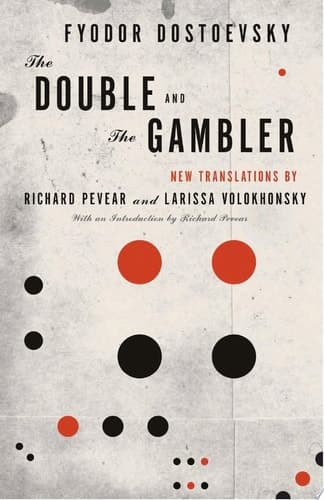
The Double and The Gambler
by Fyodor Dostoevsky
Dostoevsky was obsessed with the same territory Nietzsche explores in *My Sister and I*—the fracturing self, the relationship between ego and shadow, the way shame and grandiosity can coexist in one consciousness. *The Double* is shorter and stranger than *Crime and Punishment*, with a protagonist whose encounter with his doppelgänger spirals into genuine psychological horror that feels less like allegory and more like lived experience.
View book
Find what the Sailor Has Hidden Vladimir Nabokov's Pale Fire
by Priscilla Meyer
Nabokov builds an entire novel from a poem, a commentary, and an index—a structure that mirrors how we're reading *My Sister and I*, as a text that's been edited, disputed, and framed by others' interpretations. Both works play with the unreliability of the narrator-as-editor, and both have that quality where the *form* of the book is doing as much philosophical work as the content. You'll find yourself rereading passages wondering what's really being said.
View bookAbout Friedrich Nietzsche
F
Friedrich Nietzsche
1844–1900
German philosopher
View author page