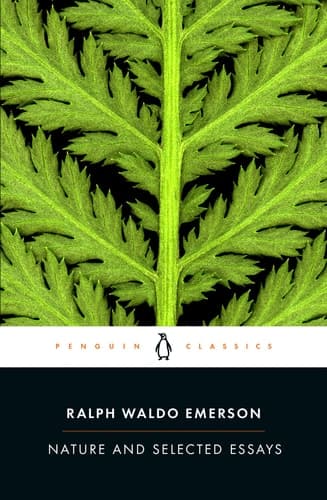
Synopsis
An indispensible look at Emerson's influential life philosophy
Through his writing and his own personal philosophy, Ralph Waldo Emerson unburdened his young country of Europe's traditional sense of history and showed Americans how to be creators of their own circumstances. His mandate, which called for harmony with, rather than domestication of, nature, and for a reliance on individual integrity, rather than on materialistic institutions, is echoed in many of the great American philosophical and literary works of his time and ours, and has given an impetus to modern political and social activism.
Larzer Ziff's introduction to this collection of fifteen of Emerson's most significant writings provides the important backdrop to the society in which Emerson lived during his formative years.
For more than seventy years, Penguin has been the leading publisher of classic literature in the English-speaking world. With more than 1,700 titles, Penguin Classics represents a global bookshelf of the best works throughout history and across genres and disciplines. Readers trust the series to provide authoritative texts enhanced by introductions and notes by distinguished scholars and contemporary authors, as well as up-to-date translations by award-winning translators.
Recommendations
Generating recommendations…
Our AI is preparing recommendations for Nature and Selected Essays. This usually takes under a minute.
About Ralph Waldo Emerson
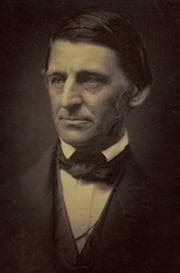
Ralph Waldo Emerson
1803–1882
Ralph Waldo Emerson was an American philosopher, essayist, and poet, best remembered for leading the Transcendentalist movement of the mid-19th century. His teachings directly influenced the growing New Thought movement of the mid-1800s. He was seen as a champion of individualism and a prescient critic of the countervailing pressures of society. Emerson gradually moved away from the religious and social beliefs of his contemporaries, formulating and expressing the philosophy of Transcendentalism in his 1836 essay, Nature. As a result of this ground-breaking work he gave a speech entitled The American Scholar in 1837, which Oliver Wendell Holmes, Sr. considered to be America's "Intellectual Declaration of Independence". Considered one of the great orators of the time, Emerson's enthusiasm and respect for his audience enraptured crowds. His support for abolitionism late in life created controversy, and at times he was subject to abuse from crowds while speaking on the topic. When asked to sum up his work, he said his central doctrine was "the infinitude of the private man." ([Source][1]) [1]: http://en.wikipedia.org/wiki/Ralph_Waldo_Emerson
View author page