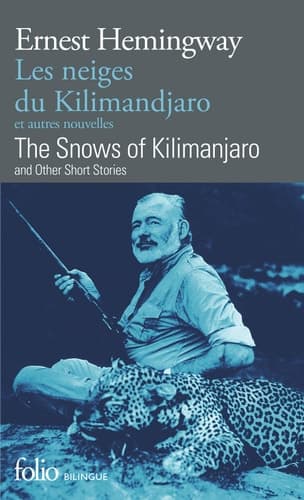
Synopsis
A la nouvelle éponyme s'ajoutent "L'heure triomphale de Francis Macomber", "La capitale du monde" (Madrid), publiée sous le titre "Les cornes du taureau"), "Le vieil homme près du pont". Préface, p. 7-20. Notes préliminaires et postliminaires. Notes infrapaginales. Le dossier photographique (16 pages) n'a pas l'intérêt auquel nous a habitué la collection. [SDM].
Recommendations
Ernest Hemingway The Sun Also Rises and Other Works
by Kevin Alexander Boon
I notice you've just finished a Hemingway collection, so let me redirect you toward his novel-length work instead. *The Sun Also Rises* gives you that same stripped-down prose and wounded masculinity, but sustained across a full narrative arc—the way Hemingway builds tension through what characters *don't* say becomes even more devastating when you're living with them for 200 pages rather than 20.
View book
The remains of the day de Kazuo Ishiguro
by Gallix/François
Ishiguro does something Hemingway reaches for in those short stories—he lets you feel the weight of what a character refuses to acknowledge. His butler Stevens has that same quality as Hemingway's protagonists: a man performing competence while something crucial crumbles beneath the surface. The restraint is almost painful, and the final pages hit with the force of a Hemingway ending.
View book
The Death of Ivan Ilyich
by Leo Tolstoy
This novella (1886) predates your Hemingway collection by over a century, but it's the spiritual ancestor of that spare, unflinching way Hemingway confronts mortality. Tolstoy watches a man die with the same clinical attention Hemingway gives his hunters and fishermen—no sentimentality, just the raw fact of existence narrowing to a point. It's shorter than you'd expect from Tolstoy, and it moves like a short story.
View book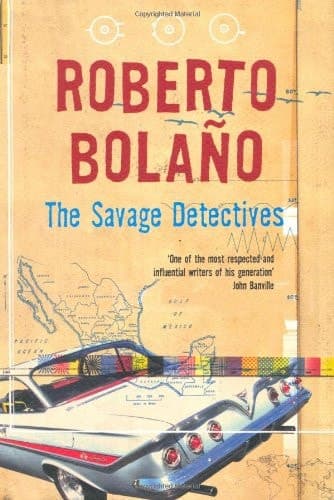
The Savage Detectives A Novel
by Roberto Bolaño
Here's the surprise: Bolaño writes with Hemingway's obsession with authenticity and masculine wandering, but he explodes it across a 900-page labyrinth where nothing resolves cleanly. If you loved the way Hemingway's stories leave you with questions rather than answers, Bolaño takes that uncertainty and makes it the entire architecture of the novel. It's messier, more baroque, but the hunger underneath is the same.
View book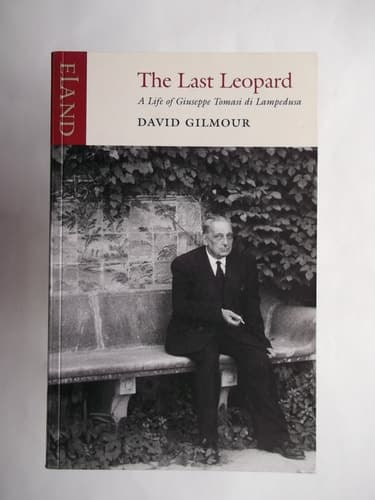
The Last Leopard: A Life of Giuseppe Tomasi di Lampedusa
by David Gilmour
Lampedusa writes about decline and change with the same unsentimental eye Hemingway brings to aging and loss, but he's working in a completely different register—lush, sensory, almost baroque. Yet there's that same recognition that the world is passing away, and the only dignity is in observing it clearly. It's a novel about a man watching his Sicily transform, and it has the weight of something Hemingway might have written if he'd grown up in a palazzo instead of Oak Park.
View bookAbout Ernest Hemingway
E
Ernest Hemingway
1899–1961
Ernest Miller Hemingway was an American writer and journalist. During his lifetime he wrote and had published seven novels; six collections of short stories; and two works of non-fiction. Since his death three novels, four collections of short stories, and three non-fiction autobiographical works have been published. Hemingway received the Nobel Prize in Literature in 1954. Hemingway was born and raised in Oak Park, Illinois. After high school he worked as a reporter but within months he left for the Italian front to be an ambulance driver in World War I. He was seriously injured and returned home within the year. He married his first wife Hadley Richardson in 1922 and moved to Paris, where he worked as a foreign correspondent. During this time Hemingway met, and was influenced by, writers and artists of the 1920s expatriate community known as the "Lost Generation". In 1924 Hemingway wrote his first novel, The Sun Also Rises. In the late 1920s, Hemingway divorced Hadley, married his second wife Pauline Pfeiffer, and moved to Key West, Florida. In 1937 Hemingway went to Spain as a war correspondent to cover the Spanish Civil War. After the war he divorced Pauline, married his third wife Martha Gellhorn, wrote For Whom the Bell Tolls, and moved to Cuba. Hemingway covered World War II in Europe and he was present at Operation Overlord. Later he was in Paris during the liberation of Paris. After the war, he divorced again, married his fourth wife Mary Welsh Hemingway, and wrote Across the River and Into the Trees. Two years later, The Old Man and the Sea was published in 1952. Nine years later, after moving from Cuba to Idaho, he committed suicide in the summer of 1961. Hemingway produced most of his work between the mid 1920s and the mid 1950s, though a number of unfinished works were published posthumously. Hemingway's distinctive writing style is characterized by economy and understatement, and had a significant influence on the development of twentieth-century fiction writing. His protagonists are typically stoical men who exhibit an ideal described as "grace under pressure." Many of his works are now considered classics of American literature. During his lifetime, Hemingway's popularity peaked after the publication of The Old Man and the Sea. [1] [1]: https://en.wikipedia.org/wiki/Ernest_Hemingway Source and more information: https://en.wikipedia.org/wiki/Ernest_Hemingway
View author page