
Nietzche's Thus Spake Zarathustra
George MyersonPublished2001
Pages88
Formatpaperback
PublisherHodder & Stoughton
Synopsis
viii, 88 p. ; 20 cm
Recommendations
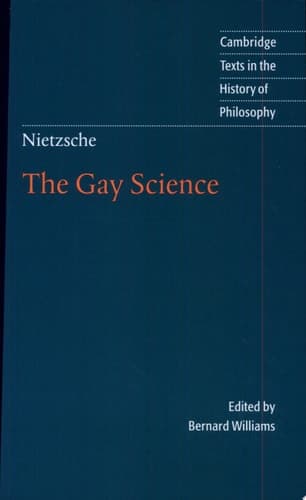
Nietzsche: The Gay Science With a Prelude in German Rhymes and an Appendix of Songs
by Friedrich Nietzsche
Since you've engaged with Myerson's accessible guide to Zarathustra, you're ready to encounter Nietzsche's own voice directly—and this work is far more playful and aphoristic than the dense reputation suggests. It's where Nietzsche experiments with shorter, punchier ideas before crystallizing them in Zarathustra, so you'll recognize the philosophical DNA while discovering his wit and irony in their rawest form.
View book
Albert Camus' The Stranger
by Kevin Kelly
Camus takes the Nietzschean question of how to live authentically and drops it into a noir-tinged narrative about a man who refuses society's emotional scripts. Where Zarathustra is prophetic and declarative, Meursault embodies the philosophy through detachment—you'll see existential ideas not as abstractions but as the lived experience of someone genuinely indifferent to conventional meaning-making.
View book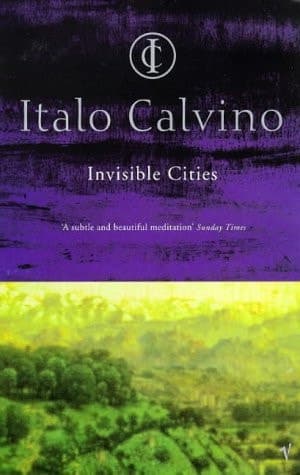
Invisible Cities
by Italo Calvino
This is the surprise pick: a dreamlike conversation between Marco Polo and Kublai Khan about imaginary cities, structured as interconnected vignettes rather than linear narrative. It shares Zarathustra's philosophical ambition and poetic density, but Calvino achieves it through architectural metaphor and playful fragmentation—you're building meaning from fragments rather than following a prophet's journey, which offers a completely different intellectual pleasure.
View book
Immanuel Kant's Critique Of Pure Reason V2: In Commemoration Of The Centenary Of Its First Publication
by Immanuel Kant
If Myerson's guide left you curious about the philosophical tradition Nietzsche was arguing against, Kant is the essential counterpoint—his systematic architecture of how we know anything became the foundation Nietzsche had to demolish. Reading them in conversation reveals why Nietzsche's aphoristic style was almost necessary; he needed to shatter Kant's geometric certainties.
View book
Simone de Beauvoir's the Second Sex
by George Myerson
De Beauvoir takes Nietzsche's concept of self-creation and asks: what happens when half of humanity has been told their essence is fixed, not chosen? She's doing applied Nietzschean philosophy—using his framework to expose how women have been denied the very freedom he championed. It's rigorous, occasionally dense, but it shows how Zarathustra's ideas collide with actual social reality.
View bookAbout George Myerson
G
George Myerson
Born 1957
Biography coming soon.
View author page