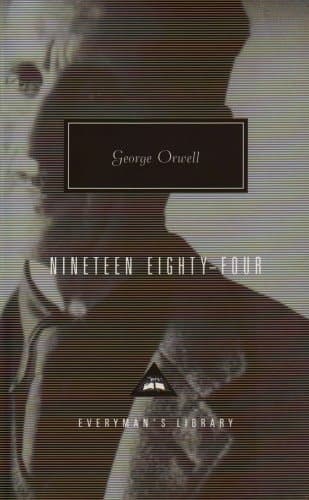
Synopsis
George Orwell's picture of a world in which personal freedom is denied, where lies replace truth and where resistance is punished by torture, is one of the most powerful satires ever written. When Winston Smith rebels against the authority of Big Brother and his treachery is uncovered, he must be made to suffer the consequences.
Recommendations
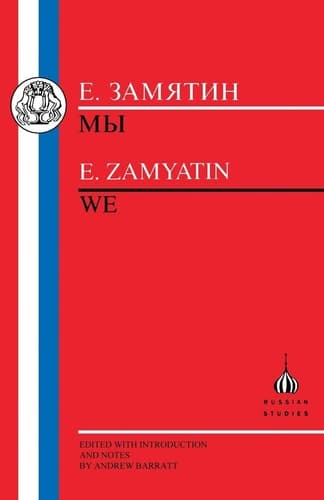
Zamyatin: We
by Yevgeny Zamyatin
Written in 1924, this Russian novel is the direct ancestor of Orwell's vision—in fact, Orwell read it and drew from it heavily. Where 1984 shows you a totalitarian state in full operation, We lets you experience the seduction of surrendering individuality to the collective, which makes it feel even more insidious. The mathematical precision of Zamyatin's dystopia has a chilling elegance that complements rather than repeats Orwell's approach.
View book
The Apocalyptic Vision of Mikhail Bulgakov's the Master and Margarita (Studies in Slavic Language & Literature)
by Edward E. Ericson
This might seem like a departure—it's surreal, darkly comic, and features the Devil himself wandering Moscow—but it's actually a brilliant counterpoint to 1984. Where Orwell shows totalitarianism crushing the human spirit through control, Bulgakov shows it through absurdity and corruption, with art and love as the only forms of resistance. The novel's structure mirrors the disorientation Winston experiences, but through magical realism rather than psychological torture.
View book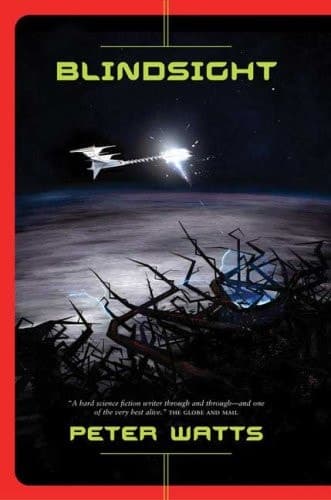
Blindsight
by Peter Watts
This hard science fiction novel shares 1984's obsession with the nature of consciousness and what it means to be human under pressure, but it approaches the question through first contact with an alien intelligence rather than political machinery. Watts uses the crew's internal conflicts and communication breakdowns to explore whether consciousness itself might be a liability—a philosophical echo of how Big Brother systematically dismantles Winston's ability to trust his own mind.
View book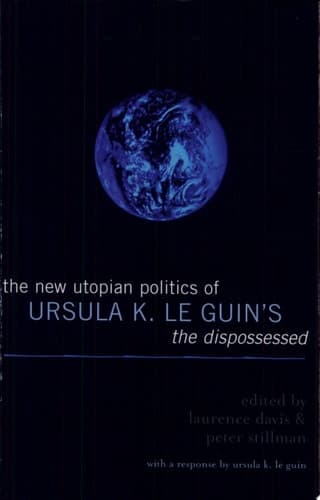
The New Utopian Politics of Ursula K. Le Guin's The Dispossessed
by Laurence Davis
Le Guin takes the opposite approach from Orwell—instead of showing one totalitarian system, she builds two competing societies (one anarchist, one capitalist) and lets you see how each constrains freedom in different ways. The protagonist's journey between worlds gives you the same sense of disorientation and moral ambiguity that Winston experiences, but it's structured as a genuine philosophical debate rather than a descent into despair.
View bookAbout George Orwell
G
George Orwell
1903–1950
George Orwell, originally born as Eric Arthur Blair, was an English novelist and journalist. His work is marked by keen intelligence and wit, a profound awareness of social injustice, an intense, revolutionary opposition to totalitarianism, a passion for clarity in language and a belief in democratic socialism. ([Source][1].) [1]:https://en.wikipedia.org/wiki/George_Orwell
View author page