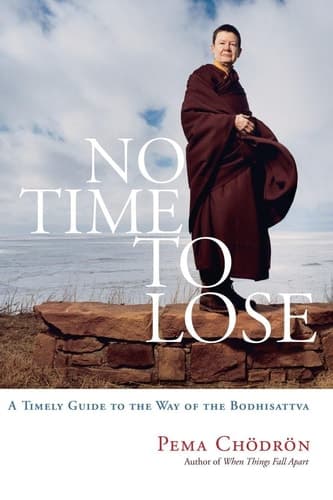
No Time to Lose A Timely Guide to the Way of the Bodhisattva
Pema ChödrönPublished2007
Pages386
Formatpaperback
PublisherShambhala
Synopsis
Over the years, Pema Chödrön's books have offered readers an exciting new way of living: developing fearlessness, generosity, and compassion in all aspects of their lives. In No Time to Lose Pema invites readers to venture further along the path of the "bodhisattva warrior," explaining in depth how we can awaken the softness of our hearts and develop true confidence amid the challenges of daily living.
Pema reveals the traditional Buddhist teachings that guide her own life: those of The Way of the Bodhisattva (Bodhicharyavatara), a text written by the eighth-century sage Shantideva. This treasured Buddhist work is remarkably relevant for our times, describing the steps we can take to cultivate courage, caring, and joy—the keys to healing ourselves and our troubled world. Pema offers us a highly practical and engaging commentary on this essential text, explaining how its profound teachings can be applied to our daily lives.
Recommendations
The Bodhisattva Vow
by Geshe Sonam Rinchen
Where Pema offers a contemporary, heart-centered entry point to bodhisattva practice, Bodhi gives you the scholarly backbone—he's a translator and monk who grounds these teachings in their original Pali texts. If you found yourself wanting to go deeper into the philosophical architecture beneath Pema's practical wisdom, this is the natural next step that won't feel like a step backward into dry academia.
View book
The Year of Magical Thinking A Play by Joan Didion Based on Her Memoir
by Joan Didion
This is the surprise pick, but hear me out: Didion's unflinching account of grief after her husband's sudden death is essentially a bodhisattva practice in real time—she's working through shock, confusion, and the impulse to cling to what's gone with the same kind of brutal honesty Pema asks you to bring to your own suffering. It's not a spiritual self-help book, but it's spiritually rigorous in ways that might deepen how you understand compassion for yourself and others.
View book
The Courage to be
by Paul Tillich
Published in 1952, this theological work predates Pema's book by decades, but it explores that same territory of developing courage amid existential uncertainty—Tillich writes about anxiety and meaninglessness in ways that echo what Pema calls 'groundlessness.' He's writing from a Christian existential framework rather than Buddhism, but the practical wisdom about how to live authentically when nothing is guaranteed will feel like a conversation partner to what you've just read.
View book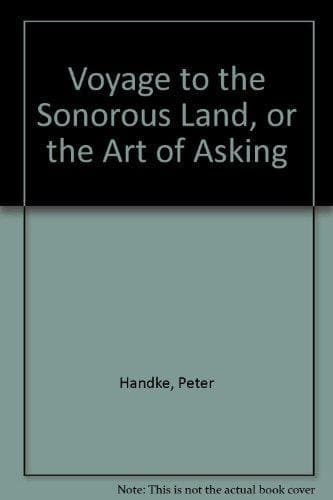
Voyage to the Sonorous Land, Or, The Art of Asking ; And, The Hour We Knew Nothing of Each Other
by Peter Handke
Palmer's memoir is ostensibly about her career as a musician and performance artist, but it's really about vulnerability, interdependence, and the generosity that comes from being willing to need others—which is exactly what Pema means by awakening the softness of your heart. She writes about asking for help, creating community, and moving through fear with the same directness and humor that makes Pema's teachings so accessible.
View book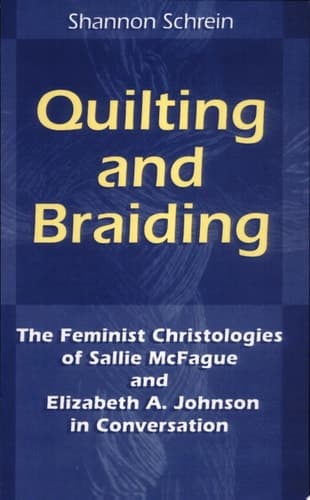
Quilting and Braiding The Feminist Christologies of Sallie McFague and Elizabeth A. Johnson in Conversation
by Shannon Schrein
Kimmerer weaves together botany, indigenous philosophy, and personal reflection to explore our relationship with the living world—and she does it with the same spirit of practical compassion that animates Pema's work. Where Pema focuses on the bodhisattva path toward other humans, Kimmerer extends that circle of caring to plants, ecosystems, and the earth itself, showing how the same principles of generosity and interconnection apply to how we inhabit this world.
View bookAbout Pema Chödrön
Biography coming soon.
View author page