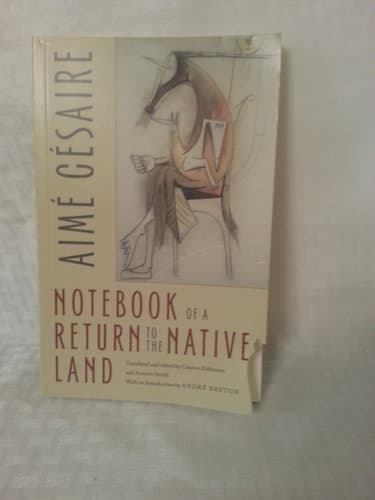
Notebook of a Return to the Native Land
Aimé CésairePublished2001
Pages66
Formatpaperback
PublisherWesleyan University Press
Synopsis
"Aime Cesaire is most well known as the co-creator (with Leopold Senghor) of the concept of negritude. His long poem Notebook of a Return to the Native Land, written at the end of World War II, is a masterpiece of immense cultural significance and beauty and became an anthem of Blacks around the world. Clayton Eshleman and Annette Smith achieve a laudable adaptation of Cesaire's work to English by clarifying double meanings, stretching syntax, and finding equivalent English puns, all while remaining remarkably true to the French text. Andre Breton's introduction, "A Great Black Poet," situates the text and provides a moving tribute to Cesaire."--Cover page 4.
Recommendations
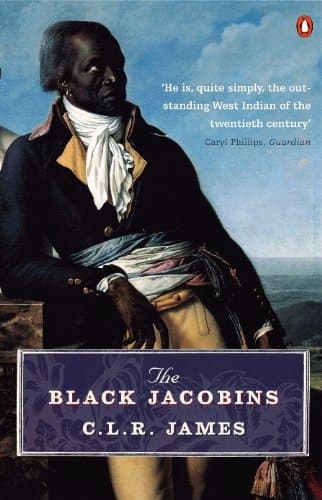
The Black Jacobins Toussaint L'ouverture and the San Domingo Revolution
by C L R James
James writes with the same urgent, poetic intensity as Césaire—this is history as liberation narrative, not dusty archive work. Where Notebook reclaims identity through lyrical defiance, James reclaims the Haitian Revolution from European historiography, and the two texts speak to each other across decades, both insisting that Black resistance is not just political fact but spiritual necessity.
View book
Things Fall Apart, Chinua Achebe
by Chinua Achebe
Achebe does what Césaire does but through narrative rather than poetry—he centers an African worldview so completely that the colonial intrusion reads as the real disruption, not the natural order. Both writers refuse the European gaze as the default perspective, and both understand that cultural survival is a form of resistance that happens in language itself.
View book
Cowboy Capitalism European Myths, American Reality
by Olaf Gersemann
This might seem like a left turn, but Fisher's essay operates in the same register as Notebook—both are incantatory texts that name a suffocating system and ask how we imagine beyond it. Where Césaire uses surrealism and rhythm to crack open colonial logic, Fisher uses cultural criticism to expose how late capitalism colonizes our imagination. Both are short, urgent, and designed to be read aloud.
View book
The Apocalyptic Vision of Mikhail Bulgakov's the Master and Margarita (Studies in Slavic Language & Literature)
by Edward E. Ericson
Bulgakov's novel shares Notebook's surrealist energy and its refusal of straightforward realism—both texts layer multiple realities (Moscow and Jerusalem, the Caribbean and the mythic) to expose the absurdity of totalizing systems. The Devil's arrival in Soviet Moscow has the same anarchic, truth-telling force as Césaire's volcanic language breaking through colonial discourse.
View book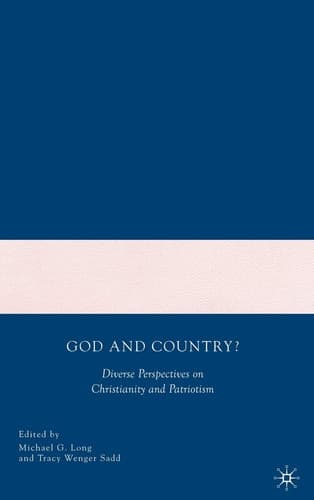
God and Country? Diverse Perspectives on Christianity and Patriotism
by M. Long
Philip takes the fragmented, music-driven language you loved in Notebook and pushes it further—she reassembles the legal documents of a slave ship massacre into poetry, making the form itself an act of recovery and resistance. If Césaire's syntax stretches to contain rage and beauty, Philip's explodes across the page, and both writers understand that how we say something is inseparable from what we're saying about power and survival.
View bookAbout Aimé Césaire
Biography coming soon.
View author page