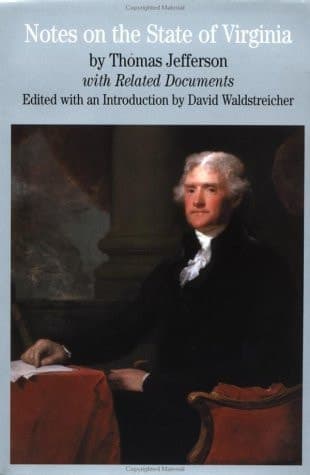
Notes on the State of Virginia
Thomas JeffersonPublished2002
Pages256
Formathardcover
PublisherPalgrave Macmillan
Synopsis
Thomas Jefferson published one book, Notes on the State of Virginia, and ever since, it has been the touchstone for understanding Jefferson's ideas about republican government, the environment, education, race and slavery, and Native-white relations. This edition is the first to present these issues as fundamentally inseparable matters. A collection of lively documents accompanies the core text of the Notes, and charts the evolution of the book in the revolutionary crucible and during the heady early days of the new nation. An introduction by David Waldstreicher places the work in the contexts of the Revolution and the social and cultural history of Jefferson's Virginia, with particular attention to developing ideas about race and nature. A chronology of the life and career of Thomas Jefferson and selected bibliography also add to the pedagogical benefits of this volume.
Recommendations
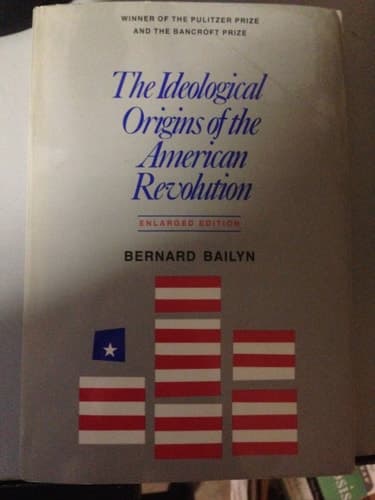
The Ideological Origins of the American Revolution Enlarged Edition
by Bernard Bailyn
Bailyn does for Revolutionary thought what Waldstreicher does in his introduction to the Notes—he traces how ideas about liberty, property, and natural rights actually crystallized during this period. Where Jefferson gives you one brilliant mind's synthesis, Bailyn shows you the intellectual ferment that produced it, examining the pamphlets and debates that shaped the founding generation's worldview.
View book
Simians, Cyborgs, and Women The Reinvention of Nature
by Donna Jeanne Haraway
This is your surprise pick—it's narrative biography rather than political philosophy, but Humboldt was Jefferson's contemporary and shared his obsession with cataloging and understanding the natural world systematically. Wulf captures that same Enlightenment drive to see nature as interconnected systems rather than isolated curiosities, and she writes with a page-turning energy that makes the intellectual history feel like adventure.
View book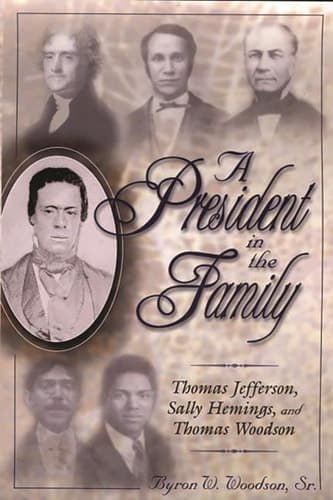
A President in the Family: Thomas Jefferson, Sally Hemings, and Thomas Woodson
by Byron W. Woodson Sr.
Gordon-Reed does something the Notes itself cannot do—she centers the enslaved Hemming family and their relationship to Jefferson, making visible the people Jefferson wrote about but whose voices were systematically excluded. If you found yourself grappling with Jefferson's contradictions on slavery and race, this book doesn't resolve them so much as deepen them by restoring the humanity and agency that the historical record tried to erase.
View book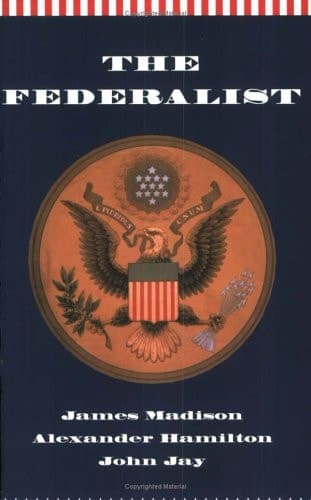
The Federalist Papers
by Alexander Hamilton
If you want to see Jefferson's ideas about republican government tested and debated in real time, the Federalist Papers show you Madison and Hamilton arguing for a different vision of the Constitution. Reading these alongside the Notes lets you understand not just what the founding generation believed, but where they fundamentally disagreed about how power should be distributed and checked.
View book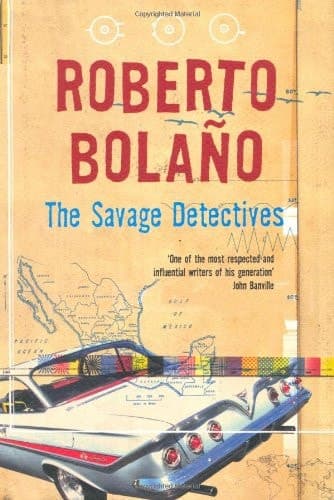
The Savage Detectives A Novel
by Roberto Bolaño
This one's genuinely unconventional, but stay with me: Bolaño's novel is structured as a fragmented archive—letters, interviews, diary entries, secondhand accounts—that mirrors how we actually encounter historical figures like Jefferson. The book captures that same tension between the grand intellectual project and the messy, contradictory reality of actual lives, and it does so through form rather than argument, which might refresh how you think about historical texts themselves.
View bookAbout Thomas Jefferson
T
Thomas Jefferson
1743–1826
Biography coming soon.
View author page