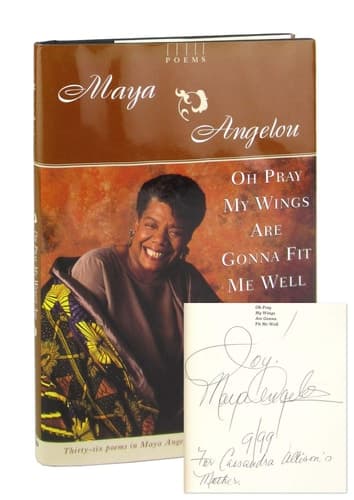
Oh Pray My Wings Are Gonna Fit Me Well Poems
Maya AngelouPublished1997
Pages66
Formathardcover
PublisherRandom House
Synopsis
This collection of thirty-six poems is, once again, eloquent evidence of Maya Angelou's continuing celebration of life: Here are poems of love and memory; poems of racial confrontation; songs of the street and songs from the heart.
Recommendations
Just Give Me a Cool Drink of Water 'fore I Diiie
by Maya Angelou
Giovanni shares Angelou's gift for making the personal feel universal—her poems move fluidly between intimate vulnerability and sharp social commentary, often within the same piece. Where Angelou celebrates resilience through transformation, Giovanni celebrates it through refusal and clarity, and you'll find that same street-level wisdom and lyrical precision that makes her work feel like overhearing someone tell you the truth you didn't know you needed.
View book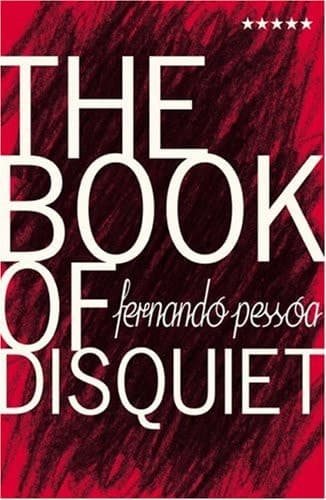
The Book of Disquiet
by Fernando Pessoa
This is my surprise pick for you—it's a fragmented prose poem rather than traditional verse, written in the early 20th century, yet it shares Angelou's obsession with memory and identity. Pessoa writes through multiple voices about the texture of ordinary moments, and there's a meditative quality here that complements Angelou's more declarative style; together they'd give you two very different ways of wrestling with what it means to be alive and aware.
View book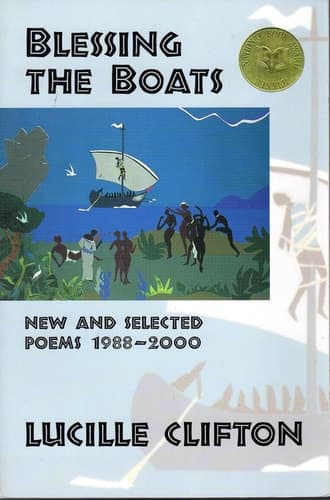
Blessing the Boats: New and Selected Poems 1988-2000 (American Poets Continuum)
by Lucille Clifton
Clifton's poems are deceptively spare—she does with fewer words what Angelou does with more, and both poets share an unflinching honesty about race, love, and survival. Her voice is quieter but no less powerful, and you'll notice how she trusts the reader to fill in emotional weight rather than stating it outright; it's a different temperature than Angelou, but the same fierce integrity underneath.
View book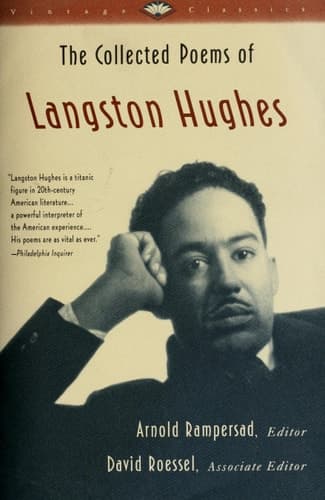
The Collected Poems of Langston Hughes
by Langston Hughes
Hughes was writing decades before Angelou, and his range is extraordinary—from blues-inflected street songs to formal verse to protest poetry. You'll recognize in him the ancestor of Angelou's own ability to move between registers, and his poems about jazz, identity, and American contradiction will deepen your understanding of the tradition Angelou was working within and transforming.
View book
A Closer Look at Ariel A Memory of Sylvia Plath
by Nancy Hunter Steiner
I'm pairing this with Angelou deliberately because they're almost opposite in temperament—where Angelou moves toward light and survival, Plath moves toward darkness and dissolution—yet both poets refuse sentimentality and demand that language do the heavy lifting of truth. Reading them together creates a kind of dialogue about what it costs to be a woman claiming her own voice, and Plath's raw intensity will make you appreciate Angelou's hard-won grace even more.
View bookAbout Maya Angelou
M
Maya Angelou
1928–2014
Maya Angelou (born Marguerite Annie Johnson) was an American poet, memoirist, and civil rights activist. She published seven autobiographies, three books of essays, and several books of poetry, and was credited with a list of plays, movies, and television shows spanning over 50 years. She received dozens of awards and more than 50 honorary degrees. She became a poet and writer after a series of occupations as a young adult, including fry cook, prostitute, nightclub dancer and performer, cast member of the opera Porgy and Bess, coordinator for the Southern Christian Leadership Conference, and journalist in Egypt and Ghana during the decolonization of Africa. She was an actor, writer, director, and producer of plays, movies, and public television programs. In 1982, she earned the first lifetime Reynolds Professorship of American Studies at Wake Forest University in Winston-Salem, North Carolina. She was active in the Civil Rights movement, and worked with Martin Luther King, Jr. and Malcolm X. Source: Wikipedia
View author page