Synopsis
Rare book
Recommendations
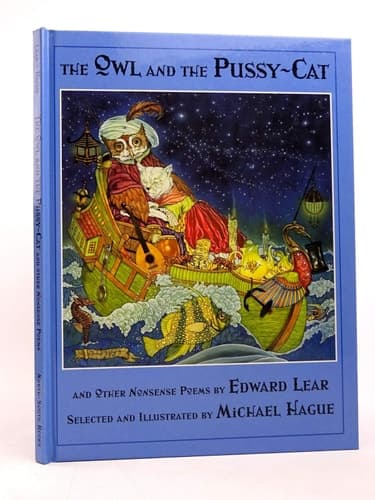
The Owl and the Pussy-cat, and Other Nonsense Poems
by Edward Lear
Like Eliot, Lear understood that nonsense verse isn't childish—it's a sophisticated linguistic game where sound and rhythm matter as much as meaning. Both poets use repetition and invented language to create worlds that feel internally logical even when they're delightfully absurd, and both wrote work that rewards reading aloud.
View book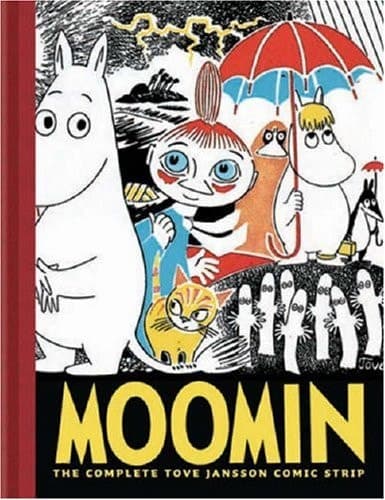
Moomin Book One The Complete Tove Jansson Comic Strip
by Tove Jansson
Jansson creates a cast of quirky, fully-realized characters inhabiting a strange landscape—much like Eliot's cats—but she adds philosophical depth and genuine emotional stakes beneath the eccentricity. Her Moomins have the same blend of whimsy and melancholy that runs through Old Possum's work, and she shares Eliot's gift for making the peculiar feel inevitable.
View book
The Apocalyptic Vision of Mikhail Bulgakov's the Master and Margarita (Studies in Slavic Language & Literature)
by Edward E. Ericson
Here's your surprise: Bulgakov's novel is a sprawling, genre-defying work that juggles satire, magical realism, and literary commentary the way Eliot juggles meter and meaning. Like Old Possum, it's playful on the surface but contains sharp social observation underneath, and both works reward readers who catch the layers of allusion and wordplay.
View book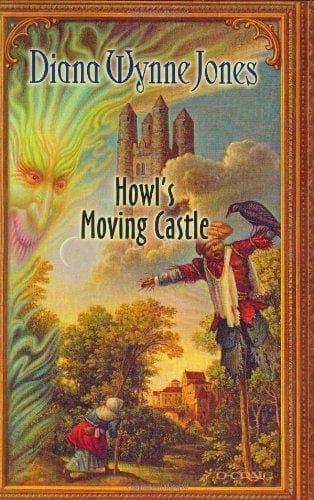
Howl's Moving Castle
by Diana Wynne Jones
Jones writes fantasy with the same attention to linguistic texture and character voice that Eliot brought to his cats—every character has a distinct verbal personality, and the plot moves with the logic of poetry rather than conventional narrative. She shares Eliot's belief that whimsy and intelligence aren't opposites, and her dialogue crackles with the same kind of playful precision.
View book
Find what the Sailor Has Hidden Vladimir Nabokov's Pale Fire
by Priscilla Meyer
Nabokov's novel is essentially a poem with a parasitic commentary—it's Eliot's interest in fragmentation and layered meaning taken to its logical extreme. Both writers delight in creating surfaces that seem simple until you look closer, and both understand that form and content are inseparable; the way Pale Fire is structured is as important as what it says.
View bookAbout T. S. Eliot
T
T. S. Eliot
1888–1965
Thomas Stearns Eliot was an American poet, playwright, and literary critic, arguably the most important English-language poet of the 20th century.[3] His first notable publication, The Love Song of J. Alfred Prufrock, begun in February 1910 and published in Chicago in June 1915, is regarded as a masterpiece of the modernist movement.[4] It was followed by some of the best-known poems in the English language, including Gerontion (1920), The Waste Land (1922), The Hollow Men (1925), Ash Wednesday (1930), Old Possum's Book of Practical Cats (1939), and Four Quartets (1945). He is also known for his seven plays, particularly Murder in the Cathedral (1935) and The Cocktail Party (1949). He was awarded the Nobel Prize in Literature and the Order of Merit in 1948. ([Source][1].) [1]:https://en.wikipedia.org/wiki/T._S._Eliot
View author page