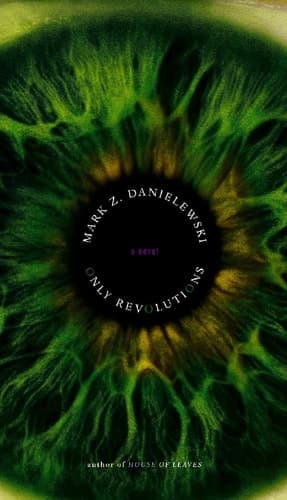
Synopsis
The story alternates between the characters of Sam and Hailey, powered by an ever-rotating fleet of cars, from Shelby Mustang to Sumover Linx, careen from the Civil Rights Movement to the Iraq War, tearing down to New Orleans, up the Mississippi River, across Montana, finally cutting a nation in half as they try to outrace History itself. By turns enticing and exhilarating, finally breathtaking, Only Revolutions is unlike anything ever conceived before, a remarkable feat of heart and intellect, moving us with the journey of two kids, perpetually of summer, perpetually sixteen, who give up everything except each other.
Recommendations
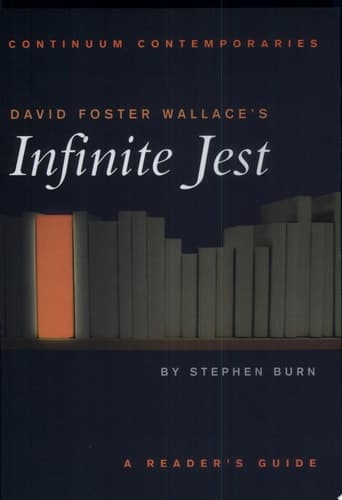
David Foster Wallace's Infinite Jest
by Stephen Burn
Wallace shares Danielewski's obsession with footnotes as narrative architecture and his willingness to make formal experimentation feel urgent rather than precious. Both novels treat America's cultural landscape as a character itself—where entertainment, technology, and youth culture become the actual plot—and both demand active, engaged reading that rewards your attention with moments of genuine emotional devastation buried in the formal pyrotechnics.
View book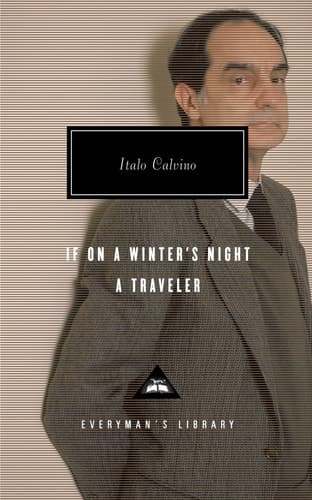
If on a Winter's Night a Traveler Introduction by Peter Washington
by Italo Calvino
Calvino's metafictional playfulness with the reader as a character mirrors Danielewski's refusal to let you passively consume the story—you're constantly aware of the book as an object, the pages as a physical experience. Both writers treat narrative structure itself as a kind of character, and both create that intoxicating feeling of being inside a puzzle that's also somehow a love story.
View book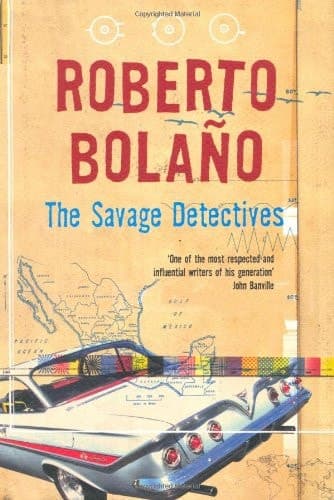
The Savage Detectives A Novel
by Roberto Bolaño
Bolaño captures that same restless, road-movie energy as Only Revolutions—a narrative that's constantly moving, constantly searching, with characters who are perpetually young and perpetually running from something. His fragmented, multi-perspective structure echoes Danielewski's refusal of linear storytelling, and both novels treat the act of seeking (whether for meaning, for each other, or for poetry) as more important than actually finding.
View book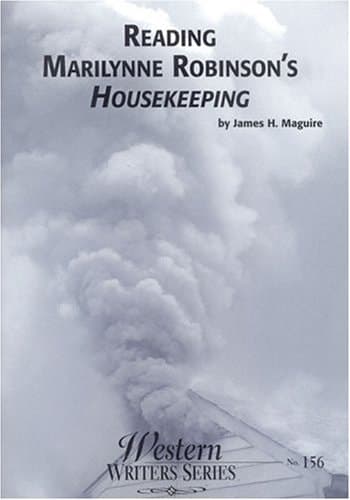
Reading Marilynne Robinson's Housekeeping (Boise State University Western Writers Series)
by James H. Maguire
Here's your surprise pick: Robinson's prose is deceptively quiet compared to Danielewski's maximalism, but she's doing something similar with American geography and memory—using landscape as emotional terrain. The novel's meditation on transience and belonging, on two characters bound together against the world's expectations, echoes Only Revolutions' emotional core beneath all the formal innovation. It's proof that experimental storytelling doesn't require pyrotechnics.
View book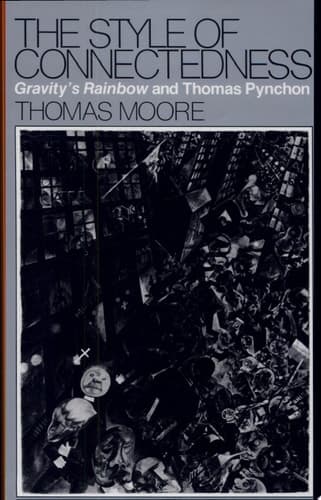
The Style of Connectedness Gravity's Rainbow and Thomas Pynchon
by Thomas Moore
Published in 1973, this is your historical reach—and it's essential because Pynchon essentially invented the maximalist American novel that Danielewski inherited. The way Pynchon weaves together history, technology, paranoia, and human connection across a sprawling, digressive narrative directly influenced Only Revolutions' approach to treating the American landscape as a character caught between competing forces. Both demand you surrender to the flow rather than fight for conventional plot.
View bookAbout Mark Z. Danielewski
M
Mark Z. Danielewski
Born 1966
Mark Z. Danielewski (born March 5, 1966) is an American fiction author. He is most widely known for his debut novel *House of Leaves* (2000), which won the New York Public Library's Young Lions Fiction Award. His second novel, *Only Revolutions* (2006), was nominated for the National Book Award. **Source**: [Mark Z. Danielewski](https://en.wikipedia.org/wiki/Mark_Z._Danielewski) on Wikipedia.
View author page