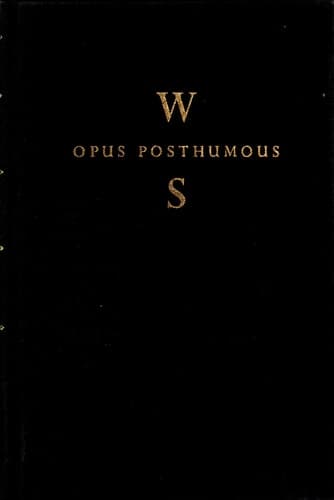
Synopsis
When Opus Posthumous first appeared in 1957, it was an appropriate capstone to the career of one of the most important writers of the twentieth century. It included many poems missing from Stevens's Collected Poems, along with Stevens's characteristically inventive prose and pieces for the theater. Now Milton J. Bates, the author of the acclaimed Wallace Stevens: A Mythology of Self, has edited and revised Opus Posthumous to correct the previous edition's errors and to incorporate material that has come to light since original publication. A third of the poems and essays in this edition are new to the volume. The resulting book is an invaluable literary document whose language and insights are fresh, startling, and eloquent.
From the Trade Paperback edition.
Recommendations
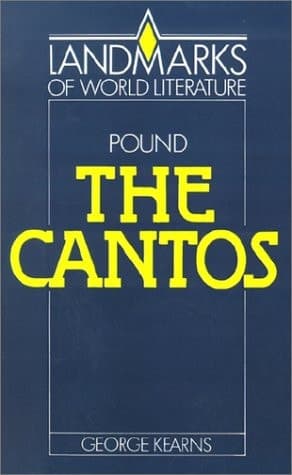
Ezra Pound: The Cantos
by George Kearns
Like Stevens, Pound constructs meaning through fragmentation, layering languages and allusions into something that demands active participation from the reader. Both poets refuse easy accessibility in favor of linguistic precision and philosophical depth—they're asking you to think about how language itself creates reality, not just describes it.
View book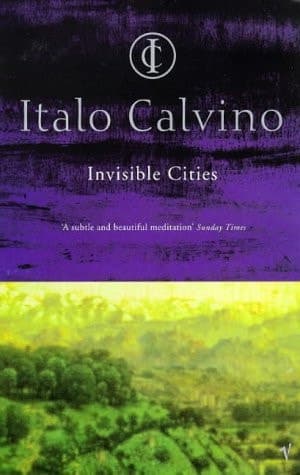
Invisible Cities
by Italo Calvino
This is a departure from pure poetry, but it operates in the same imaginative space Stevens does—each brief section is a prose poem that builds a world through description and philosophical meditation rather than narrative. Calvino's Venice-as-frame for infinite cities mirrors Stevens's way of using ordinary objects (jars, snow, light) as portals to larger truths about perception and existence.
View book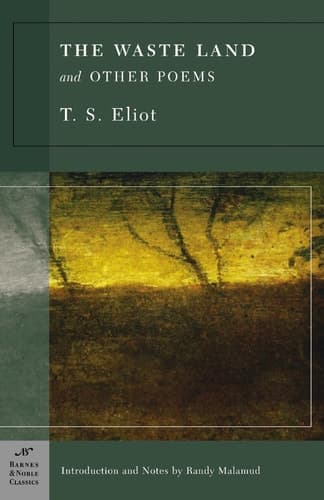
The Waste Land and Other Poems
by Thomas Stearns Eliot
You might expect this recommendation, but the revised Opus Posthumous actually shows how differently Stevens and Eliot approached modernism—where Eliot fragments culture into despair, Stevens finds exuberance in the act of perception itself. Reading them together clarifies what makes Stevens's voice distinctive: his refusal of Eliot's pessimism.
View book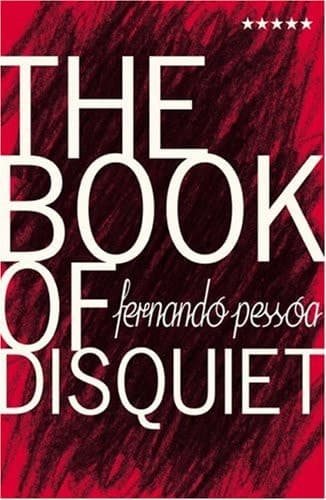
The Book of Disquiet
by Fernando Pessoa
Pessoa's fragmented, philosophical notebook—written across multiple personas—shares Stevens's obsession with how consciousness creates meaning and identity. Both writers treat the act of observation as a kind of performance, and both find profound beauty in the gap between what we see and what we think we see.
View book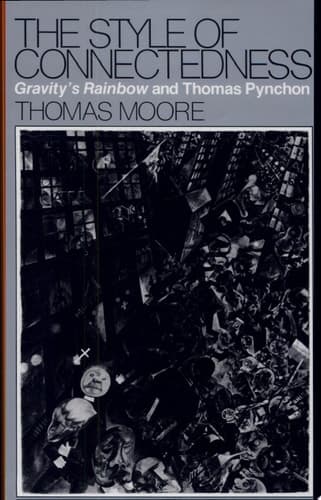
The Style of Connectedness Gravity's Rainbow and Thomas Pynchon
by Thomas Moore
This might seem like a wild leap from Stevens, but Pynchon shares his conviction that language can reveal hidden patterns in reality—except Pynchon applies it to 20th-century paranoia and physics rather than aesthetics. Both writers demand you surrender to their linguistic density and trust that meaning emerges from immersion rather than summary. It's Stevens's philosophical precision applied to the chaos of history.
View bookAbout Wallace Stevens
W
Wallace Stevens
1879–1955
Wallace Stevens was an American Modernist poet. He was born in Reading, Pennsylvania, educated at Harvard and then New York Law School, and spent most of his life working as a lawyer for an insurance company in Connecticut. ([Source][1].) [1]: http://en.wikipedia.org/wiki/Wallace_Stevens
View author page