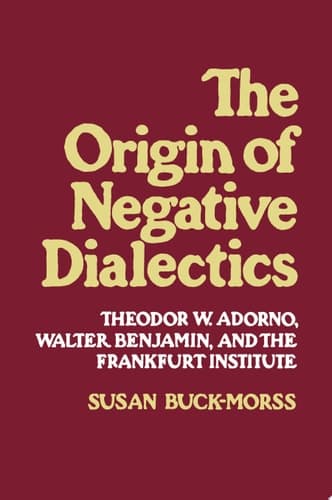
Origin of Negative Dialectics
Susan Buck-MorssPublished1979
Pages335
Formatpaperback
PublisherSimon and Schuster
Synopsis
Susan Buck-Morss examines and stresses the significance of Critical Theory for young West Germ intellectuals after World War II.
Looking at the differences between German and American situations during this time period, Origin of Negative Dialectics convincingly sketches the learning process that ended in antagonism.
“[The Origin of Negative Dialectics] is by far the best introduction for the American reader to the complex, esoteric, and illusive structure of thought of one of the most seminal Marxian thinkers of the twentieth century. It belongs on the same shelf as Martin Jay’s history of the Frankfurt School, The Dialectical Imagination.” – Lewis A. Coser, State University of New York, Stony Brook
Recommendations
The Good Society A Personal Account of Its Struggle with the World of Social Planning and a Dialectical Inquiry Into the Roots of Radical Practice
by John Friedmann
Since Buck-Morss's book is essentially a companion piece to Jay's foundational work, you're ready for the fuller institutional history. Jay traces how the Frankfurt School's intellectual project developed across decades and continents, giving you the broader ecosystem in which Adorno's negative dialectics emerged—think of it as moving from a focused portrait to the complete landscape.
View book
The German Ideology
by Karl Marx
You've been reading about Marxian thought through Buck-Morss's lens; now encounter Marx and Engels directly on ideology and consciousness. The way they argue against Hegelian abstractions will make Adorno's later negations click into sharper focus—you'll see what he was responding to, and where he diverged.
View book
Minima Moralia Reflections from Damaged Life
by Theodor W. Adorno
This is Adorno's own aphoristic meditation on culture and society written during exile—it's far more accessible than his denser theoretical work, yet it contains the seeds of negative dialectics in fragmentary form. Buck-Morss prepared you perfectly to read Adorno's own voice without getting lost in the abstraction.
View book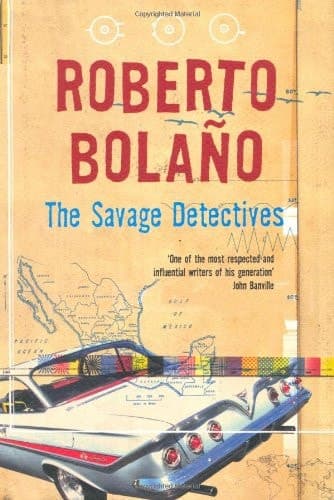
The Savage Detectives A Novel
by Roberto Bolaño
Here's your surprise pick: Bolaño's labyrinthine novel about avant-garde poets and intellectual wandering captures something Buck-Morss analyzes theoretically—the disillusionment of post-war intellectuals, the gap between utopian ambition and historical reality. It's Critical Theory as lived experience rather than argument, and the fragmented structure mirrors negative dialectics' refusal of synthesis.
View book
The Jargon of Authenticity
by Theodor W. Adorno
Adorno's own polemical essay against Heidegger and existentialism gives you his critical method in action—how negative dialectics actually works as a weapon against false reconciliation and pseudo-profound thinking. It's shorter and more combative than his systematic work, showing the intellectual stakes Buck-Morss has been explaining.
View bookAbout Susan Buck-Morss
S
Susan Buck-Morss
Born 1942
Susan Buck-Morss (1942) is an American philosopher and intellectual historian. -Wikipedia
View author page