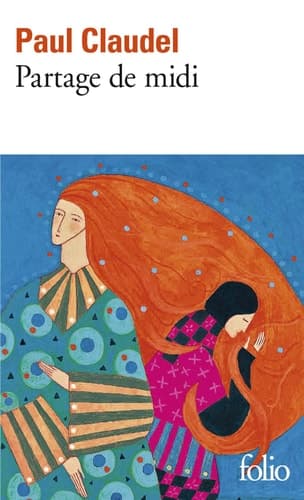
Synopsis
Première version
Recommendations
Herr Nightingale and the Satin Woman
by William Kotzwinkle
Wait—I know what you're thinking. But hear me out: if you've just finished the first version of *Partage de midi*, you absolutely need to experience how Claudel himself revisited and transformed this material. *The Satin Slipper* shows his mature dramaturgical voice grappling with similar tensions between desire and spiritual surrender, but across a vast historical canvas. It's like watching a composer return to the same emotional core with an entirely different orchestration.
View book
Phèdre A Play
by Jean Racine
Racine's *Phèdre* shares Claudel's obsession with passion as a force that destroys the soul, but where Claudel reaches toward grace, Racine traps his characters in classical inevitability. The compressed intensity of Racine's alexandrines—the way he makes language itself feel like a cage—will deepen your appreciation for how Claudel uses similar formal constraints to explore desire, guilt, and the possibility of redemption.
View book
The Apocalyptic Vision of Mikhail Bulgakov's the Master and Margarita (Studies in Slavic Language & Literature)
by Edward E. Ericson
This is your surprise recommendation: a 20th-century Russian novel that's structurally chaotic and darkly comic, yet shares Claudel's preoccupation with how love and art survive in a world hostile to both. Bulgakov weaves together a Moscow satire, a retelling of Pontius Pilate, and a love story in ways that feel fragmentary until you realize the fragments are the point—much like how *Partage de midi*'s first version leaves gaps that force you to confront what's unsaid.
View book
Nausea
by Jean-Paul Sartre
Sartre's protagonist experiences the same vertigo of confronting existence without predetermined meaning that haunts Claudel's characters—except Sartre refuses the theological escape hatch. If you found yourself wrestling with the metaphysical weight of *Partage de midi*, *Nausea* will push you into the existential void that Claudel was trying to transcend. It's the philosophical argument your heart had while reading.
View bookAbout Paul Claudel
Biography coming soon.
View author page