Synopsis
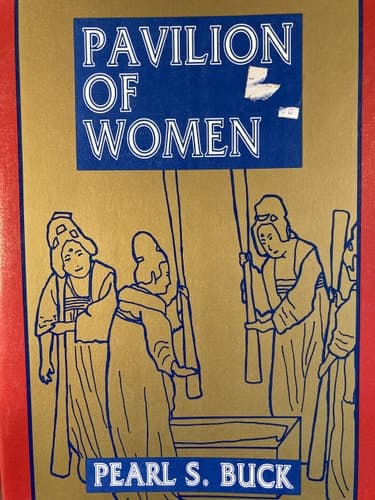
On her fortieth birthday, Madame Wu carries out a decision she has been planning for a long time: she tells her husband that after twenty-four years their physical life together is now over and she wishes him to take a second wife. The House of Wu, one of the oldest and most revered in China, is thrown into an uproar by her decision, but Madame Wu will not be dissuaded and arranges for a young country girl to come take her place in bed. Elegant and detached, Madame Wu orchestrates this change as she manages everything in the extended household of more than sixty relatives and servants. Alone in her own quarters, she relishes her freedom and reads books she has never been allowed to touch. When her son begins English lessons, she listens, and is soon learning from the foreigner, a free-thinking priest named Brother Andre, who will change her life. Few books raise so many questions about the nature and roles of men and women, about self-discipline and happiness.
Recommendations
Generating recommendations…
Our AI is preparing recommendations for Pavilion of Women. This usually takes under a minute.
About Pearl S. Buck
P
Pearl S. Buck
1892–1973
Pearl S. Buck had always lived in China except for the time she spent in the United States when she was being educated. She studied at Randolph-Macon College and at Cornell University. She taught at the University of Nanking and at the Government University in Nanking under two national regimes. She lived in Nanking during the 1930's. *The Good Earth* was Mrs. Buck's second published novel. *East Wind: West Wind* appeared under the John Day imprint in 1930. She contributed articles and stories to various magazines, among them *The Atlantic Monthly, The Nation*, and *Asia*.
View author page