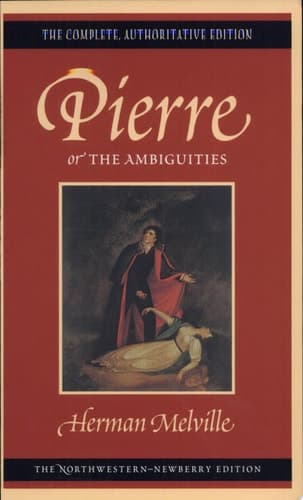
Pierre, Or, The Ambiguities
Herman MelvillePublished1995
Pages435
Formatpaperback
PublisherNorthwestern University Press
Synopsis
Herman Melville's second book, Omoo, begins where his first book, Typee, leaves off. As the author described the book, "It embraces adventures in the South Seas (of a totally different character from 'Typee') and includes an eventful cruise in an English Colonial Whaleman (a Sydney Ship) and a comical residence on the island of Tahiti." The popular success of Melville's first book encouraged him to write this sequel, hoping it would be "a fitting successor" to Typee, which delineates Polynesian life "in its primitive state, " while Omoo represents it "as affected by intercourse with the whites" and also "describes the 'man about town' sort of life, led, at the present day, by roving sailors in the Pacific."Wait Whitman found Omoo "the most readable sort of reading" and praised its "richly good-natured style." But many reviewers doubted the author's veracity and some objected to his "raciness" and "indecencies." Some also denounced his criticism of missionary endeavors, for Melville returned inOmoo to the attack upon the missionaries he had begun in Typee, making his second book more polemical than his first. Over the years, however, readers have been charmed by both books. The reading of Omoo influenced such later visitors to Tahiti as Pierre Loti, Henry Adams, John LaFarge, and Jack London; it was the book that sent Robert Louis Stevenson to the South Seas.
Recommendations
Generating recommendations…
Our AI is preparing recommendations for Pierre, Or, The Ambiguities. This usually takes under a minute.
About Herman Melville
H
Herman Melville
1819–1891
Herman Melville was an American novelist, short story writer, essayist and poet who is often classified as part of dark romanticism. He is best known for his novel *Moby Dick* and novella Billy Budd, the latter of which was published posthumously. ([Source][1].) [1]:http://en.wikipedia.org/wiki/Herman_Melville
View author page