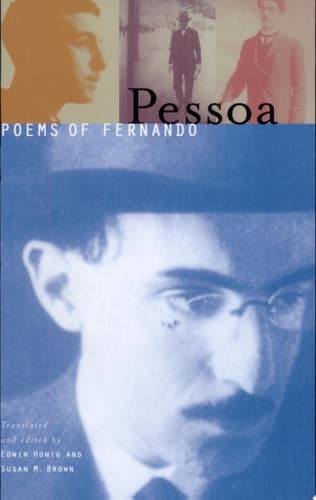
Poems of Fernando Pessoa
Fernando PessoaPublished1998
Pages240
Formatpaperback
PublisherCity Lights Books
Synopsis
Fernando Pessoa is Portugal's most important contemporary poet. He wrote under several identities, which he called heteronyms: Albet Caeiro, Alvaro de Campos, Ricardo Reis, and Bernardo Soares. He wrote fine poetry under his own name as well, and each of his "voices" is completely different in subject, temperament, and style. This volume brings back into print the comprehensive collection of his work published by Ecco Press in 1986.
Recommendations
The Book of Disquiet
by Fernando Pessoa
I know—same author, but hear me out. If you connected with Pessoa's fragmented consciousness and philosophical restlessness in the poems, this prose work by his heteronym Bernardo Soares is essential. It's like watching someone think in real-time across decades, with the same lyrical precision but in longer, more meditative passages that feel like reading someone's most honest diary.
View book
The Savage Detectives A Novel
by Roberto Bolaño
Bolaño does something Pessoa would recognize: he creates multiple narrative voices and perspectives that circle around a central mystery without ever quite resolving it. The middle section reads like found documents and testimonies—different people describing the same events in wildly different ways—which captures that same sense of truth being refracted through multiple consciousnesses.
View book
Find what the Sailor Has Hidden Vladimir Nabokov's Pale Fire
by Priscilla Meyer
This is a novel disguised as a poem with a scholarly commentary, which means it's essentially a conversation between multiple unreliable voices arguing about meaning and identity. Like Pessoa's heteronyms, you're never quite sure whose version of reality you're reading, and Nabokov plays with that uncertainty the way Pessoa plays with the masks we wear.
View book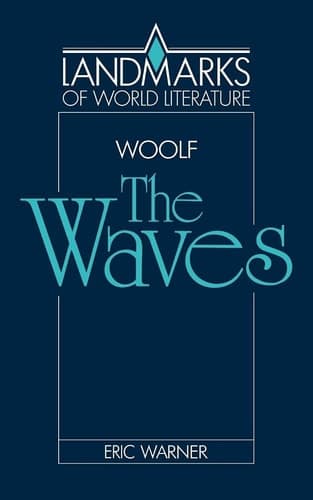
Virginia Woolf: The Waves
by Eric Warner
Published in 1931, this novel abandons conventional narrative for something closer to poetry—six characters speak in lyrical, overlapping monologues that blend together like voices in a chorus. It's Woolf's most Pessoa-like work: each character has a distinct philosophical temperament and way of seeing the world, and their separateness matters less than the unified consciousness they create together.
View bookThe Savage Detectives A Novel
by Roberto Bolaño
A genuine surprise recommendation: this is a novel that reads like someone's collected thoughts and conversations rather than a plot. Cortázar creates a protagonist (or several) who experiences reality as a series of philosophical tangents and observations, much like Pessoa's heteronyms do. It's playful where Pessoa is austere, but both writers share that sense that consciousness itself is the real subject.
View bookAbout Fernando Pessoa
F
Fernando Pessoa
1888–1935
Fernando António Nogueira Pessoa (Lisboa, 13 de junho de 1888 – Lisboa, 30 de novembro de 1935) foi um poeta português identificado com o modernismo, amplamente reconhecido como um dos principais expoentes da língua portuguesa e o maior poeta lusófono do século XX. Atuou também como dramaturgo, ensaísta, tradutor, publicitário, astrólogo, inventor, empresário, correspondente comercial, crítico literário e comentador político. ---------- Fernando Pessoa was a Portuguese poet, writer, literary critic, translator, publisher, and philosopher, described as one of the most significant literary figures of the 20th century and one of the greatest poets in the Portuguese language.
View author page