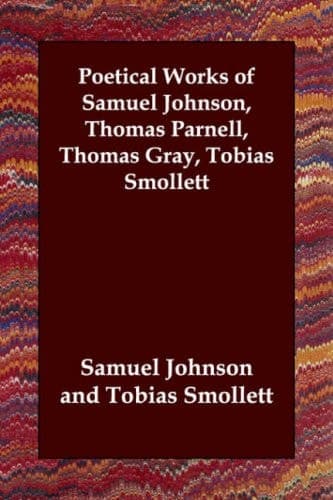
Poetical Works of Samuel Johnson, Thomas Parnell, Thomas Gray, Tobias Smollett
Samuel JohnsonPublished2006
Pages172
Formatpaperback
PublisherEcho Library
Synopsis
With a brief biography of each author.
Recommendations
James Boswell: the Life of Samuel Johnson
by Unknown
Since you've just read Johnson's poetry, you'll find Boswell's biography absolutely revelatory—it's essentially a portrait of Johnson as a conversationalist and thinker, filled with his wit and opinions on everything from literature to morality. Boswell captures the man behind the verses you've been reading, and his biographical method influenced how we write about writers ever since.
View book
Oliver Goldsmith The Vicar of Wakefield Notes
by Brian Donnelly
Goldsmith was Johnson's contemporary and friend, and this novel has that same blend of moral reflection and gentle humor you'd find in Johnson's more satirical verses. It's a deceptively simple story about a country parson that becomes increasingly complex—the way Goldsmith layers sentiment with social critique mirrors how the poets in your collection balance personal feeling with broader observations about human nature.
View book
The remains of the day de Kazuo Ishiguro
by Gallix/François
This is my surprise pick for you: while it's 20th-century fiction rather than 18th-century poetry, it shares something crucial with what you've just read—a narrator gradually revealing his emotional depths through restraint and careful language. Stevens, like Johnson or Gray, is a man of considerable feeling who expresses himself through indirection and formal precision, and watching that mask slip is as moving as any of the elegies you've encountered.
View book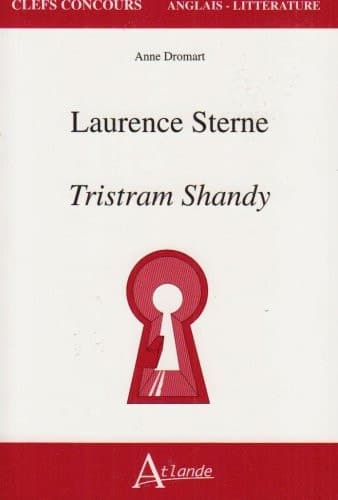
Laurence Sterne, "Tristram Shandy"
by Anne Dromart
Sterne was writing just after your poets' era, and he's absolutely obsessed with the mechanics of language and digression in ways that would fascinate anyone who's studied 18th-century verse closely. His novel is wildly experimental—it plays with typography, interrupts itself constantly, and uses humor to explore serious ideas about time and mortality, much like how Smollett and Gray use wit to deepen their philosophical points.
View book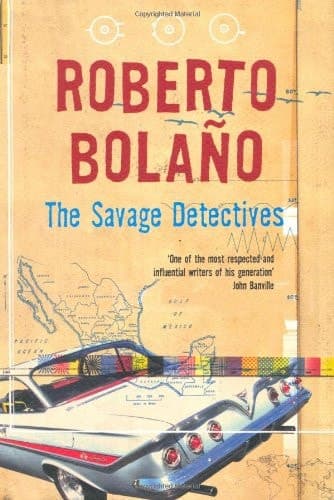
The Savage Detectives A Novel
by Roberto Bolaño
I know this seems like a leap, but bear with me: Bolaño's novel is structured around the lives and writings of poets, and it captures something about literary obsession and the pursuit of beauty through language that connects directly to why you'd spend time with Johnson, Parnell, Gray, and Smollett. It's a 21st-century book that's genuinely haunted by 18th and 19th-century Romantic ideals about what poetry can do.
View bookAbout Samuel Johnson
S
Samuel Johnson
1709–1784
Samuel Johnson, was an English author who made lasting contributions to English literature as a poet, essayist, moralist, literary critic, biographer, editor and lexicographer. Johnson was a devout Anglican and committed Tory, and has been described as "arguably the most distinguished man of letters in English history".[1] He is also the subject of "the most famous single work of biographical art in the whole of literature": James Boswell's Life of Samuel Johnson.[2] ([Source][1].) [1]:http://en.wikipedia.org/wiki/Samuel_Johnson
View author page