
Political Descartes Reason, Ideology and the Bourgeois Project
Antonio NegriPublished2007
Pages352
Formatpaperback
PublisherVerso Books
Synopsis
A classic study of modern philosophy’s founder, translated into English for the first time.
Recommendations

The German Ideology
by Karl Marx
Since you've engaged with Negri's materialist reading of Descartes, Marx's direct confrontation with ideology and consciousness will feel like a natural continuation—but where Negri traces philosophy's political genealogy, Marx demolishes the very concept of 'pure' thought. You'll find yourself rereading passages from Political Descartes with new eyes once you've seen how Marx weaponizes the relationship between ideas and economic conditions.
View book
Discipline and punish: the birth of the prison
by Michel Foucault
Foucault does something Negri hints at—he shows how rationality itself becomes a mechanism of control. Where Descartes' cogito promises liberation through reason, Foucault traces how that very logic gets embedded in institutions that surveil and normalize. The two books create a productive tension: Negri recovering reason's radical potential while Foucault warns of reason's capacity to discipline.
View book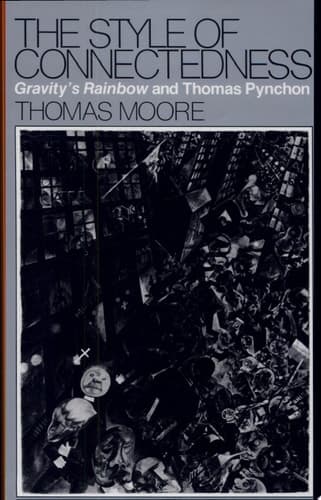
The Style of Connectedness Gravity's Rainbow and Thomas Pynchon
by Thomas Moore
This might seem like a left turn, but hear me out: Pynchon's novel is fundamentally about how ideology colonizes perception itself—characters chase patterns that may or may not exist, unable to distinguish signal from noise in a world saturated with competing systems of meaning. It's Negri's political philosophy rendered as narrative paranoia, where the question 'what is reason?' becomes 'can we even trust our own minds to parse reality?' The prose itself enacts the fragmentation of Cartesian certainty.
View book
The Savage Detectives A Novel
by Roberto Bolaño
Bolaño's epic follows a group of poets chasing an obscure literary movement across Latin America—it's a novel about how ideas circulate, mutate, and become detached from their origins. There's something deeply Negrian about how these characters treat intellectual history as lived experience rather than abstract doctrine, and how the book itself resists the kind of rational systematization that Descartes promised. Published in 1998, it also gives you a different temporal perspective on how twentieth-century thought actually functioned.
View bookAbout Antonio Negri
Biography coming soon.
View author page